

Table of Contents
How to Make a Wedding Sustainable in Hyderabad: A Complete Practical Guide
Learning how to make a wedding sustainable in Hyderabad comes down to replacing single-use plastics, floral foam, and excessive food waste with traditional South Indian zero-waste practices and local sourcing. In Telangana’s capital—where an average 500-guest celebration generates between 300 and 500 kilograms of wet and dry waste—eco-conscious planning aligns naturally with regional heritage. By serving traditional Panti Seva meals on biodegradable banana leaves, sourcing seasonal marigolds and mango leaves from Gudimalkapur wholesale market, switching to steel or glass water stations, and partnering with Hyderabad food-recovery NGOs, couples can host a deeply dignified celebration while lowering their environmental footprint and overall expenses.

Last Updated: November 2026
What Is a Sustainable Wedding in Hyderabad?
A sustainable wedding in Hyderabad is an eco-conscious marriage celebration designed to minimize single-use plastics, floral foam, carbon emissions, and food waste. It achieves this through biodegradable banana-leaf dining (Panti Seva), locally sourced seasonal flowers, reusable brass and terracotta decor, digital invitations, and structured surplus food donation.
Executing an environmentally responsible celebration requires integrating sustainable choices across four core operational pillars.
4 Pillars of a Sustainable Wedding in Hyderabad
A sustainable wedding focuses on reducing waste, using local materials and making environmentally friendly choices without compromising the celebrations.
1. Plastic-Free Mandap and Local Flowers (30%)
- Use fresh local flowers such as marigolds.
- Decorate with reusable brass items and clay accessories.
- Reduce single-use plastic decorations.
2. Responsible Dining and Food Waste Reduction (35%)
- Consider banana leaves or reusable plates for serving food.
- Plan food quantities based on the guest count.
- Arrange safe surplus food redistribution through authorised food donation organisations.
3. Eco-Friendly Guest Transport and Gifts (20%)
- Arrange group transport or shared shuttles for guests.
- Choose plants or useful, sustainable gifts.
- Reduce unnecessary individual vehicle trips.
4. Digital Invitations and Waste Segregation (15%)
- Send digital wedding invitations to reduce paper waste.
- Place separate bins for wet, dry and recyclable waste.
- Coordinate proper waste collection and disposal.
Why Conventional Indian Weddings Generate Massive Waste
Traditional South Indian households historically practiced low-waste hospitality, yet modern banquet trends have introduced heavy disposable waste streams into Hyderabad weddings.
- Single-Use Plastic Water Bottles: Distributing 250ml or 500ml PET water bottles across 600 guests easily generates 1,600+ discarded plastic bottles in a single afternoon, most of which end up half-empty in venue dumpsters.
- Synthetic Floral Foam (Oasis) and Imported Flowers: Modern stage backdrops rely heavily on non-biodegradable phenolic floral foam blocks and imported orchids flown in from outside India, creating toxic landfill waste alongside high air-freight carbon emissions.
- Uncalibrated Buffet Overproduction: According to industry estimates cited by sustainability researchers and Indian hospitality groups, roughly 15% to 25% of prepared wedding buffet food goes uneaten when menus exceed 35 items without strict RSVP headcount audits.
5 Practical Ways to Make Your Hyderabad Wedding Eco-Friendly
Implementing how to make a wedding sustainable in Hyderabad becomes straightforward when you replace disposable banquet habits with regional, reusable alternatives:
5 CORE SUSTAINABLE WEDDING PRACTICES
- Eliminate Floral Foam Using Banana Stems, Marigolds & Brass Props
- Replace PET Water Bottles with Copper, Steel & Glass Dispensers
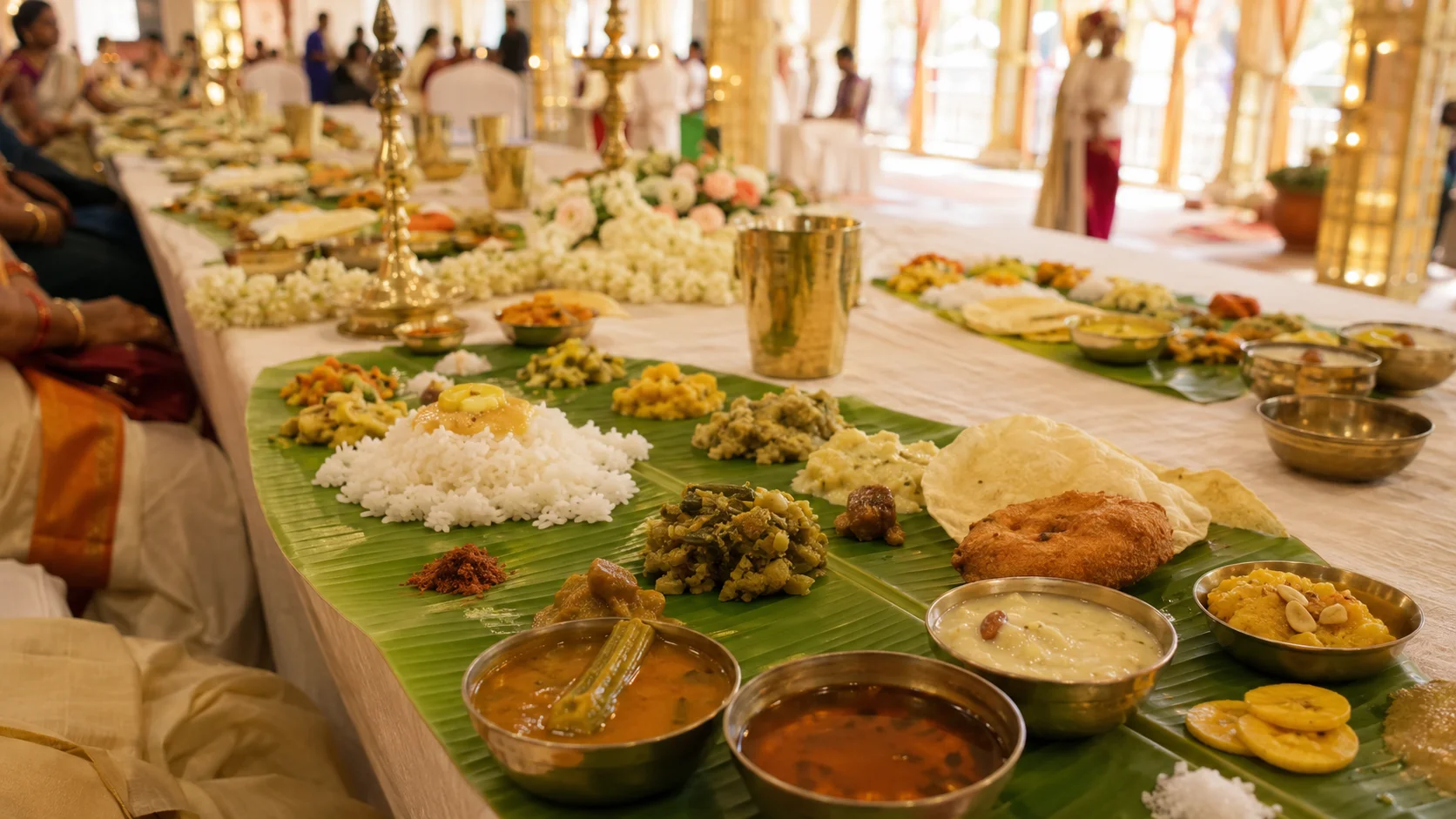
- Serve Traditional Panti Seva Meals on Biodegradable Banana Leaves
- Partner with Hyderabad Food-Rescue NGOs for Surplus Meals
- Offer Living Saplings, Brassware, or Handloom Thamboolam Favors
1. Eliminate Floral Foam Using Local Florals and Brass Props
Instruct your decorator to avoid green synthetic floral foam entirely. Instead, build mandap arches using wet coconut coir ropes, banana stems, fresh mango leaves (Mamidi Aakulu), and locally harvested marigolds (Banti Poolu) sourced from Gudimalkapur market, paired with rented brass lamps (Samai) and terracotta pots.
2. Replace PET Bottles with Steel and Glass Hydration Stations
Ban small plastic water bottles from dining halls and ceremony seating. Set up staffed hydration counters featuring 20-liter water dispensers paired with washed stainless steel tumblers (glassulu) or borosilicate glass carafes on dining tables.
3. Serve Traditional Panti Seva on Biodegradable Banana Leaves
Traditional Telugu sit-down dining (Panti Seva) served on fresh banana leaves is inherently zero-waste. Unlike coated paper plates or melamineware requiring chemical detergents, used banana leaves are 100% compostable and can be processed into organic manure within weeks.
4. Partner with Local Food-Rescue Organizations
Arrange a scheduled pickup with verified Hyderabad food-recovery networks—such as Robin Hood Army Hyderabad, No Food Waste, or local shelter kitchens—to collect untouched surplus food safely within two hours of meal service.
5. Rethink Invitations and Thamboolam Return Favors
Switch to animated video invitations and digital wedding websites with built-in RSVP tracking to eliminate paper printing and courier emissions. For traditional Thamboolam return gifts, replace plastic-wrapped synthetic trinkets with native saplings (Tulsi, neem, or jasmine), organic turmeric-kumkum pouches in cotton bags, or Pochampally ikat fabric bookmarks.
Conventional vs. Sustainable Wedding Choices: Comparison Table
Comparing standard banquet practices against sustainable alternatives shows how eco-friendly swaps often lower costs simultaneously:
| Planning Category | Conventional Banquet Practice | Sustainable Hyderabad Alternative | Environmental & Cost Impact |
| Hydration & Water | 1,600+ single-use 500ml PET bottles | 20L dispenser jars + reusable steel tumblers | Eliminates 35 kg of plastic waste; saves ₹12,000–₹18,000 |
| Mandap Backdrop | Imported orchids in synthetic floral foam | Local marigolds, jasmine, mango leaves & brass | 100% compostable florals; cuts decor spend by 40%–55% |
| Dining Service | Plastic-coated disposable plates & cutlery | Fresh banana leaves (Panti Seva) + steel spoons | Zero landfill trash; authentic cultural hospitality |
| Invitations | 400 multi-card boxed paper invites + couriers | Digital e-invites + 30 printed cards for elders | Saves ₹40,000–₹80,000; avoids paper & dye waste |
| Return Favors | Plastic-wrapped synthetic decor items | Potted native saplings or handloom cotton bags | Living keepsakes that guests use long-term |
How Much Does a Sustainable Wedding Cost in Hyderabad?
Contrary to popular belief, planning an eco-friendly wedding in Hyderabad typically costs 15% to 25% less than a conventional commercial wedding of the same guest size.
Cost Savings from Sustainable Wedding Choices (300 Guests)
Choosing eco-friendly alternatives can help reduce wedding expenses while creating a more traditional and responsible celebration.
1. Digital Invitations vs. Printed Box Invitations
- Digital invitations reduce printing, packaging and delivery costs.
- Estimated savings: ₹45,000–₹75,000.
2. Local Marigolds and Brass Decor vs. Exotic Flowers
- Locally available flowers and reusable brass decorations can reduce decoration expenses.
- Estimated savings: ₹1,20,000–₹2,50,000.
3. Steel Tumblers vs. Bottled Water
- Reusable steel tumblers and water dispensers reduce single-use bottle purchases.
- Estimated savings: ₹10,000–₹18,000.
4. Traditional Panti Seva vs. Luxury 35-Item Buffet
- A thoughtfully planned traditional menu can reduce food variety, service and preparation costs.
- Estimated savings: ₹1,50,000–₹3,00,000.
- Where Costs Drop: Eliminating imported flowers, printed stationery, bottled water, and oversized buffet waste directly reduces vendor bills.
- Where Costs Shift Slightly: Hiring dedicated dishwashing staff for steel tumblers or paying an on-site waste-segregation crew adds roughly ₹15,000 to ₹25,000 in labor, which is easily offset by savings elsewhere.
Step-by-Step Guide: How to Plan a Zero-Waste Wedding in Hyderabad
Follow this 6-step operational process to organize an eco-friendly celebration without compromising guest comfort:
1.Step 1: Finalize a Realistic Guest Count and Digital RSVP: Audit RSVP counts accurately to prevent over-catering.
Send digital invitations with clear RSVP deadlines 6 weeks out so your caterer prepares food based on confirmed attendance rather than inflated estimates.
2.Step 2: Choose a Venue with Natural Light and Waste Segregation: Prioritize daylight venues with natural airflow.
Select kalyana mandapams, heritage courtyards, or resorts in Gandipet or Shamshabad that offer natural daylight for morning Muhurthams and separate wet/dry waste bins.
3.Step 3: Write Green Clauses into Vendor Contracts: Enforce zero-plastic and zero-foam clauses.
Include explicit clauses prohibiting synthetic floral foam, single-use plastic cups, and styrofoam containers in your caterer and decorator agreements.
4.Step 4: Set Up Plastic-Free Hydration and Dining Stations: Deploy steel tumblers and 20L water jars.
Coordinate with your caterer to provide stainless steel tumblers at every dining seat and place clearly marked hydration stations across ceremony halls.
5.Step 5: Register with a Local Food-Rescue Organization: Schedule NGO pickup for untouched surplus food.
Contact a Hyderabad food-rescue NGO 10 days before the wedding, sharing your venue location and meal end times so volunteers arrive with insulated containers.
6.Step 6: Arrange Post-Event Floral and Leaf Composting: Separate organic florals for post-event composting.
Instruct venue housekeeping to separate used banana leaves and marigold garlands from dry waste so they can be sent to municipal compost pits or local nurseries.
4 Common Myths About Sustainable Weddings
Myth 1: “Sustainable weddings look plain, austere, or under-decorated.”
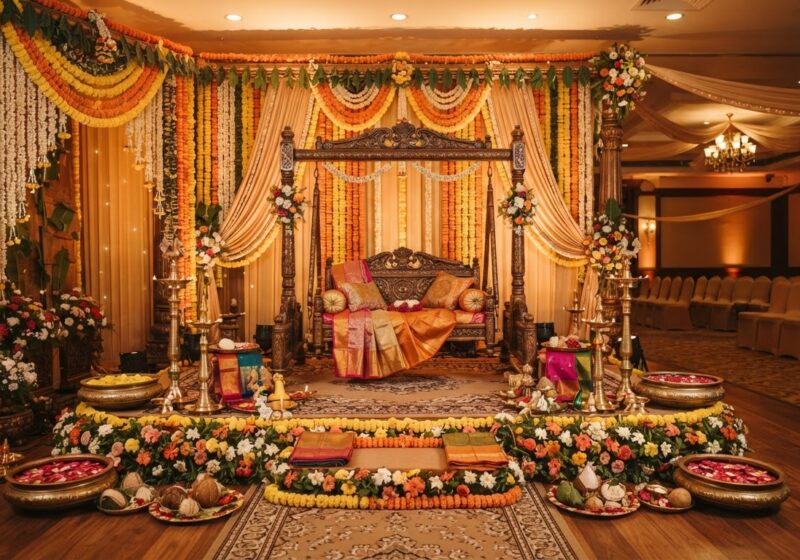
Fact: Traditional South Indian decor—featuring dense strings of vibrant yellow and orange marigolds, fragrant jasmine, banana saplings, terracotta diyas, and polished temple brassware—creates rich visual warmth without a single piece of plastic.
Myth 2: “Guests will complain if they don’t get sealed plastic water bottles.”
Fact: When venues station uniformed servers pouring chilled, RO-purified water into clean stainless steel tumblers or glass carafes at tables, guests appreciate the attentive service and rarely miss disposable bottles.
Disposable PET Bottles vs. Glass Carafes and Steel Tumblers
Choosing reusable water-serving options can help reduce plastic waste at weddings and large events.
| Disposable 500 ml PET Bottles | Glass Carafes and Steel Tumblers |
|---|---|
| More Leftover Bottles: Guests may leave half-used bottles on tables and chairs. | Less Water Waste: Guests can pour only the amount of water they need. |
| More Plastic Waste: Hundreds of disposable bottles can increase waste after the event. | Reusable Alternatives: Glass carafes and steel tumblers can be washed and used again. |
| More Cleanup Work: Staff must collect and sort discarded bottles. | Cleaner Dining Setup: Reusable serving options create a neat and organised table arrangement. |
| Higher Packaging Use: Each bottle comes with separate plastic packaging. | Reduced Single-Use Plastic: Helps reduce dependence on disposable water bottles. |
Myth 3: “Donating leftover wedding food is legally risky or logistically impossible.”
Fact: Under FSSAI guidelines (Save Food Share Food), hygienic surplus food from events can be safely donated through registered food-recovery partners in Hyderabad, provided untouched trays are cooled and packed promptly after service.
Myth 4: “You have to sacrifice traditional rituals like Homa or Talambralu.”
Fact: Sacred Vedic rituals are inherently natural. Using organic cow-dung cakes and pure ghee for the Homa fire, and replacing plastic-coated confetti with real turmeric-dyed rice (Talambralu) and fresh rose petals, keeps rituals 100% eco-friendly.
Real-World Sustainable Wedding Scenarios in Hyderabad
Scenario 1: A 350-Guest Zero-Waste Telugu Wedding in Secunderabad
- The Profile: An environmentally conscious couple hosting a morning Muhurtham and traditional lunch at a heritage kalyana mandapam.
- The Green Execution: The decorator built a lush mandap using mango leaves, banana trees, and 150 kg of Gudimalkapur marigolds with zero floral foam. Meals were served on fresh banana leaves, steel tumblers replaced bottled water, and 45 kg of untouched rice and curries were collected by a local shelter kitchen at 3:00 PM.
- The Outcome: Less than 12 kg of dry non-recyclable waste was generated across the entire event, and the family saved ₹2.4 Lakhs compared to conventional quotes.
Secunderabad Zero-Waste Wedding: Event Schedule
A zero-waste wedding focuses on using natural materials, reducing plastic and managing food and floral waste responsibly.
1. 6:00 AM – Natural Mandap Setup
- Decorate the mandap with fresh marigolds and reusable brassware.
- Use natural daylight wherever possible.
- Avoid unnecessary plastic decorations and floral foam.
2. 8:30 AM – Muhurtham Ceremony
- Conduct the traditional wedding ceremony.
- Use organic turmeric rice (Talambralu).
- Prefer natural and biodegradable ceremony materials.
3. 12:30 PM – Traditional Panti Seva Lunch
- Serve meals on biodegradable banana leaves.
- Provide drinking water through refill stations and reusable steel tumblers.
- Plan food quantities carefully to minimise leftovers.
4. 3:00 PM – Food Donation and Floral Recycling
- Arrange collection of safe surplus food through an authorised Hyderabad food-rescue organisation.
- Send suitable leftover flowers for composting.
- Separate recyclable and biodegradable waste.
Scenario 2: A 200-Guest Eco-Boutique Reception in Gandipet
- The Profile: A couple hosting an evening celebration at a garden property near Osman Sagar.
- The Green Execution: Instead of printed paper menus and plastic table numbers, the couple used hand-painted terracotta tiles. Return favors consisted of potted Tulsi and Mogra plants wrapped in reusable jute sleeves, and guests traveled via four shared AC coaches from Banjara Hills to cut individual car emissions.
- The Outcome: Guests praised the thoughtful, personal touches, and the venue required minimal post-event cleanup.
Sustainable Wedding Vendor Audit Checklist
Review these five practical checkpoints with your caterer, decorator, and venue manager before signing contracts:
- [ ] Zero Floral Foam Commitment: Has your decorator confirmed in writing that mandaps and centerpieces will use coir, wire mesh, or water-filled vessels instead of synthetic green foam?
- [ ] Plastic-Free Hydration Setup: Has your caterer arranged sufficient stainless steel tumblers or glass jugs so zero single-use PET bottles are brought onto the venue floor?
- [ ] Biodegradable Dining Materials: Are all dining plates, cups, and cutlery made from fresh banana leaves, areca palm leaves, terracotta (kulhads), or reusable steel?
- [ ] Two-Bin Waste Segregation: Will the venue provide clearly labeled wet (organic) and dry (recyclable) bins in both the kitchen and dining areas?
- [ ] Surplus Food Cold-Chain Plan: Do you have a confirmed contact person from a Hyderabad food-rescue NGO scheduled to arrive 30 minutes before dining closes?
Frequently Asked Questions
How to make a wedding sustainable in Hyderabad without compromising tradition?
You can make a wedding sustainable in Hyderabad by leaning into traditional South Indian practices: serve Panti Seva meals on compostable banana leaves, decorate with locally grown marigolds and brass lamps instead of plastic foam, replace bottled water with steel tumblers, and donate surplus food through local NGOs.
Is an eco-friendly wedding more expensive than a regular wedding in Hyderabad?
No, sustainable weddings in Hyderabad typically cost 15% to 25% less than conventional weddings. Switching to digital invitations, local seasonal flowers, and calibrated Panti Seva menus eliminates expensive imported decor, stationery printing, and buffet food waste.
Where can I donate leftover wedding food in Hyderabad?
Organizations such as Robin Hood Army Hyderabad, No Food Waste Hyderabad, and local charitable shelters actively collect untouched, hygienic surplus food from weddings across Secunderabad, Banjara Hills, Kukatpally, and Gachibowli when notified 7 to 10 days in advance.
What are the best eco-friendly return gifts (Thamboolam) for guests?
Popular sustainable Thamboolam ideas include potted native saplings (Tulsi, jasmine, or money plants), handloom Pochampally cotton pouches, brass kumkum boxes, seed-paper bookmarks, and organic jaggery or honey jars.
How can we avoid plastic water bottles at a large 500-guest wedding?
Set up staffed water stations with 20-liter dispensers alongside racks of sanitized stainless steel tumblers, or place glass water jugs and tumblers on every dining table so guests pour only what they drink.
Are banana leaves and areca palm plates available easily in Hyderabad?
Yes. Fresh banana leaves and pressed areca palm leaf plates are widely available through wholesale suppliers in Bowenpally, Gudimalkapur, and Begum Bazaar, and virtually all regional Telugu caterers include them in standard Panti Seva packages.
How do we handle flower waste after a wedding in Hyderabad?
Ensure your venue staff separates organic marigold and jasmine garlands from plastic ribbons or wires during teardown. Many Hyderabad nurseries, temples, and municipal compost centers accept clean floral waste to produce organic compost and natural incense.
Can we host a sustainable wedding at a 5-star hotel in Hyderabad?
Yes. Even at luxury hotels in Hitec City or Banjara Hills, you can request glass water carafes instead of plastic bottles, specify foam-free local floral arrangements, opt for plated or tighter buffet menus, and coordinate surplus food pickup with hotel management.
Understanding how to make a wedding sustainable in Hyderabad proves that environmental responsibility and authentic South Indian hospitality work hand in hand. By replacing single-use plastics and synthetic floral foam with biodegradable banana leaves, locally harvested marigolds, reusable steel ware, and structured food donation, you honor cultural heritage while protecting the city’s environment. Armed with this understanding, you are well positioned to plan a dignified, low-waste celebration that leaves lasting memories rather than landfill trash.
Planning your dream wedding in Hyderabad? Learn more about our end-to-end Wedding Planners in Hyderabad services and in-house décor.

 Tekula Prashanth Reddy
1 comment