
Table of Contents
What Are the Different Types of Wedding Decorations? A Complete Style & Planning Guide
Understanding what are the different types of wedding decorations helps couples align their visual aesthetic with venue architecture, regional rituals, and realistic budgets. Across Hyderabad and South India—where a single marriage often spans an intimate Pellikuthuru at home, a vibrant outdoor Haldi or Mehendi, an early-morning traditional Muhurtham mandapam, and a grand evening reception—wedding styling falls into six primary categories: traditional temple-inspired decor, lush floral installations, minimalist pastel themes, royal heritage sets, contemporary bohemian lounges, and sustainable zero-waste designs. Choosing the right style depends on whether your celebration takes place inside a suburban AC kalyana mandapam in Secunderabad or an open-air resort lawn in Shamshabad or Gandipet.
Last Updated: November 2026
What Are the Main Categories of Wedding Decorations?
The main types of wedding decorations in India are traditional temple-style mandaps, dense floral decor, minimalist pastel setups, royal heritage themes, bohemian outdoor lounges, and sustainable eco-friendly designs. Each style differs in structural framing, flower density, lighting warmth, and cost, allowing couples to match decor to specific rituals and venue layouts.
Structurally, every wedding decor theme adapts four core visual elements—backdrops, florals, lighting, and seating—to create a distinct atmosphere across functions.
6 Popular Types of Indian Wedding Decorations
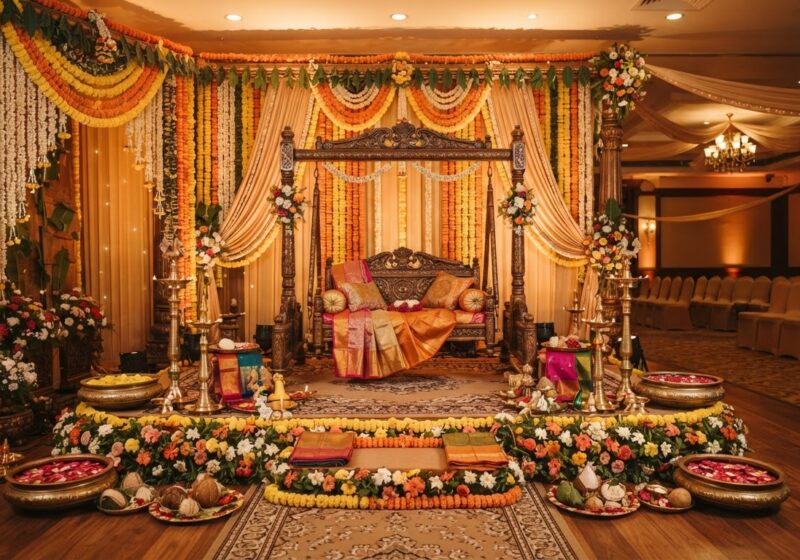
1. Traditional Temple Decorations – Cultural mandaps with traditional designs, brass elements and festive details.
2. Floral & Botanical Decorations – Beautiful arrangements using fresh flowers, greenery and floral backdrops.
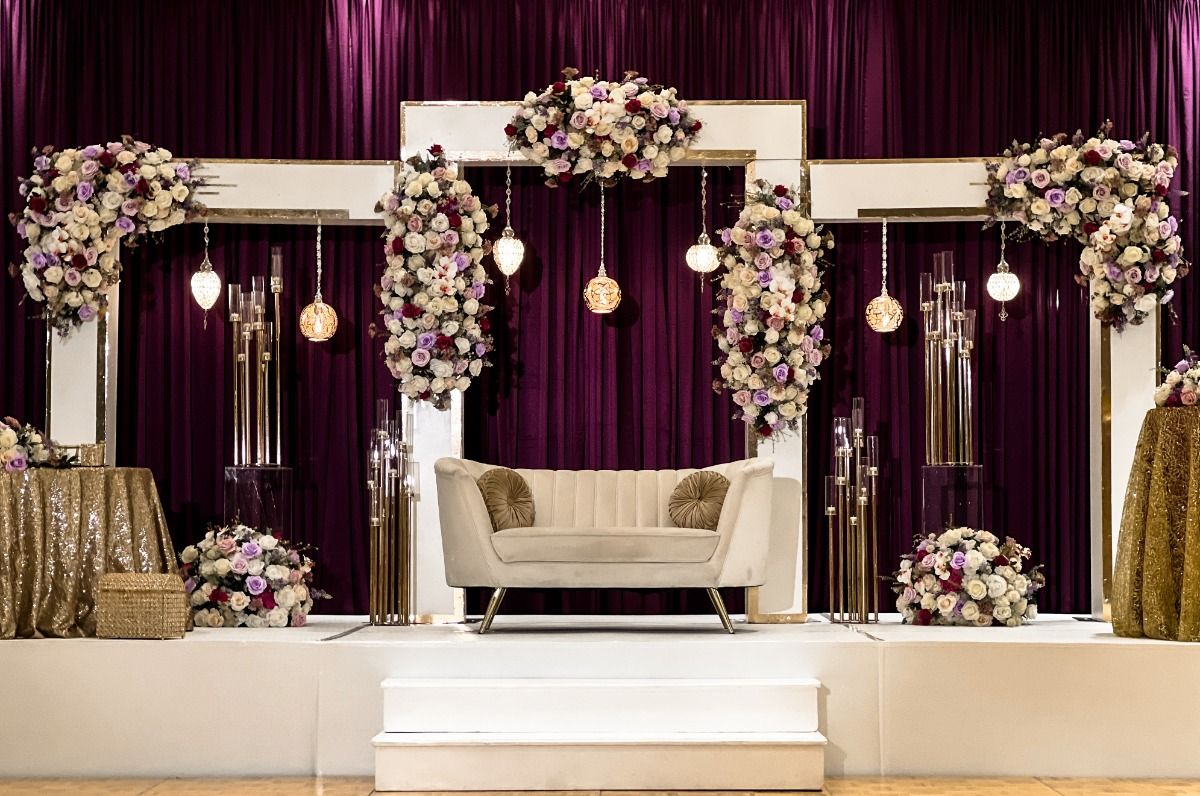
3. Minimalist Pastel Decorations – Soft colours, simple designs and elegant decorative frames.
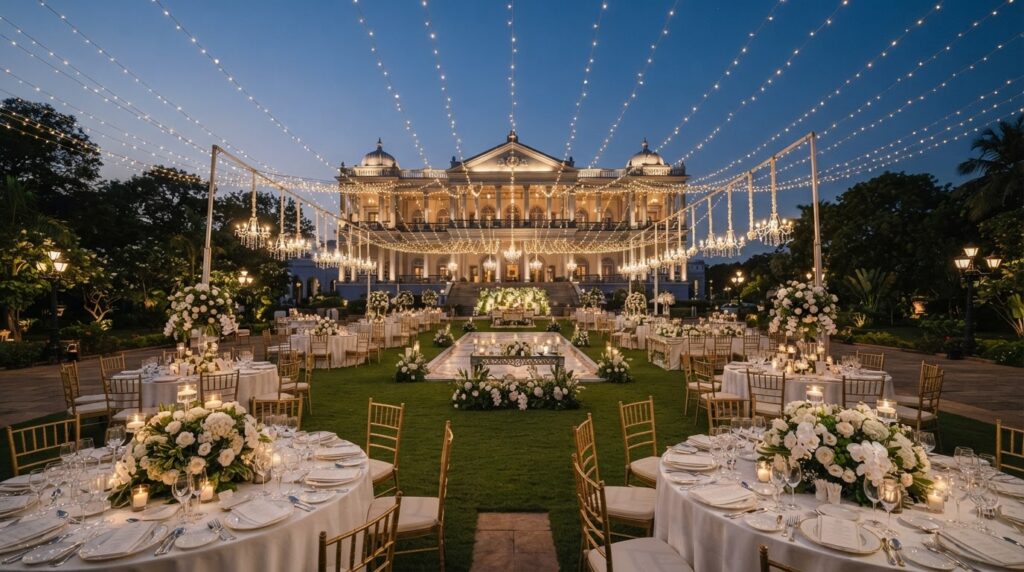
4. Royal & Heritage Decorations – Palace-inspired stages with grand seating, rich fabrics and traditional elements.
5. Bohemian & Outdoor Decorations – Natural themes with garden seating, rustic details and relaxed outdoor settings.
6. Sustainable Wedding Decorations – Eco-friendly materials, reusable props and decorations that help reduce waste.
Why Couples Struggle to Choose the Right Wedding Decor Style
Many families scroll through hundreds of online inspiration photos without considering how venue proportions, local climate, and ritual rules affect real-world execution in Hyderabad.
- Mismatched Venue Architecture: Installing ultra-modern geometric neon frames inside a traditional stone-pillared kalyana mandapam creates visual friction, whereas placing heavy temple Gopuram sets inside a sleek glass hotel ballroom in HITEC City can look out of place.
- Ignoring Heat and Humidity on Delicate Blooms: Imported pastel hydrangeas, tulips, and peonies wilt rapidly during afternoon outdoor functions in Telangana unless kept inside air-conditioned banquet halls.
- Overlooking Multi-Function Budget Allocation: Spending 70% of the decor budget on a single evening reception stage often leaves pre-wedding Haldi, Mehendi, and morning Muhurtham spaces looking bare.
6 Primary Types of Wedding Decorations Explained
Examining what are the different types of wedding decorations in detail clarifies where each style works best across a multi-day Indian celebration:
Choosing the Right Wedding Decor for Each Function
| Wedding Function | Suitable Decoration Style |
|---|---|
| Morning Telugu / Tamil Muhurtham | Traditional temple decorations or eco-friendly floral designs |
| Daytime Haldi / Pellikuthuru | Bright marigold flowers or Bohemian courtyard decor |
| Evening Sangeet / Cocktail Night | Modern LED lighting, mirror decorations and stage frames |
| Grand Evening Reception | Elegant pastel decorations or royal heritage themes |
1. Traditional Temple & Cultural Decor
Rooted in South Indian architectural heritage, this style features carved wooden pillars, temple bells (Gantalu), brass oil lamps (Samai), fresh banana saplings, mango leaf festoons (Torans), and dense strings of yellow and orange marigolds sourced from markets like Gudimalkapur. It remains the preferred choice for morning Muhurtham ceremonies because it honors sacred Vedic aesthetics and frames bright silk sarees naturally.
2. Lush Floral & Botanical Installations
Floral-centric decor uses flowers as the primary structural medium—creating suspended floral ceilings, dense rose-and-jasmine mandap pillars, and cascading flower runners along the aisle. Experienced decorators in Hyderabad typically blend hardy local chrysanthemums, jasmine buds, and roses with selective silk botanicals to keep arrangements fresh across 6-to-8-hour events.
3. Minimalist Pastel & Architectural Decor
Minimalist styling replaces heavy floral walls with clean geometric arches, pleated ivory or champagne fabric drapes, acrylic pillars, and focused clusters of white orchids, baby’s breath, and eucalyptus foliage. This understated approach works particularly well inside modern convention halls in Gachibowli and Madhapur, letting the couple’s outfits stand out without visual clutter.
4. Royal Heritage & Palace-Inspired Sets
Inspired by Deccan, Nizami, and Rajasthani palace architecture, royal decor incorporates scalloped Mehrab arches, antique gold molding, velvet drapes, crystal chandeliers, mirror-work walkways, and ornate brass urli bowls filled with floating rose petals. Families hosting grand 600-to-1,000-guest receptions at Shamshabad resorts often favor this high-impact aesthetic.
5. Bohemian & Outdoor Garden Lounge Decor
Designed for daytime Mehendi brunches, poolside Haldi events, and intimate resorts in Gandipet or Vikarabad, bohemian decor combines macramé hangings, rattan furniture, pampas grass, terracotta pots, colorful printed cushions, and warm fairy-light canopies. It encourages relaxed, informal mingling rather than rigid row seating.
6. Sustainable & Zero-Waste Decor
Eco-conscious decor eliminates synthetic green floral foam (Oasis), plastic drapes, and thermocol cutouts entirely. Instead, artisans use wet coconut coir ropes, earthen clay pots, handloom Pochampally ikat fabric runners, potted living plants, and locally harvested marigolds that are composted immediately after the event.
Comparison Table: Types of Wedding Decorations in Hyderabad
Comparing all six decoration styles across ideal venues, key materials, and Hyderabad cost ranges helps couples build a balanced multi-event budget:
| Decoration Style | Best Suited Ceremony | Core Visual Elements | Ideal Hyderabad Venue Type | Indicative Cost Range (Per Function) |
|---|---|---|---|---|
| Traditional Temple Style | Morning Muhurtham, Pellikuthuru | Brass lamps, banana stems, marigolds, carved wood | Kalyana mandapams, heritage courtyards | ₹95,000 – ₹3,50,000 |
| Lush Floral Installations | Wedding Mandap, Evening Reception | Suspended flower canopies, dense rose/jasmine pillars | AC banquet halls, luxury hotel ballrooms | ₹2,20,000 – ₹7,50,000+ |
| Minimalist Pastel | Engagement, Modern Reception | Ivory arches, pleated drapes, baby’s breath, warm lights | HITEC City & Gachibowli convention halls | ₹1,40,000 – ₹4,00,000 |
| Royal Heritage Sets | Grand Reception, Baraat Welcome | Scalloped arches, chandeliers, mirror aisle, velvet | Shamshabad resorts, large convention centers | ₹3,00,000 – ₹9,00,000+ |
| Bohemian Garden Lounge | Mehendi, Haldi, Sundowner | Macramé, rattan seating, pampas grass, fairy lights | Gandipet lakefront lawns, Vikarabad resorts | ₹85,000 – ₹2,60,000 |
| Sustainable Zero-Waste | Eco-Friendly Morning Wedding | Coir framing, terracotta, handloom fabrics, potted plants | Daylight courtyards, community halls | ₹75,000 – ₹2,20,000 |
How Much Do Wedding Decorations Cost in Hyderabad?
According to regional wedding industry benchmarks reported by WedMeGood and local event production studios, decoration typically accounts for 15% to 22% of a family’s total wedding budget.
How to Divide a ₹4.5 Lakh Wedding Decoration Budget
| Wedding Event | Estimated Budget | What It Includes |
|---|---|---|
| Haldi & Mehendi Decorations | ₹75,000–₹1,00,000 | Entrance flowers, seating area and photo corner |
| Morning Muhurtham Mandap | ₹1,50,000–₹1,80,000 | Traditional mandap, wedding aisle and dining hall decorations |
| Evening Reception Stage | ₹1,70,000–₹2,00,000 | Stage backdrop, couple sofa and decorated entrance |
Total Estimated Budget: ₹4,50,000
- Fresh vs. Hybrid Floral Pricing: Pure fresh imported floral ceilings can triple decor bills due to air-freight costs and manual labor. Mixing fresh local marigolds, jasmine, and roses at eye level with high-grade silk botanicals overhead maintains rich visual impact while saving 35% to 45%.
- Venue Panel Restrictions: Some 5-star hotels and convention centers in Hyderabad maintain an empanelled decorator list; bringing an external decorator may incur a 10% to 15% royalty fee unless negotiated during venue booking.
Step-by-Step Guide: How to Choose the Right Wedding Decoration Style
Follow this 6-step decision process to select and finalize your wedding decor themes without budget overruns or venue clashes:
1.Step 1: Lock Your Venue Architecture First (6 Months Out):Audit existing hall colors, carpets, and ceiling height.
Finalize your kalyana mandapam, hotel ballroom, or resort lawn before picking decor themes, recording exact ceiling height, wall colors, and pillar locations.
2.Step 2: Match a Specific Style to Each Function (5 Months Out):Assign distinct moods to morning and evening events.
Pair traditional temple or eco-floral styling with morning Vedic rituals, bohemian lounges with daytime Haldi/Mehendi, and minimalist pastel or royal themes with evening receptions.
3.Step 3: Coordinate Decor Colors with Bridal Attire (4 Months Out):Ensure backdrops complement bridal silk and jewelry.
Share your saree and lehenga color swatches with your decorator so stage backdrops contrast cleanly—using ivory, sage, or gold behind bright crimson or magenta outfits.
4.Step 4: Set a Zone-Wise Decor Budget Cap (3 Months Out):Allocate funds across stage, entrance, and guest zones.
Divide your decor budget intentionally: roughly 50% for the main stage/mandap, 20% for entrance welcome tunnels, 15% for lighting/trussing, and 15% for guest table centerpieces.
5.Step 5: Approve Scaled 3D Mockups and Written Specs (6 Weeks Out):Request 3D renders and itemized flower/prop lists.
Review scaled 3D visual renders alongside a written bill of quantities specifying fresh flower ratios, warm 3200K lighting fixtures, and exact stage dimensions.
6.Step 6: Lock Monsoon Contingencies and Setup Timelines (2 Weeks Out):Verify weather backups and overnight setup schedules.
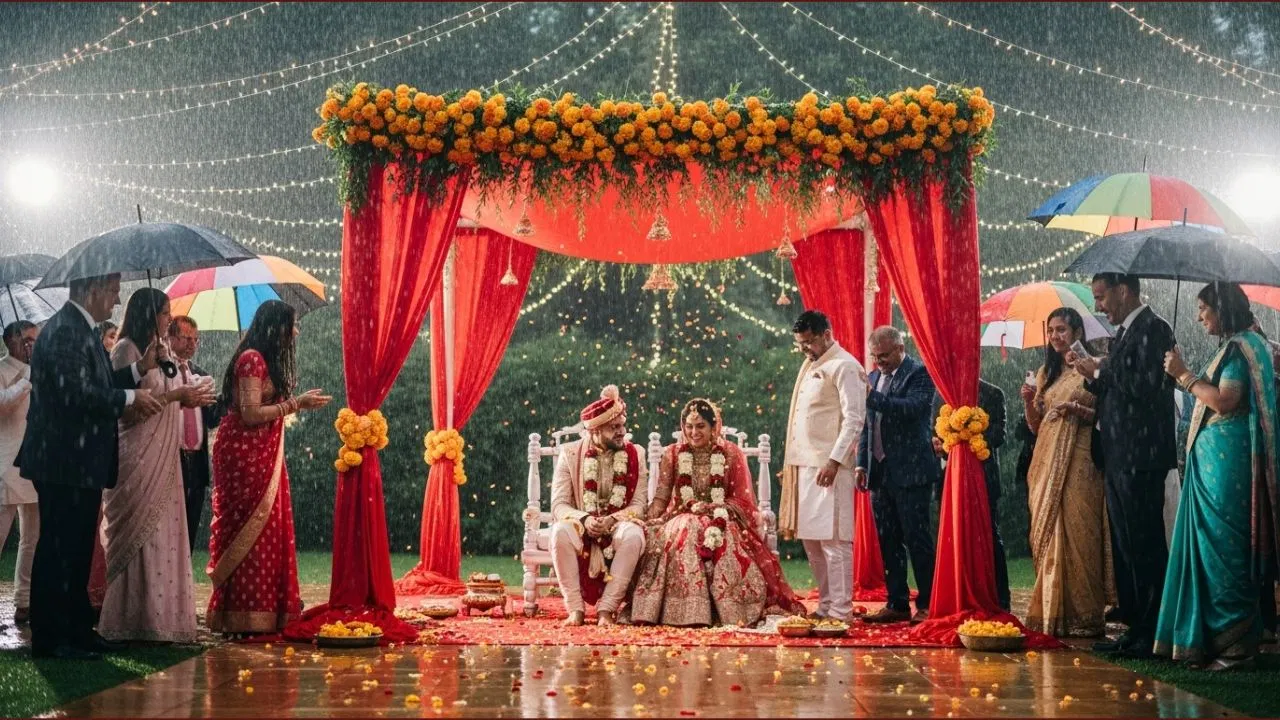
Confirm waterproof marquee options for outdoor lawns and enforce a loading schedule ensuring heavy structures finish 6 hours before the Muhurtham.
4 Common Myths About Wedding Decorations
Myth 1: “You must use 100% imported fresh flowers for a luxury wedding look.”
Fact: Over 80% of high-end wedding setups in India combine fresh flowers in close-up focal areas (like the couple’s seating and mandap pillars) with premium silk florals, carved panels, and warm lighting in overhead installations that guests view from 20 feet away.
Myth 2: “Every wedding function needs a completely new structural stage built from scratch.”
Fact: When a morning ceremony and evening reception happen in the same hall, decorators keep the core wooden or truss structure intact and swap only the central floral panels, drapes, and furniture—cutting duplicate labor costs significantly.
Separate Stage Setup vs. Same-Day Stage Change
| Two Separate Stage Setups | Same-Day Stage Change |
|---|---|
| Pay separately for stage platforms and frames. | Reuse the main stage platform and frame. |
| Takes 8 or more hours to remove and rebuild. | Change flowers and seating in around 3 hours. |
| Involves higher labour and transport costs. | Can reduce overall decoration costs by 35%–40%. |
Myth 3: “More decorative props across the hall always create a grander impression.”
Fact: Crowding every corner with unrelated props narrows guest walking aisles and clutters photographs. Focusing budget on three high-impact focal zones—the entrance walkway, the main mandap/stage, and a dedicated photo booth—delivers far stronger visual polish.
Myth 4: “Decor lighting is purely for visual mood and doesn’t affect photography.”
Fact: Colored RGB spotlights (pink, purple, or blue) cast unnatural tints onto faces and ruin expensive bridal silk colors in photos. Warm-white front-facing lights (3200K) paired with subtle ambient uplighting keep both the room and your wedding album natural.
Real-World Wedding Decoration Scenarios in Hyderabad
Scenario 1: A 350-Guest Traditional-Meets-Minimalist Wedding in Begumpet
- The Profile: A Telugu family hosting an 8:00 AM Muhurtham followed by a 7:30 PM reception at an air-conditioned banquet hall in Begumpet.
- The Decor Strategy: For the morning ceremony, decorators styled a traditional temple-inspired mandap using carved teak-finish arches, brass Samai lamps, and dense Gudimalkapur marigold garlands. In the afternoon, the crew flipped the same arch structure into a minimalist pastel reception backdrop featuring ivory pleated drapes, white roses, and warm fairy lights.
- The Outcome: Two distinct aesthetics tailored to each ceremony’s mood at a combined spend of ₹2,85,000.
Begumpet Wedding Decoration Schedule
| Time | Event & Decoration Setup |
|---|---|
| 8:00 AM – Morning Muhurtham | Traditional temple-style arch with marigold flowers and brass decorations. |
| 2:00 PM–5:30 PM – Stage Changeover | Replace flowers, change drapes and rearrange Peeta stools for the next event. |
| 7:30 PM – Evening Reception | Elegant ivory drapes, white roses and a stylish couple sofa for a minimalist look. |
Scenario 2: A 200-Guest Bohemian & Sustainable Weekend Wedding in Gandipet
- The Profile: An eco-conscious couple hosting a 2-day outdoor celebration at a lakefront property near Osman Sagar.
- The Decor Strategy: Day 1’s poolside Haldi and Mehendi featured a bohemian garden lounge with rattan chairs, macramé backdrops, and terracotta pots. Day 2’s morning ceremony utilized zero-waste decor—banana stems, coconut coir arches, handloom Pochampally runners, and potted native plants gifted to guests afterward.
- The Outcome: Zero synthetic floral foam waste and effortless harmony with the natural lakeside setting.
Pre-Booking Wedding Decorator Evaluation Checklist
Review these five essential checkpoints before signing a contract with any wedding decorator:
- [ ] Original Portfolio Verification: Have you reviewed unedited daytime and nighttime photos of past setups executed inside venues similar to yours?
- [ ] Itemized Bill of Quantities: Does the quote clearly list stage dimensions, fresh vs. artificial flower percentages, lighting fixture counts, and furniture pieces?
- [ ] Venue Royalty & Power Clarity: Have you confirmed whether the venue charges external decorator royalty fees and who provides generator power for stage spotlights?
- [ ] Weather & Wind Contingencies: For outdoor lawns in Shamshabad or Gandipet, does the plan include weighted truss bases for wind safety and waterproof canopy backups?
- [ ] Teardown & Cleanup Responsibility: Does the contract specify that the decorator’s crew will dismantle and clear all frames, wires, and floral waste before venue checkout?

Frequently Asked Questions
What are the different types of wedding decorations popular in India?
The six most popular types of wedding decorations in India are traditional temple-style mandaps, lush floral installations, minimalist pastel architectural setups, royal heritage palace themes, bohemian outdoor garden lounges, and sustainable zero-waste decor. Couples typically assign different styles across Haldi, Mehendi, Muhurtham, and Reception functions.
Which wedding decoration style works best for a traditional Telugu morning wedding?
Traditional temple-style decor—featuring four-pillar wooden or brass mandaps, fresh banana saplings, mango leaf torans, brass lamps, and vibrant yellow and orange marigolds—works best for morning Telugu Muhurthams because it complements Vedic rituals and bright silk sarees.
How much does wedding decoration cost in Hyderabad for a mid-size wedding?
For a 250-to-400-guest wedding in Hyderabad, complete decoration across pre-wedding, Muhurtham, and reception functions typically costs between ₹2.5 Lakhs and ₹6.5 Lakhs, depending on whether you choose local seasonal marigolds and fabric drapes or dense imported floral ceilings.
What is the difference between traditional and minimalist wedding decor?
Traditional wedding decor relies on rich auspicious colors (marigold yellow, crimson, emerald), temple iconography, brass props, and dense floral garlands. Minimalist wedding decor uses clean geometric arches, neutral ivory or pastel drapes, sparse greenery, and warm architectural lighting to create an uncluttered modern backdrop.
How can we reduce wedding decoration costs without making the venue look empty?
Focus 70% of your decor budget on three high-visibility focal points—the main mandap/stage, the entrance welcome walkway, and a designated photo backdrop—while using warm-white uplighting and clean fabric draping across secondary walls instead of expensive floral panels.
Are artificial or silk flowers acceptable in modern Indian wedding decor?
Yes. Experienced decorators routinely pair fresh local flowers (marigolds, jasmine, roses) at eye level where guests stand and take close-up photos with high-grade silk botanicals in high ceiling installations, keeping costs manageable while preventing wilting in warm weather.
How early should we finalize our wedding decoration theme and vendor in Hyderabad?
Finalize your decorator and core theme concepts 4 to 6 months before your wedding date—especially during peak Shubha Muhurtham months between November and February—so custom carpentry, fabric dyeing, and wholesale flower orders are secured smoothly.
What decor elements are essential for a sustainable, eco-friendly wedding?
Sustainable wedding decor replaces green synthetic floral foam and plastic backdrops with coconut coir framing, locally harvested marigolds and jasmine, terracotta pots, brass lamps, handloom textiles, and potted living plants that can be replanted after the celebration.
Understanding what are the different types of wedding decorations empowers you to match every function’s visual mood to your venue’s architecture, local climate, and cultural traditions. Whether you gravitate toward the timeless warmth of a traditional marigold-and-brass mandap, the clean elegance of minimalist pastel arches, or a zero-waste botanical setup, aligning your design choices with realistic zone budgets and warm photography lighting ensures effortless polish. Armed with this understanding, you are well positioned to collaborate with your decorator and design a cohesive, memorable wedding atmosphere.


 Tekula Prashanth Reddy