
Table of Contents
Eco-Friendly Event Planning Practices Hyderabad: The Practical Guide
Executing a celebration in Telangana requires balancing cultural hospitality with responsible waste management. Implementing eco-friendly event planning practices in Hyderabad allows families, couples, and corporate organizers to reduce single-use plastic waste, minimize leftover food loss, and lower energy consumption without sacrificing elegance.
From sourcing potted flora along the Shamshabad nursery belt to coordinating surplus food redistribution with local NGOs in Hitec City, this guide outlines the practical, step-by-step methods required to host a sustainable gathering in Hyderabad.

What Are Eco-Friendly Event Planning Practices?
Eco-friendly event planning practices are structured strategies designed to reduce the environmental footprint of gatherings such as weddings, corporate conferences, and milestone celebrations. These practices prioritize waste diversion from landfills, eliminate single-use plastics, utilize locally sourced organic materials, optimize energy efficiency, and ensure ethical surplus food distribution through certified local partners.
Why Sustainable Event Planning Matters in Hyderabad
Large celebrations across Telangana generate substantial physical waste. A standard 500-guest wedding or corporate gala in regions like Jubilee Hills, Gachibowli, or Kompally produces approximately 300 to 600 kilograms of solid waste in a single day.
Much of this waste consists of single-use PET water bottles, non-biodegradable floral foam (oasis) used in stage backdrops, synthetic polymer drapes, and unsegregated food waste that ends up in municipal landfills like Jawaharnagar.
Standard 500-Guest Event Output         Green Event Target Output
├── 1,500 Single-Use Plastic Bottles    ├── 0 Plastic Bottles (Glass/Refill Hubs)
├── 40 kg Non-Biodegradable Foam        ├── 0 Floral Foam (Kenzan/Potted Plants)
├── 150 kg Unsegregated Food Waste      ├── 0 Landfill Food (Compost + NGO Transfer)
└── 80 kg Synthetic PVC/Flex Banners    └── 0 PVC (Cloth/Digital LED Backdrops)
Adopting green practices addresses several key challenges:
- Resource Conservation: Swapping single-use items for reusable or compostable alternatives keeps tons of material out of local drainage systems and landfills.
- Cost Efficiency: Sourcing seasonal, local flowers and renting reusable decor items reduces transportation fees and lowers overall decor budgets.
- Compliance with Municipal Standards: Alignment with Greater Hyderabad Municipal Corporation (GHMC) single-use plastic bans protects organizers and venues from unexpected regulatory fines.
- Positive Cultural Alignment: Sustainable choices align well with traditional South Indian values that honor natural elements—such as serving meals on banana leaves and using fresh marigolds, mango leaves, and clay brassware.
Core Pillars of Sustainable Event Execution
Integrating sustainability into an event requires looking at every vendor category. Below is a detailed breakdown of actionable practices across five primary operational areas.
                          ┌── 1. Venue & Energy Efficiency
                          ├── 2. Zero-Foam Decor & Floral Design
Eco-Event Architecture ───┼── 3. Sustainable Catering & Water Management
                          ├── 4. Waste Segregation & Food Recovery
                          └── 5. Green Invitations & Return Gifts
1. Venue Selection and Energy Efficiency
Your choice of venue lays the groundwork for your event’s total environmental footprint.
- Daylight Optimization: Schedule daytime rituals such as Pellikuthuru, Haldi, or morning conference sessions in open-air lawns, glass courtyards, or heritage venues in Sainikpuri or Gandipet. This reduces daytime generator use and heavy artificial lighting demands.
- Renewable Energy Integration: Prioritize convention centers and hotels equipped with rooftop solar installations or grid-tied green energy options.
- HVAC Management: For enclosed AC banquet halls, maintain air conditioning set points at a comfortable 24°C rather than over-cooling to 18°C. This simple adjustment reduces compressor energy draw by 20% to 30% over a multi-hour function.
2. Zero-Foam Decor and Floral Sourcing
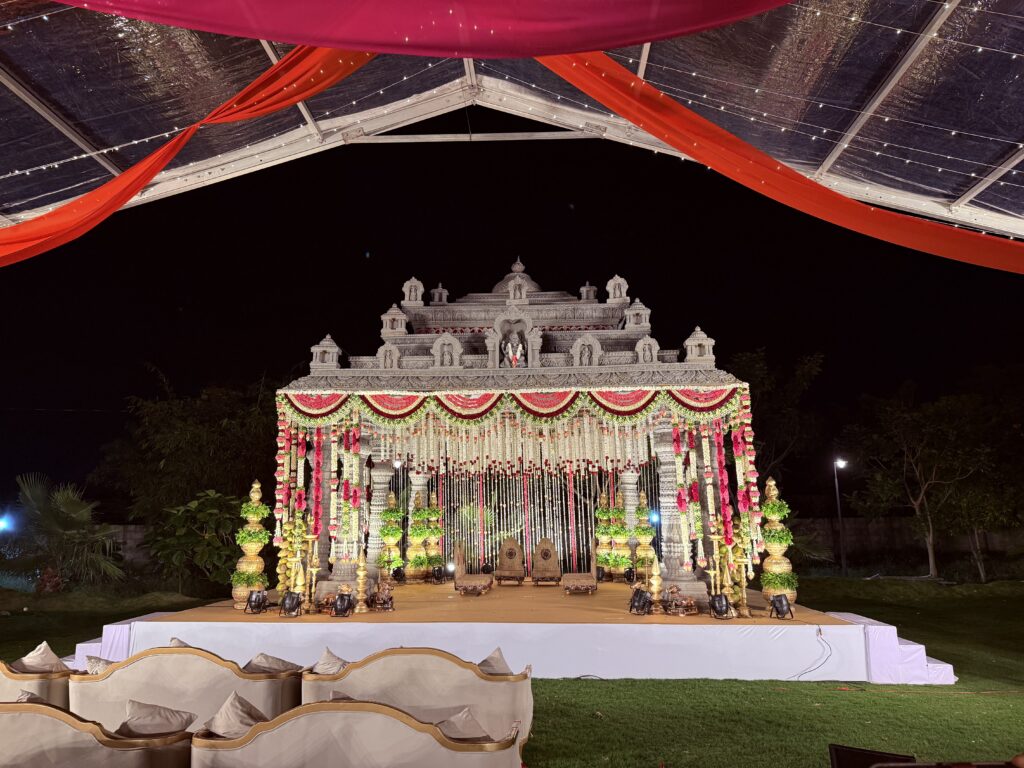
Conventional stage, mandap, and entrance décor frequently rely on phenolic floral foam, synthetic cloth, and imported flowers shipped in temperature-controlled air freight.
- Eliminating Floral Foam: Floral foam (oasis) is a non-biodegradable microplastic that breaks down into toxic elements in wastewater. Replace it with reusable metal pin frogs (kenzan), chicken wire frames, terracotta pots, or water-filled glass cylinder vases.
- Local and Seasonal Sourcing: Source fresh flowers directly from regional wholesale markets such as Gudimalkapur or local farms near Kattedan. Utilizing native marigolds, chrysanthemums, tuberoses (sampinga), and jasmine reduces cold-chain transit emissions.
- Potted Plants and Rental Structures: Incorporate living potted palms, ferns, and flowering plants sourced from nurseries along the Kadiyam or Shamshabad belts. These can be rented for the event and returned undamaged afterward.
- Upcycled Fabrics: Replace synthetic nylon or PVC drapes with unbleached kora cotton, natural jute, woven bamboo screens, or traditional handloom fabrics.
┌───────────────────────────┬───────────────────────────────────┬────────────────────────────────┐
│ Decor Element             │ Conventional Practice             │ Sustainable Alternative        │
├───────────────────────────┼───────────────────────────────────┼────────────────────────────────┤
│ Structural Floral Support │ Phenolic Floral Foam (Oasis)      │ Kenzan, Wire Mesh, Water Vases │
├───────────────────────────┼───────────────────────────────────┼────────────────────────────────┤
│ Stage Backdrops           │ Printed PVC Flex Banners          │ Brass Screens, Live Greens     │
├───────────────────────────┼───────────────────────────────────┼────────────────────────────────┤
│ Fabric Drapes             │ Synthetic Polyester & Nylon       │ Kora Cotton, Handloom Jute     │
├───────────────────────────┼───────────────────────────────────┼────────────────────────────────┤
│ Aisle Centerpieces        │ Single-Use Cut Flowers            │ Rented Potted Plants in Clay   │
└───────────────────────────┴───────────────────────────────────┴────────────────────────────────┘
3. Low-Impact Catering and Water Management
Catering operations account for a significant portion of an event’s total material output and water consumption.
- Plastic-Free Water Systems: Replace 200ml plastic bottles with 20-liter purified water dispensers paired with copper pitchers, glass carafes, or stainless steel tumblers. For formal sit-down dinners, utilize reusable glass bottles with custom capping systems.
- Compostable and Traditional Dinnerware: For traditional sit-down meals (panthi dining), use fresh, un-lined banana leaves. For buffet arrangements, opt for sturdy Areca palm leaf plates or rented stainless steel thalis. Avoid PE-coated paper plates, which cannot be easily composted or recycled.
- Seasonal, Locally Sourced Menus: Design menus around regional, seasonal produce. Incorporate traditional Telangana and Andhra specialties that highlight local millets (jowar, bajra, ragi), seasonal vegetables, and locally produced dairy.
4. Waste Segregation and Food Recovery
Managing leftover food and waste requires clear, pre-arranged logistics before the event begins.
- On-Site Sorting Stations: Place clearly labeled, three-bin waste stations (Wet/Organic, Dry/Recyclable, Reject/Non-Recyclable) near catering stations, kitchen backyards, and bar counters. Staff these stations with trained personnel to ensure guests and caterers sort waste accurately.
- Surplus Food Logistics: Partner with verified food recovery NGOs in Hyderabad (such as No Food Waste or Robin Hood Army) at least 20 days prior to the event. Establish temperature-controlled storage and set up designated pickup times immediately following meal services.
- On-Site Organic Composting: Arrange for organic waste, banana leaves, and spent floral decor to be transported to local composting units or municipal organic processing sites, diverting wet waste away from landfills.
5. Digital Invitations and Eco-Friendly Return Gifts
Stationery and return favors often end up discarded shortly after the event concludes.
- Digital Invitations: Replace multi-page cardstock invitations with interactive website portals, video invites, or PDF cards. Use print invitations sparingly, reserving them primarily for senior family members, and select recycled or seed-embedded paper.
- Thoughtful Return Gifts: Replace plastic knick-knacks with functional, earth-friendly favors:
- Potted tulsi, jade, or herbal plants in terracotta planters.
- Seed-paper notebooks paired with seed pens.
- Organic jaggery, artisanal preserves, or cold-pressed oils in glass jars.
- Handwoven jute bags crafted by local artisan collectives.
How to Implement Sustainable Event Planning Practices Step-by-Step
Transforming your event from a conventional setup into a green celebration requires an organized, step-by-step approach.
[Phase 1: Audit & Venue] ──> [Phase 2: Decor & Caterer] ──> [Phase 3: NGO Setup] ──> [Phase 4: Day-of Sorting]
Step 1: Audit Expected Waste Streams and Set Target Benchmarks
- Estimate guest counts and analyze expected waste generation across food, decor, stationery, and beverage categories.
- Establish clear metrics before signing vendor agreements (e.g., “Zero single-use plastic water bottles,” “100% food surplus recovery,” or “Zero floral foam usage”).
Step 2: Select a Compliant Venue with Green Infrastructure
- Inspect venue facilities in key event corridors such as Shamirpet, Gandipet, or Hitec City.
- Confirm the presence of functional on-site wet waste processing, dedicated sorting spaces behind kitchen areas, and sufficient natural lighting for daytime events.
Step 3: Contract Decorators Experienced in Eco-Friendly Setups
- Include explicit clauses in decor contracts prohibiting PVC flex banners, single-use plastic props, and non-biodegradable floral foam.
- Request a material plan specifying the use of brass structures, terracotta pots, kora fabrics, and rented live greenery.
Step 4: Finalize Food Surplus Protocols with Local NGOs
- Contact local food recovery networks 15 to 30 days before the event date.
- Establish safety protocols: food must be preserved in clean, temperature-controlled containers, logged for hygiene compliance, and collected within 90 minutes of buffet service completion.
Step 5: Enforce Zero-Single-Use-Plastic Catering Standards
- Require caterers to use stainless steel cutlery, glass drinkware, and real banana leaves or heavy-duty Areca palm plates.
- Set up water refill stations throughout the venue, ensuring glass pitchers or copper urns are restocked regularly during the event.
Step 6: Deploy On-Site Sorting and Monitor Day-of Operations
- Position color-coded waste bins in high-traffic catering zones and assign dedicated sorting staff to guide guests.
- Conduct a final walkthrough post-event to confirm that wet waste is routed to composting facilities and dry recyclables are collected by authorized local recyclers.
4 Common Myths About Sustainable Event Planning
Myth 1: “Eco-friendly events always cost significantly more than traditional setups.”
Fact: Going green often redistributes your budget rather than increasing it. Savings achieved by eliminating single-use plastic bottles, printed cardstock invites, and disposable cutlery offset the costs of hiring food recovery services, renting real glass/steel tableware, or sourcing potted plants.
Myth 2: “Banana leaves and compostable plates look cheap or informal.”
Fact: High-end events across South India regularly incorporate traditional banana leaf dining (panthi) or polished Areca palm plates. When set against natural wood tables, brass urns, and fresh marigold arrangements, eco-friendly tableware presents an authentic, elegant, and culturally rich aesthetic.
Myth 3: “Real flowers are always eco-friendly because they are natural.”
Fact: Cut flowers shipped internationally or across state lines often carry a high carbon footprint due to refrigerated transport. Furthermore, flowers treated with pesticides or mounted on phenolic foam (oasis) cannot be easily composted. Sourcing local, pesticide-free blooms mounted on chicken wire or kenzan ensures true environmental sustainability.
Myth 4: “Digital invitations are inappropriate for traditional elders.”
Fact: A hybrid approach works best. Utilizing digital invitations, RSVP portals, and broadcast channels for 80% of your guest list drastically cuts paper waste, while a small run of seed-paper or recycled paper invitations can be printed specifically for senior family members.
Real-World Event Planning Scenarios
Scenario 1: The Zero-Plastic 400-Guest Telugu Wedding in Gandipet
- The Setup: A family planned a 400-guest wedding at a lawn venue near Gandipet Lake, prioritizing zero lake pollution and minimal solid waste generation.
- Execution: Replaced all plastic water bottles with 20-liter dispensers and copper carafes across 20 service tables. Decor relied entirely on brass vessels, marigold garlands, and rented potted palms. Dinner was served on traditional banana leaves with stainless steel cutlery.
- Results: Diverted over 1,200 plastic bottles and 45 kilograms of floral foam from local landfills. Organic waste was routed directly to an on-site composting unit.
Scenario 2: The Sustainable Corporate Annual Gala in Hitec City
- The Setup: A technology firm hosted a 250-person corporate award gala in Hitec City aiming for carbon-conscious execution.
- Execution: Replaced printed backdrops with dynamic LED video walls. Standard paper badges were swapped for bamboo lanyards attached to seed-paper name tags. Food surplus was packed into insulated containers and handed over to an NGO within two hours of event closure.
- Results: Achieved a 95% reduction in dry waste generation compared to previous corporate galas, establishing an internal company benchmark for future events.
How to Apply Sustainable Practices to Your Next Event
To get started with your green event plan, follow this practical checklist:
- Conduct a Vendor Alignment Check: Before paying deposits, ask caterers, decorators, and venue managers about their waste handling policies and single-use plastic alternatives.
- Download an Event Waste Tracker: Keep a simple spreadsheet tracking estimated guest counts, required plate counts, water station placements, and NGO collection times.
- Draft a Vendor Agreement Addendum: Include specific sustainability guidelines in your written contracts (e.g., banning floral foam, requiring glass or copper water service, and mandating proper waste segregation).
- Appoint a Sustainability Lead: Assign a family member, team member, or event coordinator to oversee waste sorting stations and manage food recovery logistics on the day of the event.
Frequently Asked Questions
How much do eco-friendly event planning practices in Hyderabad cost?
Implementing sustainable practices typically adjusts total event budgets by -5% to +10%. Money saved on printed invitations, single-use plastic bottles, and cut flowers often balances out the higher rental costs for reusable cutlery, compostable dinnerware, and food distribution logistics.
Can a traditional 500-guest Telugu wedding go completely zero waste?
Yes. A 500-guest Telugu wedding can achieve up to 90% waste diversion by serving meals on traditional banana leaves or Areca palm plates, using cloth drapes and brass decor, deploying water refill stations, and contracting local food recovery networks.
What is the best alternative to floral foam for stage and mandap decor?
The best alternatives to non-biodegradable floral foam (oasis) include kenzan (metal pin frogs), chicken wire structures, terracotta pots, glass vases filled with water, and re-rootable potted plants that can be returned to nurseries after the event.
How early should I contact food recovery NGOs in Hyderabad before an event?
You should register your event with local food recovery organizations at least 15 to 30 days in advance. This allows the NGO to assign volunteers, arrange insulated transport vehicles, and verify distribution centers near your venue.
Are Areca leaf plates better than paper plates for large gatherings?
Yes. Areca palm leaf plates are 100% natural, chemical-free, sturdy enough for heavy Indian gravies, and compost within 60 to 90 days. Paper plates are often lined with a thin plastic (polyethylene) film that prevents them from being recycled or composted easily.
How do I handle water service for guests without using plastic bottles?
Replace 200ml plastic water bottles with 20-liter purified water dispensers connected to copper pitchers, glass carafes, or personalized steel bottles. For high-end events, rental glass bottle stations with custom capping options provide a clean, elegant presentation.
What eco-friendly return gift options work best for South Indian functions?
Popular eco-friendly return gifts include potted tulsi or jade plants in terracotta pots, seed-paper stationery, handwoven jute bags, organic terracotta diyas, and locally sourced artisanal preserves or jaggery sweets in reusable glass jars.

Do eco-friendly venue policies affect catering licenses in Telangana?
Telangana state municipal regulations strictly enforce bans on single-use plastics under 120 microns. Venues enforcing green policies comply with FSSAI hygiene standards and GHMC waste handling guidelines, reducing the risk of municipal fines during large gatherings.
Hosting a memorable celebration in Hyderabad does not require compromising on style, traditional hospitality, or scale. By adopting structured waste management, sourcing local materials, eliminating single-use plastics, and partnering with community food recovery networks, you can execute a smooth, elegant gathering. Armed with this practical framework, you are well positioned to plan an eco-friendly event that honors both your guests and the local environment.

Leave a Comment