

Table of Contents
How Wedding Decor Planning Works: A Complete Operational Guide
Understanding how wedding decor planning works begins with recognizing that visual styling in Indian celebrations is an intricate engineering and logistical process rather than just choosing color palettes and fresh flowers. From conceptualizing 3D renders to coordinating late-night structural installations across Hyderabad’s premier banquet halls and open lawns, executed decor balances aesthetic vision with strict venue timelines, safety parameters, and budget allocations.

What Is Wedding Decor Planning?
Understanding how wedding decor planning works involves studying the systematic management of visual, structural, and environmental design elements for a wedding. It translates a couple’s vision into technical blueprints, material sourcing, floral design, lighting production, and on-site execution across multi-day ceremonies while operating within venue rules, structural constraints, and strict timelines.
+-----------------------------------------------------------------------------------+
|                        THE WEDDING DECOR PLANNING MATRIX                          |
+------------------------------------+----------------------------------------------+
| Phase 1: Conceptualization         | Mood boards, 3D renders, spatial allocation  |
| Phase 2: Technical & Material      | Fabric, trussing, floral selection, lighting |
| Phase 3: Budget Optimization       | High-impact focal points vs peripheral fills |
| Phase 4: On-Site Production        | Night-shift builds, rigging, floral assembly |
+------------------------------------+----------------------------------------------+
Why People Get Wedding Decor Planning Wrong
In the Indian wedding ecosystem—particularly within high-scale celebrations in regions like Hyderabad, Bengaluru, and Delhi—decor often accounts for 20% to 35% of the total event budget. Yet, couples frequently miscalculate what goes into executing those visuals.
The most common misconception is treating decor as a retail purchase: assuming a ₹500,000 quote buys ₹500,000 worth of flowers and fabric. In reality, decor estimates cover skilled fabrication labor, structural trussing, transportation, overnight venue loading, municipal permits, power generation, and specialized lighting teams.
When couples look purely at Pinterest photos without understanding structural scale, ceiling clearances, or floral shelf life under intense summer heat, budgets break and expectations misalign. Understanding how wedding decor planning works behind the scenes prevents these costly mid-way pivots.
The Core Pillars of Indian Wedding Decor Architecture
Executing a multi-ceremony Indian wedding requires managing several distinct design domains simultaneously. Each domain comes with its own technical demands and vendor requirements.
+---------------------------------------------------------------------------------+
|                       4 CORE PILLARS OF WEDDING DECOR                           |
+---------------------------------------------------------------------------------+
| [ Structural Fabrications ] -> Mandaps, stage backdrops, entry tunnels, trusses |
| [ Floral Architecture ]     -> Fresh vs artificial mix, cold-chain logistics    |
| [ Ambient & Stage Lighting ] -> Intelligent fixtures, power loads, color temps   |
| [ Spatial Soft Furnishings ]-> Draping, table linen, lounge layouts, floor covers|
+---------------------------------------------------------------------------------+
1. Structural Fabrication and Stage Backdrops
The main stage and ceremonial mandap serve as the visual focal points for the entire event. Fabrication involves heavy steel framing, wooden ply structures, CNC-cut panels, and custom-painted backdrops.
- Weight Distribution: Heavy backdrops require counter-weighted bases to prevent tipping on carpeted hotel ballrooms or soft turf lawns.
- Proportion Ratios: Stage backdrops must scale proportionally to the venue’s width and ceiling height. A 12-foot backdrop looks dwarfed in a 24-foot ceiling convention center in Gachibowli or Shamshabad.
2. Floral Architecture and Sourcing Dynamics
Floral arrangements define the scent, texture, and mood of traditional South Indian Pelli or North Indian Sangeeth setups.
- Fresh vs. Artificial Blends: Modern decor strategies use an 80/20 or 70/30 mix—placing premium fresh blooms (like imported Dutch roses, hydrangeas, and tuberoses) at eye-level contact points, while high-density artificial florals cover elevated structural trusses.
- Cold-Chain Management: High summer temperatures require conditioned storage vans and late-stage floral insertion, especially for delicate blooms used on the mandapam.
3. Ambient, Architectural, and Functional Lighting
Lighting transforms flat structural elements into three-dimensional experiences. Without professional lighting design, expensive floral setups lose impact under harsh venue floodlights.
- Color Temperature Matching: Traditional rituals require warm amber tones (2700K–3000K) to complement marigolds, brass fixtures, and silk Kanjeevarams. Modern Sangeeth stages utilize cooler, intelligent moving-head fixtures (5600K) sync’d to performance tracks.
- Power Utility Loads: High-intensity LED walls, profile spotlights, and halogen floods require dedicated 62.5 kVA to 125 kVA generator back-ups separate from the venue’s internal grid.
4. Spatial Layouts and Soft Furnishings
Managing guest flow requires deliberate spatial planning. Decor planners map distinct zones for seated dining, lounge spaces, live food stations, and photo opportunities.
- Seating Variations: Combining round-table arrangements (for intimate guest conversations) with theater-style rows facing the main stage optimizes ballroom space.
- Draping and Fabric Weight: Using flame-retardant materials like chiffon, velvet, or heavy georgette ensures clean lines and safety around open ceremonial flames (Havan or Homam).

Comparing Decor Execution Across Key Indian Wedding Functions
Each wedding function carries a distinct aesthetic theme, material mix, and functional requirement.
| Function | Primary Aesthetic Theme | Typical Material Palette | Technical Priority | Key Focus Area |
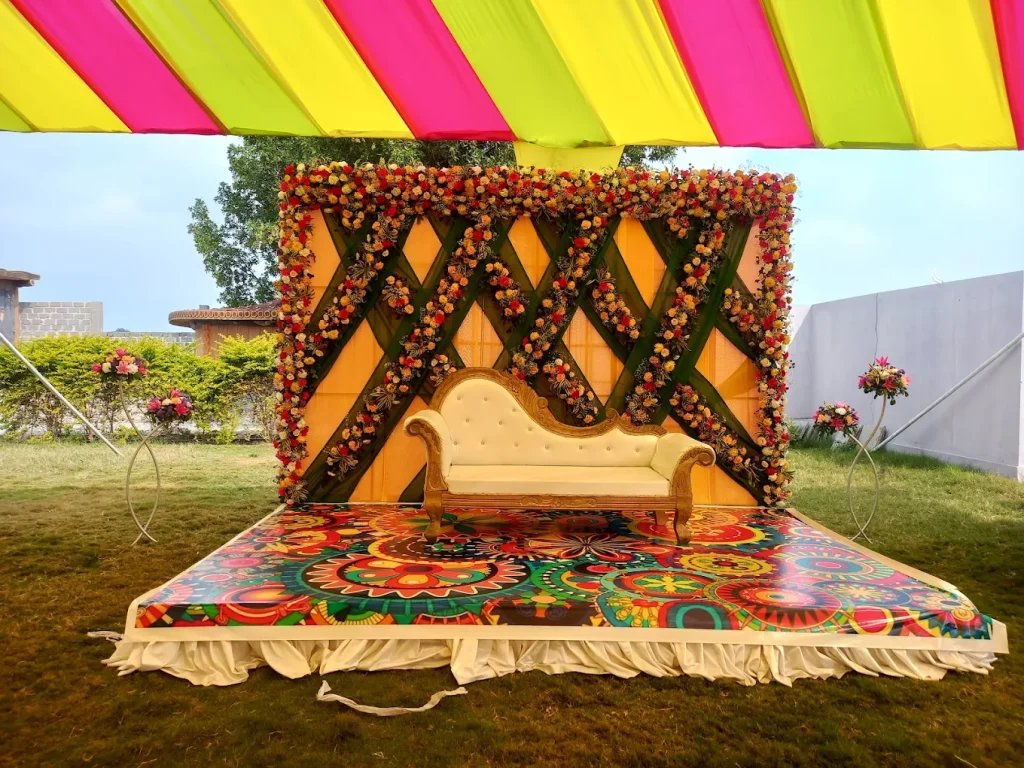
| Haldi / Pellikuthuru | Vibrant, organic, culturally playful | Yellow marigolds, brass vessels, printed drapes, cane furniture | Weather resistance & stain-friendly seating | Interactive backdrop & seating tub |
| Sangeeth / Cocktail | High-energy, glamorous, nocturnal | LED screens, acrylic flooring, metallic trusses, neon accents | Sound-sync lighting & stage weight limits | Performance stage & dance floor |
| Main Wedding (Pelli) | Traditional, sacred, heritage-inspired | Fresh jasmine, tuberoses, banana trees, brass lamps, silk drapes | Fire safety around Havan & clear camera angles | Mandapam & entrance pathway |
| Reception | Regal, contemporary luxury | Cold-cut crystal, orchids, velvet draping, warm ambient wash | Overhead rigging & balanced floor illumination | Grand entrance & main stage backdrop |
How Wedding Decor Planning Works: A 6-Step Execution Timeline
Planning and installing wedding decor follows a strict sequence. Missing a technical step early in the process creates delays during the overnight setup shift.
+-----------------------------------------------------------------------------------+
|                        DECOR EXECUTION TIMELINE AT A GLANCE                       |
+-----------------------------------------------------------------------------------+
| Step 1 (Months Out): Venue Spatial Audit & Structural Blueprinting                |
| Step 2 (Months Out): Mood Boarding, Color Palette & 3D Render Sign-Off            |
| Step 3 (Weeks Out) : Material Inventory Sourcing & Structural Fabrication         |
| Step 4 (T-24 Hours): On-Site Load-In, Rigging & Base Structural Build             |
| Step 5 (T-6 Hours) : Floral Dressing, Soft Furnishings & Lighting Alignment       |
| Step 6 (Post-Event): Systematic De-Rigging, Waste Sorting & Venue Handover        |
+-----------------------------------------------------------------------------------+
Step 1: Venue Spatial Audit and Technical Blueprinting
Before designing a single element, the decor team conducts an on-site technical inspection of the venue.
- Measure total floor area, ceiling clearance, stage dimensions, and entry doorway clearances.
- Identify overhead hanging points (rigging points) and calculate maximum weight load limits per truss.
- Locate primary power distribution panels, emergency exits, and freight elevator dimensions for smooth material movement.
Step 2: Concept Development, 3D Rendering, and Material Allocation
Translating abstract ideas into concrete visual plans ensures complete alignment between the client and production teams.
- Develop mood boards establishing the color palette, texture density, and cultural motifs.
- Generate scaled 3D CAD renders showing exact stage proportions, guest sightlines, and camera framing angles.
- Itemize the bill of quantities (BOQ), separating rental assets (furniture, trusses) from consumable items (fresh flowers, custom prints).
Step 3: Off-Site Carpentry, Printing, and Pre-Fabrication
To meet tight on-site setup windows, major structural elements are pre-built off-site in production warehouses.
- Frame wooden structures, spray-paint decorative panels, and assemble custom metal props.
- Print large-format vinyl carpets, custom flex backdrops, and stationery elements.
- Pre-bundle electrical cabling, prep light fixtures, and conduct bench-tests for DMX lighting controllers.
Step 4: On-Site Load-In, Heavy Rigging, and Frame Construction
Production teams arrive at the venue during allocated load-in hours—often starting at midnight for next-day evening events.
- Transport raw materials via covered freight trucks and clear venue access routes.
- Erect aluminum box trusses, position base plates, and hoist overhead lighting frames using chain blocks.
- Secure heavy backdrops, build stage extension platforms, and lay down sub-flooring.
Step 5: Floral Detailing, Draping, and Technical Testing
With structural frames safely locked in place, specialized teams apply fine aesthetic touches.
- Drape fabrics using heavy-duty industrial staplers, tension clamps, and steam irons.
- Insert fresh floral stems into water-soaked foam blocks attached to structural frames just hours before guest arrival.
- Focus spotlight beams onto main stage seating, adjust color washes, and eliminate glare along main camera angles.
Step 6: Post-Event Breakdown, Waste Management, and Handover
Once the event concludes, systematic strike-down begins immediately to avoid venue penalty fees.
- Dismantle delicate lighting fixtures and sound equipment first, packing them into padded flight cases.
- Strip floral foam and sort organic floral waste from reusable plastic, metal, and wooden framework.
- Load out structural materials, sweep the venue floor clean, and complete a final joint handover inspection with venue management.
4 Common Wedding Decor Myths Debunked
Clarifying common misconceptions helps couples make informed decisions during vendor meetings.
Myth 1: “Artificial flowers look cheap and should never be used.”
The Reality: High-grade latex, silk, and 3D-printed synthetic florals match the texture and appearance of natural blooms from standard viewing distances. Professional decorators strategically mix fresh, fragrant blooms at eye-level contact points while using high-density artificial florals on elevated 20-foot ceilings, saving significant budget without sacrificing visual quality.
Myth 2: “Decor costs are purely based on venue size.”
The Reality: Venue dimensions dictate raw floor coverage, but design complexity, material density, and structural engineering drive the actual cost. A minimalist design in a massive 20,000-square-foot convention center can cost far less than an intricately carved, floral-dense, custom-fabricated setup inside an intimate 4,000-square-foot hotel ballroom.
Myth 3: “Pinterest photos can be replicated exact-to-exact for any budget.”
The Reality: Pinterest images often feature ultra-luxury installations built with unlimited budgets, custom imported florals, and specific architectural conditions. Replicating those visuals requires adapting the design to match local material availability, ceiling heights, and realistic budget parameters without compromising structural stability.
Myth 4: “Booking decor through a venue’s in-house panel is always cheaper.”
The Reality: Venue-approved decor panels offer convenience and familiarity with site rules, but they often work off fixed, template designs. Independent decor planners can negotiate custom fabrications, source materials directly from wholesale markets, and deliver tailored visual concepts at competitive rates.
Real-World Decor Execution Scenarios
Examining real-world production setups illustrates how decor concepts adapt to specific cultural and logistical requirements.
+---------------------------------------------------------------------------------+
|                         REAL-WORLD PLANNING SCENARIOS                           |
+---------------------------------------------------------------------------------+
| Scenario A: 800-Guest Traditional South Indian Wedding (Pelli)                  |
| Focus: Fresh marigold/jasmine mandapam, brass elements, low warm lighting       |
|                                                                                 |
| Scenario B: 400-Guest High-Energy Sangeeth Night                               |
| Focus: Custom LED walls, heavy overhead trussing, acrylic dance floor           |
|                                                                                 |
| Scenario C: 150-Guest Intimate Open-Air Garden Haldi                           |
| Focus: Cane seating, printed drapes, eco-conscious floral installations         |
+---------------------------------------------------------------------------------+
Scenario A: The 800-Guest Traditional South Indian Pelli
- The Brief: A traditional morning ceremony requiring an authentic, cultural atmosphere in a large Hyderabad convention center.
- The Decor Plan: A four-pillar traditional mandapam wrapped in fresh marigolds, local jasmine (Mallepoolu), and banana leaves, anchored by heavy brass Samai oil lamps.
- Logistical Reality: To keep fresh jasmine from wilting before the 6:00 AM Muhurtham, the floral team executed a 2:00 AM installation under cold-blast AC conditions. Warm 3000K spotlights highlighted the gold thread of the bride’s silk saree without distorting official photography colors.
Scenario B: The 400-Guest Modern High-Energy Sangeeth Night
- The Brief: A high-tech, concert-style evening celebration inside a luxury hotel ballroom in Hitec City.
- The Decor Plan: A central 40-foot by 16-foot LED video screen backdrop, a custom glossy black acrylic dance floor, and overhead box-trussing housing 24 moving-head light fixtures.
- Logistical Reality: Because the hotel permitted only a 6-hour setup window between afternoon and evening events, all LED panels were pre-configured into modular 1-meter blocks off-site. This cut on-site assembly time in half while meeting strict weight-distribution limits over the ballroom floor.
Scenario C: The 150-Guest Intimate Garden Haldi
- The Brief: A playful, daytime outdoor event on a private farmhouse lawn in Gandipet.
- The Decor Plan: Bright yellow and teal printed fabric canopies, cane furniture with custom throw pillows, interactive photo booths, and a central brass tub (Urli) setup for ceremonial paste application.
- Logistical Reality: Open-air afternoon heat called for water-weighted canopy bases to resist unexpected wind gusts. The team also incorporated misting fans behind floral walls to keep both guests and flower displays fresh throughout the event.
What to Look for When Evaluating a Wedding Decorator
When interviewing potential decor teams or event planners, look beyond social media portfolios. Evaluate these operational capabilities to ensure smooth execution on your big day:
+-----------------------------------------------------------------------------------+
|                        DECORATOR EVALUATION CHECKLIST                             |
+-----------------------------------------------------------------------------------+
| [ ] Scaled 3D Rendering & Blueprints (Not just 2D sketches or reference photos)  |
| [ ] Itemized Bill of Quantities (Clear breakdown of structure, floral, lighting) |
| [ ] In-House Production & Inventory (Warehouse assets vs 100% sub-contracted)     |
| [ ] Technical Venue Familiarity (Knowledge of power loads, access gates, limits)  |
| [ ] Contingency Management (Backup generators, rain covers, spare floral stock)   |
+-----------------------------------------------------------------------------------+
- Detailed 3D Spatial Renders: Professional teams provide accurate 3D renders generated to your venue’s exact dimensions, ensuring you see precise proportions before production begins.
- Transparent Itemized Cost Breakdowns: Look for detailed line-item quotes that separate structural fabrication, floral sourcing, lighting equipment, and labor costs.
- In-House Production Infrastructure: Teams with their own warehouses, fabrication workshops, and decor inventory maintain better quality control and adjust faster to last-minute design tweaks than decorators who sub-contract every element.
- Venue-Specific Technical Knowledge: Experienced decorators understand the specific layout rules, freight elevator capacities, and electrical limits of major local venues, preventing costly surprises during load-in.
- Clear Emergency Contingency Plans: Ask decorators how they handle sudden outdoor weather shifts, power outages, or delayed material deliveries. Reliable teams maintain duplicate generator units and backup floral stocks on standby.
Frequently Asked Questions
What is the average cost of wedding decor in India?
Wedding decor costs vary based on guest count, venue scale, and material choices. A mid-range, multi-event wedding typically allocates between ₹300,000 and ₹1,000,000 for decor. High-end or luxury celebrations featuring custom fabrications, imported florals, and extensive lighting setups range from ₹1,500,000 to well over ₹5,000,000.
How far in advance should I book my wedding decorator?
It is best to finalize your wedding decorator 6 to 9 months before the event date. Booking early secures your date during peak wedding seasons (Subha Muhurtham periods), locks in current material rates, and provides ample time for custom 3D rendering and structural design adjustments.
What is the difference between a wedding decorator and a wedding planner?
A wedding decorator focuses specifically on visual design, structural setups, floral arrangements, lighting production, and spatial styling. A wedding planner oversees the entire event ecosystem, managing budgets, vendor contracts, guest logistics, catering, invitations, and day-of timeline coordination.
Can I reuse decor elements across multiple wedding functions to save money?
Yes, re-using structural elements is an effective way to optimize your budget. Metallic trusses, stage platforms, structural frames, and heavy drapery can be re-styled across different events by swapping out floral colors, accent lighting, furniture, and graphic backdrops.
How do decorators handle outdoor setups during monsoon months?
For outdoor events during rainy or transitional months, decorators erect waterproof German tent structures (hangars), build raised wooden sub-flooring over lawn turf, use water-resistant synthetic fabrics, and run electrical cabling through elevated waterproof conduit channels.
How many hours does it take to set up wedding decor at a venue?
Setting up a large wedding decor installation typically takes between 8 and 18 hours, depending on design complexity. Simple daytime setups (Haldi or Mehendi) take 4 to 6 hours, whereas elaborate Sangeeth stages or traditional mandapams require overnight shifts lasting 12 to 14 hours.
Are fresh flowers always better than artificial flowers for wedding decor?
Not necessarily. Fresh flowers provide natural fragrance and authenticity for close-up rituals like the mandap or dining tables. Artificial or silk flowers offer better structural durability, cost efficiency, and heat resistance when used on high 20-foot ceiling trusses or large outdoor backdrop walls.
Moving Forward with Your Wedding Decor Strategy
Understanding how wedding decor planning works transforms your planning experience from stressful guesswork into a structured, creative journey. By viewing decor as a blend of artistic vision and physical engineering, you can set realistic budgets, communicate effectively with production teams, and prioritize high-impact visual elements.
Begin by establishing a clear total budget, identifying your non-negotiable design elements, and collecting reference images that reflect your personal style. Work closely with an experienced decor production team to translate those ideas into technical blueprints tailored to your venue’s unique layout. Armed with this operational knowledge, you are well-positioned to create an extraordinary event setup that feels both deeply personal and flawlessly executed.



Leave a Comment