
Table of Contents
How to Avoid Food Wastage in a Wedding: A Practical Indian Planning Guide
Learning how to avoid food wastage in a wedding requires accurate RSVP tracking, intelligent menu design, real-time kitchen preparation controls, and pre-arranged surplus donation partnerships with local hunger-relief NGOs. In major Indian event hubs like Hyderabad, wedding banquets regularly prepare for hundreds—or even thousands—of guests. Because cultural norms emphasize abundance and hospitality, host families often overestimate food volumes, leading to massive financial loss and significant organic waste. By shifting from sprawling 50-item buffets to curated live stations, monitoring tray replenishment rates, and establishing surplus distribution networks, families can honor hospitality traditions while completely eliminating food waste.
Last Updated: October 2026
What Is Zero-Waste Event Catering Management?
Managing wedding catering food waste requires structuring operations across four distinct stages: pre-event forecasting, menu curation, active service monitoring, and post-event donation.
To avoid food wastage in a wedding, implement live cooking stations, mandate staggered batch preparation with caterers, establish realistic guest RSVP numbers, enforce live counter portion control, and pre-arrange same-night surplus food collection with registered local food banks or non-profit NGOs.
Zero-Waste Wedding Catering Framework
1. Guest Prediction: Estimate the number of guests using RSVP responses and expected attendance to avoid preparing excess food.
2. Menu Design: Plan a balanced menu with carefully selected dishes and minimal overlap to reduce food waste.
3. Kitchen Batching: Prepare food in small batches and cook or replenish more based on actual guest demand.
4. Surplus Food Donation: Coordinate with NGOs or food donation partners to collect safe, surplus food on the same night and distribute it to people in need.
Why People Get Wedding Food Quantities Wrong in India
In Indian wedding culture, running short on food is viewed as a significant social faux pas. Consequently, families habitually over-order, creating predictable operational traps.
- Preparing for 100% Attendance on Total Invites: Sending 500 invitation cards does not mean 500 families will attend simultaneously. A standard attendance rate across urban centers like Hyderabad ranges between 65% and 80%, depending on whether the function falls on a weekday or weekend.
- Overloading Buffet Menus with Overlapping Items: Offering four rice variations (Hyderabadi Dum Biryani, Veg Pulao, Bagara Rice, and Jeera Rice) alongside eight gravies leads guests to take small bites of each dish, discarding half-eaten plates.
- Pre-Cooking All Food Before Event Doors Open: Preparing 1,000 portions of hot curry at 5:00 PM for a reception running until 11:00 PM results in spoiled, unserveable food that cannot be safely donated.
5 Practical Strategies to Prevent Food Waste at Indian Weddings
Eliminating excess food requires coordinating closely with your caterer, venue manager, and hospitality crew throughout the planning timeline.
5 Core Strategies to Reduce Food Waste at Weddings
1. Digital RSVP and Guest Forecasting: Track guest confirmations and estimate attendance to plan the right quantity of food.
2. Live Cooking and Made-to-Order Counters: Prepare food fresh at live counters based on guest preferences and demand.
3. Batch Cooking and Timely Refills: Cook in smaller batches and refill serving counters when needed to prevent excess food preparation.
4. Portion Control: Use suitable plate sizes and trained serving staff to help guests take manageable portions and reduce leftovers.
5. Same-Night Food Donation: Partner with NGOs or food recovery organizations in advance to collect and distribute eligible surplus food safely on the wedding day.
1. Multi-Tiered Digital RSVP & Attendance Forecasting
Move beyond traditional paper invitations by setting up digital RSVP tracking via instant messaging or wedding websites 3 weeks prior to the date. Categorize your guest list into three clear tiers: Immediate Family (100% attendance), Local Relatives & Friends (75–80% attendance), and Outstation/Formal Contacts (40–50% attendance). Supply your caterer with a realistic headcount rather than your gross invitation print count.
2. Live Cooking Counters & Made-to-Order Station Design
Replace static, pre-filled buffet chafing dishes with interactive live counters. Cooking items on demand—such as hot dosas, kathi rolls, pasta, chaat, and grilled starters—ensures food is prepared only when guests request it. Raw ingredients remain refrigerated and un-cooked, allowing un-used produce to be preserved safely for subsequent family functions.
3. Staggered Batch Cooking & Refill Trigger Protocols
Contractually require your caterer to cook in staggered batches. For a 600-guest reception in a hall along Gachibowli or Shamshabad, instruct the kitchen to prepare an initial batch for 350 guests. Additional batches should be triggered only when dining hall headcounts cross specific thresholds, preventing excess cooked food from sitting in warmers late into the night.
4. Plate Size Reduction & Portion Control Staffing
Large 14-inch dinner plates encourage guests to pile on large servings that go unfinished. Opt for 10-inch dinner plates and assign trained catering staff to serve high-density main courses (such as Hyderabadi Mutton Biryani or Paneer Tikka Masala) in measured portions, rather than allowing self-service pile-ups.
5. Pre-Contracted Same-Night NGO Food Donation Recovery
Partner with established food recovery networks and non-profit organizations operating in major Indian cities—such as No Food Waste, Feeding India, or Robin Hood Army. These organizations deploy temperature-controlled vehicles directly to wedding venues at midnight to package untouch, excess cooked food and transport it to nearby shelters or night refuges within hours.
Buffet Service vs. Live Counter Waste Comparison Table
Understanding how catering formats impact waste production helps families choose menu structures that preserve food quality and budget:
| Service Format | Average Food Waste Percentage | Primary Source of Excess | Food Safety for Donation |
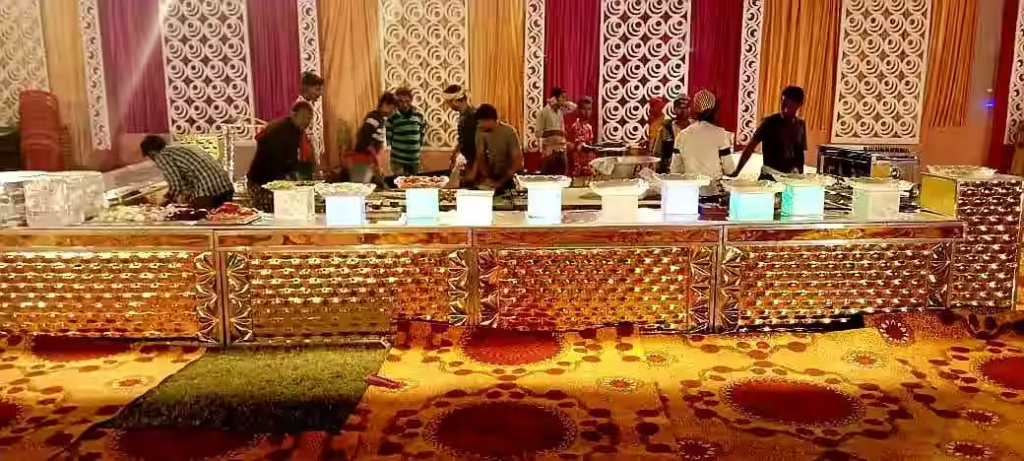
| Traditional Static Buffet | 25% – 35% Excess Waste | Over-filled chafing dishes, half-eaten plates, late-night cold food | Low (Cooked hours prior; spoils quickly in warmers) |
| Interactive Live Counters | 5% – 10% Excess Waste | Un-cooked raw ingredients (reusable) | High (Raw vegetables and batters remain refrigerated) |
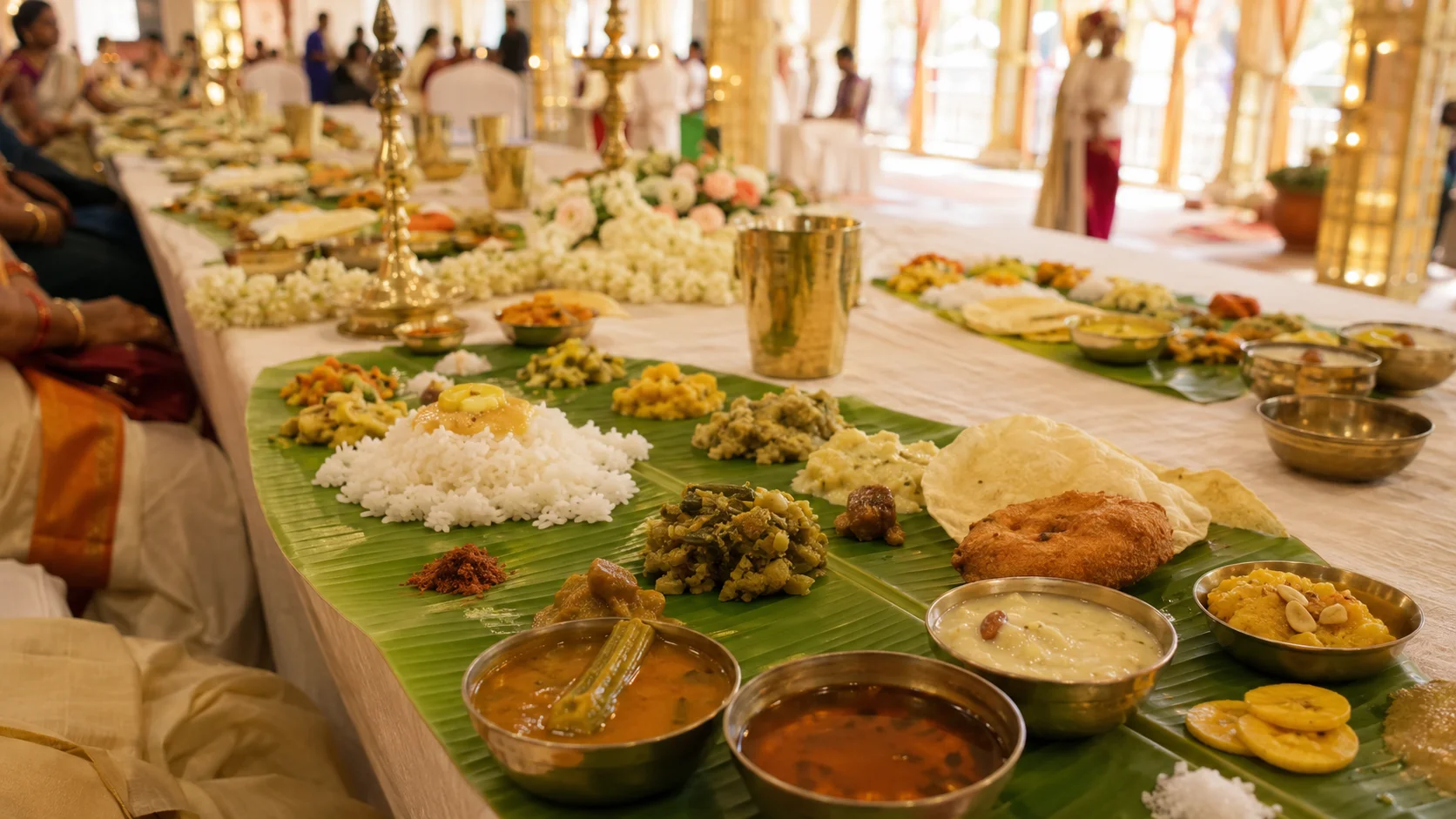
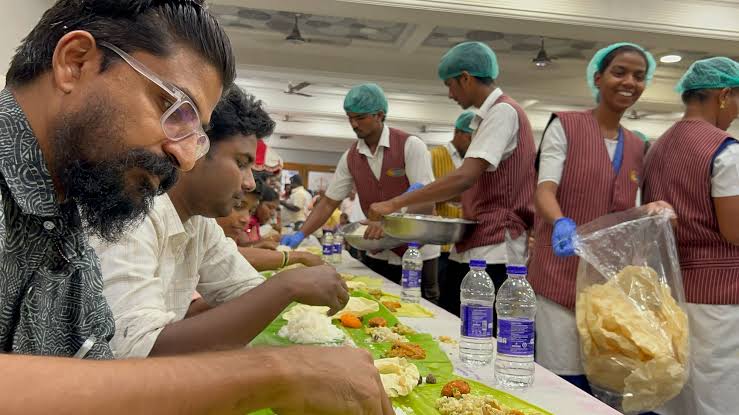
| Traditional Sit-Down (Panti Seva) | 10% – 15% Excess Waste | Unfinished banana-leaf portions | Medium (Kitchen pot surplus is clean and easily packed) |
| Plated Multi-Course Service | 2% – 5% Excess Waste | Minor kitchen trim scraps | Very High (Precise portion control per seated guest) |
How Do I Partner with Food Donation NGOs in Hyderabad?
Partnering with local food donation networks requires establishing contact at least two weeks before your event to ensure transport logistics and food safety testing protocols are locked in.
Follow this operational flow to set up a seamless surplus food recovery system:
- Contact Recognized Food Recovery Networks: Reach out to local chapters of national food recovery organizations operating in Hyderabad (such as No Food Waste or Robin Hood Army) or local city shelters.
- Designate a Venue Food Safety Officer: Assign a catering supervisor or family coordinator to ensure untouched surplus food in the main kitchen pots is kept covered, clean, and unmixed with plate leftovers.
- Equip the Recovery Area: Supply your catering team with food-grade aluminum foils, thermal containers, and clean storage boxes so surplus food can be packed rapidly upon venue closure (typically between 10:30 PM and midnight).
Surplus Food Donation Process at Weddings
1. Event Ends: Begin the food recovery process after the wedding catering service concludes.
2. Separate Surplus Food: Separate untouched kitchen surplus from food left on guests’ plates.
3. Check Food Quality: Inspect freshness and ensure the food has been stored and maintained at safe temperatures.
4. Pack and Transport: Pack eligible surplus food in suitable, food-safe containers and arrange collection by a partner NGO.
5. Timely Distribution: Coordinate with the NGO in advance to transport and distribute the food safely to shelters or people in need.
Step-by-Step Guide: How to Plan a Zero-Waste Wedding Menu
Follow this step-by-step checklist to design a sustainable menu and service workflow for your celebration:
1.Step : Calculate Your Adjusted Attendance Index:Audit attendance probability based on guest tiers.
Do not rely on card counts. Multiply your local guest list by 0.75 and outstation contacts by 0.50 to derive a realistic guest count for your caterer.
2.Step : Streamline Menu Selections to Prevent Overlap:Limit overlapping rice and gravy dishes.
Limit main courses to one flagship rice dish (e.g., Hyderabadi Dum Biryani), two complementary gravies, one dry vegetable, and two breads. Avoid offering redundant carbs.
3.Step : Shift 40% of Starters and Mains to Live Stations:Include live cooking stations for popular dishes.
Incorporate live counters for items like chaat, dosas, pasta, and kebabs, ensuring raw ingredients are cooked only as guests request them.
4.Step : Sign a Staggered Preparation Agreement with Your Caterer:Specify batching rules in catering agreements.
Include a clause requiring the caterer to cook 60% of the food for opening doors, keeping remaining raw ingredients ready for dynamic secondary preparation.
5.Step : Pre-Arrange NGO Surplus Collection Logistics:Lock in collection times and packaging materials.
Confirm arrival times, venue collection points, and container arrangements with your chosen food recovery NGO two weeks before the event.
6.Step : Place Discrete Guest Awareness Signage:Add gentle signage encouraging thoughtful portions.
Display polite table cards encouraging guests to sample smaller portions at live counters and return for refills, normalizing mindful dining.
4 Common Myths About Wedding Food Wastage
Myth 1: “Having excess food is the only way to demonstrate grand hospitality.”
Fact: True hospitality centers on food quality, temperature, presentation, and attentive service—not overflowing buffet troughs. Guests appreciate fresh, piping-hot dishes prepared at live counters far more than cold, stagnant buffet lines.
Myth 2: “Caterers automatically donate excess wedding food.”
Fact: Unless explicitly requested by the host family, most caterers discard unserved food or feed a small portion to cleanup staff due to a lack of late-night transport logistics. Setting up an NGO partnership ensures excess food reaches those in need.
Caterer Food Disposal vs. NGO Food Recovery
| Standard Unmanaged Catering | Organized NGO Food Recovery |
|---|---|
| Excess cooked food remains after the event. | Kitchen surplus is identified and checked for safety. |
| Leftover food may be discarded in venue waste bins. | Eligible surplus food is packed in food-safe, insulated containers. |
| Food waste increases, along with disposal costs. | Safe surplus food can be redistributed to people in need, reducing avoidable waste. |
| No planned recovery or donation process is in place. | An NGO or food recovery partner coordinates collection and delivery to shelters. |
Myth 3: “Donated wedding food poses health and liability risks.”
Fact: Registered food recovery NGOs follow strict hygiene and thermal storage protocols. They inspect food freshness using sensory checks before collection and distribute meals immediately to ensure food safety.
Myth 4: “Live counters cause long queues and guest frustration.”
Fact: Queue bottlenecks occur only when live stations are understaffed. Setting up multiple duplicate stations—such as three identical chaat counters for 500 guests—keeps lines moving quickly while eliminating food waste.
Real-World Catering Waste Reduction Scenarios
Scenario 1: A 600-Guest Reception in Madhapur, Hyderabad
- The Profile: A large evening reception hosted at a city hotel hall.
- The Challenge: Preventing massive waste across a 35-item international buffet menu.
- The Solution: The family replaced 12 static buffet items with 6 live cooking stations (Dosa, Italian Pasta, Kebab Grill, and Chaat) and signed a batch-cooking agreement with the caterer. They partnered with a local food recovery NGO for late-night pickup.
- The Outcome: Un-cooked live station ingredients were safely preserved for the next morning’s family breakfast, while 45 untouched main-course meals were packed and distributed to a nearby children’s shelter by 12:30 AM.
Madhapur Reception Waste Management: Example Workflow
- Live Cooking Stations: Six live counters were used to prepare food on demand, helping reduce unnecessary preparation and raw ingredient waste.
- Staggered Kitchen Preparation: Food preparation was scheduled in stages, with additional batches planned from 8:30 PM based on guest demand.
- Food Waste Audit: Forty-five untouched meals were identified, checked for food safety, and packed in suitable insulated containers.
- NGO Food Distribution: A local NGO coordinated the collection and delivery of eligible meals to shelters by 12:30 AM.
Scenario 2: A 300-Guest Traditional Day Wedding in Kompally
- The Profile: A traditional afternoon ceremony featuring sit-down banana-leaf dining (Panti Seva).
- The Challenge: Managing portion sizes during rapid dining hall rotations.
- The Solution: Servers used standardized portion scoops for rice and sweet items, offering refills only when requested. Kitchen staff maintained cooked reserves in large insulated pots rather than pre-plating leaves.
- The Outcome: Plate waste dropped by 70%, and clean kitchen pot reserves were safely distributed to community workers post-event.
Zero-Waste Catering Checklist for Host Families
Complete this operational checklist with your caterer prior to your event dates:
- [ ] Headcount Calibration: Is your final catering count based on realistic guest attendance tiers rather than gross card prints?
- [ ] Contractual Batch Clause: Does your catering agreement stipulate 60/40 staggered batch preparation?
- [ ] Live Station Ratio: Are there at least 2 identical live counters per 150 guests to prevent queue bottlenecks?
- [ ] Plate Dimensions: Has the venue or caterer agreed to supply 10-inch dinner plates instead of oversized 14-inch platters?
- [ ] NGO Pickup Confirmation: Has the local food recovery team confirmed vehicle dispatch, driver contact details, and venue entry access for midnight pickup?
Frequently Asked Questions
How do I estimate the right amount of food for my wedding guests?
Estimate food requirements by multiplying your total guest invitation count by historical attendance rates: 75% for local city contacts and 50% for outstation guests. Instruct your caterer to cook an initial batch covering 60% of this adjusted number.
How can I donate leftover food from a wedding in Hyderabad?
Donate excess food by contacting organizations like No Food Waste, Robin Hood Army, or Feeding India at least two weeks before your event. Assign a venue coordinator to ensure untouched kitchen pots remain covered and clean for midnight pickup.
What food items generate the most waste at Indian weddings?
Rice dishes (Pulao, Biryani), heavy breads (Naan, Parathas), and sweet desserts generate the highest plate waste when self-served in large portions from static buffets.
How can caterers reduce food waste during live events?
Caterers reduce waste by implementing staggered batch cooking, using smaller serving spoons, setting up interactive live counters, and preparing main courses based on real-time dining hall headcounts.
What is the best way to prevent food wastage during a Sangeeth function?
For a Sangeeth, replace heavy, sit-down dinner buffets with finger-food live stations (small-portion kebabs, sliders, rolls, and chaat). Finger foods generate minimal plate waste and keep guests active on the dance floor.
Can uncooked catering ingredients be saved or returned?
Yes. Raw, un-cooked ingredients used at live stations—such as chopped vegetables, paneer blocks, un-fried snacks, and batters—remain safely refrigerated and can be preserved for post-wedding family meals.
How do I talk to my family about reducing the wedding menu size?
Explain to family elders that a curated 15-item menu featuring fresh, piping-hot live dishes delivers higher food quality and a better guest experience than a cold 40-item buffet where half the food goes to waste.
Is it safe to donate wedding food prepared hours earlier?
Yes, provided the food has remained untouched in clean, covered kitchen pots at safe holding temperatures. NGO recovery teams inspect food freshness before packing and distributing meals immediately.
Understanding how to avoid food wastage in a wedding allows you to host an elegant, hospitable celebration while upholding environmental and social responsibility. By combining accurate guest forecasting, curated live-counter menus, staggered kitchen batching, and same-night NGO food recovery, you can eliminate catering waste entirely. Armed with these practical operational steps, you are well prepared to design a zero-waste wedding feast with complete confidence.





Leave a Comment