
Table of Contents
What Are the Current Trends in Wedding Design? A Complete Guide to Modern Indian Event Aesthetics
Couples planning their celebrations frequently ask: what are the current trends in wedding design? Today, Indian wedding aesthetics are shifting away from rigid, cookie-cutter stage setups and generic floral walls toward highly personalized, immersive environments. Modern wedding design integrates architectural spatial planning, dynamic kinetic lighting, sustainable floral choices, and nuanced cultural storytelling to create cohesive multi-sensory experiences.
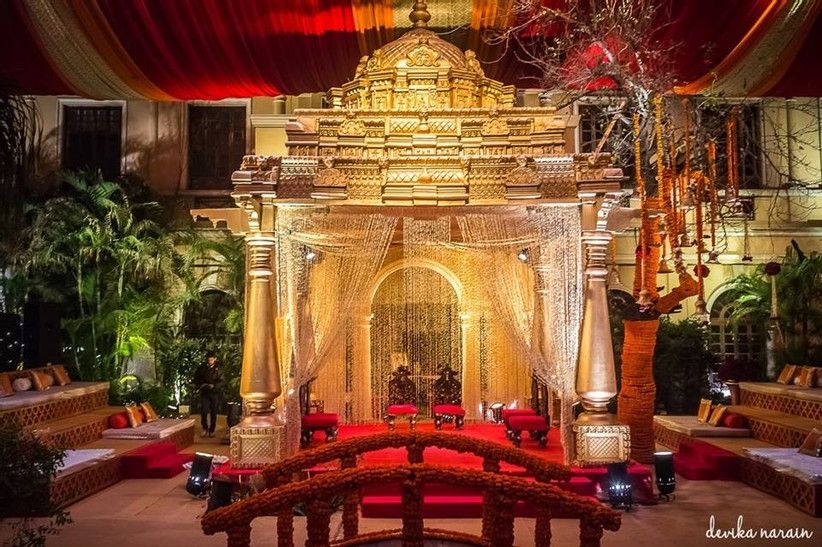
What Are the Current Trends in Wedding Design?
The primary trends in wedding design focus on immersive spatial storytelling, architectural lighting, sustainable floral installations, and regional cultural fusion. Modern couples prioritize interactive guest environments over flat, backdrop-heavy stage setups. Key elements include open-air structural mandaps, customized color palettes, tactile fabric draping, and integrated technology like projection mapping.
+-----------------------------------------------------------------------------------+
|                     THE 5 PILLARS OF MODERN WEDDING DESIGN                        |
+------------------------------------+----------------------------------------------+
| 1. Structural & Spatial Layouts    | Open-concept mandaps, 360-degree seating     |
| 2. Architectural Lighting & Tech   | Intelligent DMX wash, projection mapping     |
| 3. Sustainable & Sculptural Flora  | Native blooms, potted greenery, foam-free    |
| 4. Multi-Sensory Guest Touchpoints | Custom scents, tactile fabrics, acoustic acoustics|
| 5. Regional Heritage Refinement    | Handloom textiles, brass, temple architecture|
+------------------------------------+----------------------------------------------+
Why Indian Wedding Design Has Shifted from Decorative to Architectural
For decades, Indian wedding decor relied heavily on surface-level embellishment: dense walls of red and white carnations, repetitive satin draping, and static stage backdrops. While visually striking in traditional photo albums, these designs often created physical barriers between the couple and their guests.
Today, wedding design is treated as temporary architectural construction. Driven by changes in photography styles, venue formats, and guest expectations, designers focus on how a space feels and functions.
Instead of treating the venue as a blank box to cover up, modern event designers work with the property’s natural environment—whether that means framing the ancient banyan trees at a Hyderabad heritage resort or constructing clear-roof hangars that bring the night sky into a monsoon-season setup.
+---------------------------------------------------------------------------------+
|                       TRADITIONAL VS. MODERN WEDDING DESIGN                     |
+----------------------------------+----------------------------------------------+
| TRADITIONAL DECOR APPROACH       | MODERN ARCHITECTURAL DESIGN                  |
+----------------------------------+----------------------------------------------+
| Flat, 2D backdrop stages         | 360-degree open structural installations     |
| Dense, mass-imported florals     | Sculptural, native, and sustainable blooms   |
| Static, bright floodlighting     | Layered, mood-based architectural DMX light  |
| Monolithic red and gold palettes | Complex tonal palettes & textured fabrics    |
| Visuals designed for photo prints| Immersive environments for live guest experience|
+----------------------------------+----------------------------------------------+
The 6 Key Trends Transforming Modern Wedding Aesthetics
Understanding what the current trends in wedding design are requires examining six distinct shifts across structural planning, color science, lighting, and cultural integration.
+---------------------------------------------------------------------------------+
|                       6 MAJOR CURRENTS IN WEDDING DESIGN                        |
+---------------------------------------------------------------------------------+
| [ 1. Open 360° Mandaps ]   -> Center-stage seating, unobstructed sightlines    |
| [ 2. Architectural DMX ]   -> Dynamic mood shifts without harsh spotlights      |
| [ 3. Tonal Color Palettes ]-> Monochrome layers, olive, terracotta, champagne   |
| [ 4. Sustainable Florals ] -> Foam-free construction, potted botanical trees    |
| [ 5. Tactile Fabric Art ]  -> Kanjeevaram drapes, textured linen, raw silk      |
| [ 6. Spatial Storytelling ]-> Custom entrance tunnels, narrative dining layouts |
+---------------------------------------------------------------------------------+
1. 360-Degree Center-Stage Mandaps and Open Layouts
The traditional mandap, positioned against a far wall, is increasingly replaced by central, four-sided open structures. Placing the mandap in the middle of the lawn or hall creates an intimate, theater-in-the-round layout.
- Sightline Optimization: Unobstructed glass, fine metallic framing, or suspended floral canopies allow every guest to witness sacred rituals like the Saptapadi or Kanyadaanam without visual obstruction.
- Cultural Relevance: In South Indian weddings—such as Telugu, Tamil, and Kannada ceremonies—central seating mirrors historical temple courtyard (Thotti Mane) gathering practices.
2. Architectural Lighting and Intelligent DMX Programming
Static halogen floodlights that wash out faces and flatten decor textures are being phased out. Modern design treats lighting as a core structural element.
- Dynamic Mood Shifts: Computer-controlled DMX lighting transitions spaces naturally throughout the event. Warm, soft golden tones during ritual moments transform into deep amber and jewel tones for evening celebrations.
- Pin-Spotting and Pattern Projection: Focused spotlights highlight table centerpieces and floral installations without spilling harsh light onto seated guests. Custom gobos project subtle geometric patterns onto floors and drapes.
3. Sophisticated, Tonal Color Palettes
While traditional jewel tones remain popular for evening receptions, color application has become more nuanced. Rather than pairing bright primary colors together, designers use single-color gradient schemes or earthy, grounded tones.
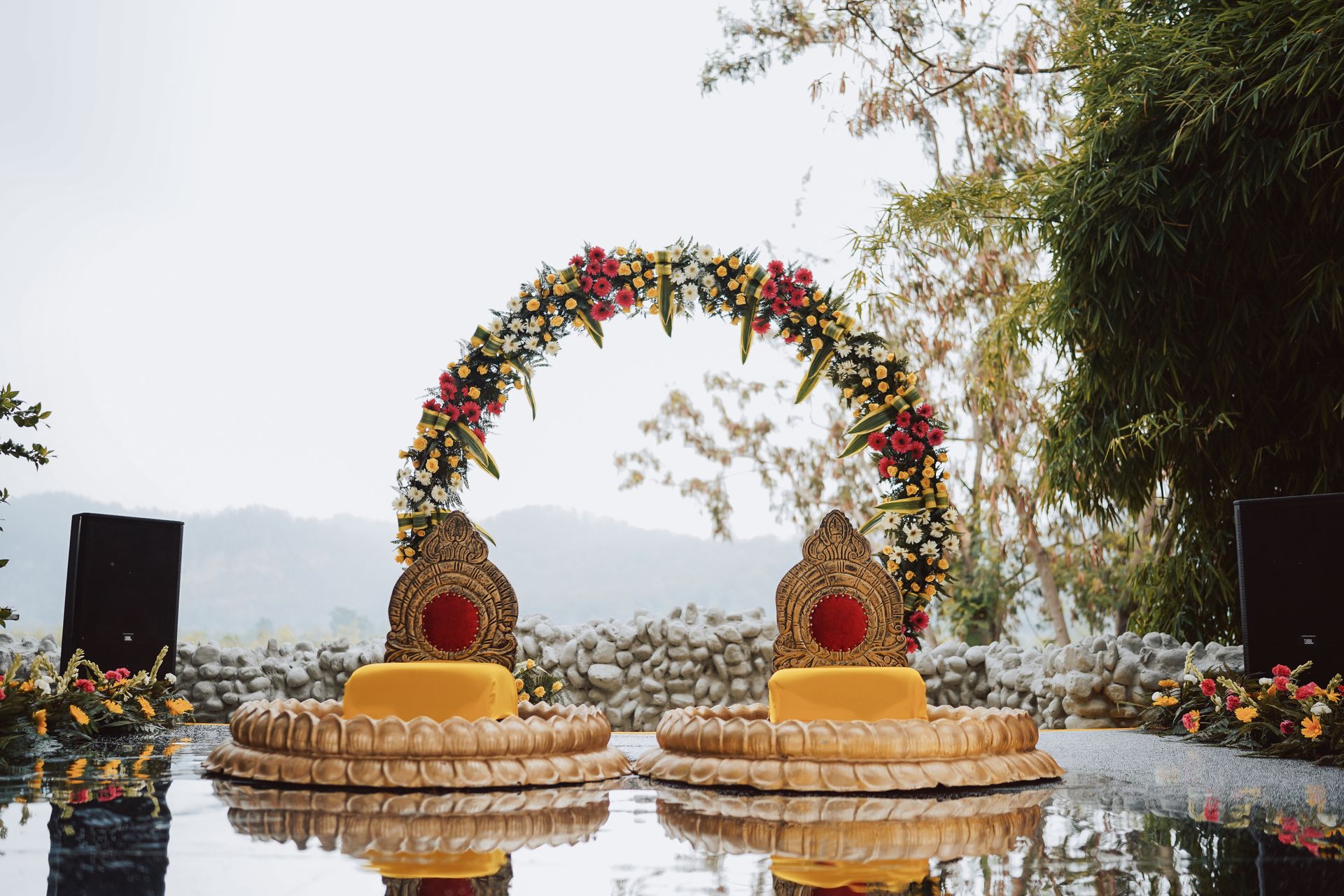
- Earthy & Organic Tones: Sage green, olive, warm terracotta, dusty rose, and champagne yellow create calm, elegant daytime settings for Haldi and Mehendi functions.
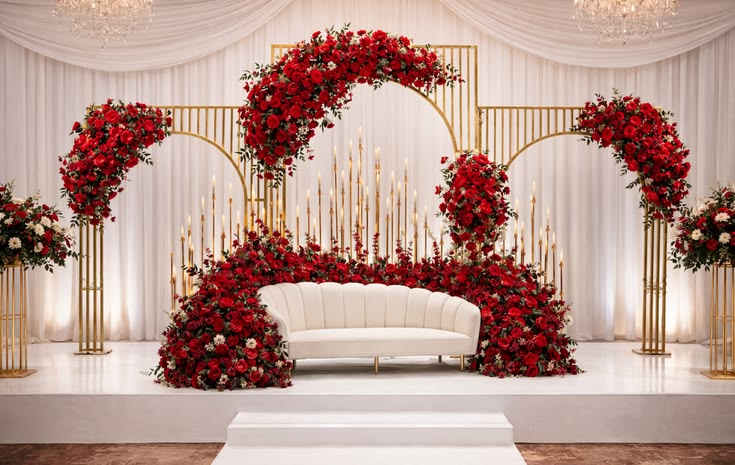
- Monochromatic Depth: Using multiple shades of a single color—such as layering deep crimson, burgundy, and soft rose—adds visual richness to stage backdrops without overwhelming the eye.
4. Sustainable, Foam-Free Floral Sculptures
Floral design is shifting away from dense, flat floral walls toward sculptural arrangements that emphasize negative space, natural stems, and eco-friendly construction methods.
- Eliminating Floral Foam: Industry practices are moving away from single-use green floral foam (Oasis), which breaks down into harmful microplastics. Designers instead use reusable metal flower frogs, chicken wire frames, and water tubes.
- Botanical and Potted Elements: Incorporating living potted trees, leafy branches, and local, seasonally available blooms reduces waste while creating an authentic forest or garden setting.
5. High-Texture Fabric Installations and Handloom Artistry
Fabric selection has expanded beyond standard poly-satin and organza drapes. Designers now incorporate rich textiles that celebrate traditional craftsmanship.
- Textile Backdrops: Incorporating woven handloom fabrics, raw silks, printed ikat, and traditional Kalamkari or Pichwai tapestries adds artistic depth to ceremony spaces.
- Architectural Tension Draping: Sweeping fabric installations create clean lines and geometric shapes overhead, transforming large convention halls into cozy, well-proportioned spaces.
6. Immersive Entrance Tunnels and Spatial Storytelling
The guest journey begins the moment they arrive at the venue. Modern design focuses on transitional spaces that build anticipation.
- Tunnel Installations: Curving walkways lined with warm fairy lights, aromatic botanical walls, or structural wooden arches guide guests away from parking areas and into the event space.
- Interactive Seating and Lounge Layouts: Traditional rows of banquet chairs are giving way to mixed seating layouts featuring plush velvet sofas, low wooden tables, and residential-style lounges.
Comparing Popular Wedding Design Themes
Selecting a design direction requires balancing venue characteristics, personal preferences, and operational feasibility.
| Design Theme | Ideal Venue Type | Primary Materials | Lighting Strategy | Floral Approach |
| Architectural Botanical | Open-air lawns, glasshouses | Raw timber, glass, steel, matte stone | Warm pin-spotting, concealed uplighting | Potted trees, loose wild greenery |
| Traditional Heritage | Courtyards, palace estates | Carved wood, brass, woven handlooms | Soft golden wash, traditional oil lamps | Fresh marigolds, jasmine, lotus |
| Modern Minimalist | Hotel ballrooms, art galleries | Acrylic, brushed metal, velvet | Sharp DMX profile spots, neon accents | Monochromatic, single-variety blooms |
| Bohemian Chic | Lakeside venues, farmhouses | Rattan, jute, macramé, raw linen | Warm festoon string lights, lantern clusters | Dried pampas grass, terracotta pots |

Step-by-Step Wedding Design Execution Process
Translating design inspiration into a physical, operational setup requires a structured execution strategy.
+-----------------------------------------------------------------------------------+
|                        5-STEP DESIGN EXECUTION TIMELINE                           |
+-----------------------------------------------------------------------------------+
| Step 1 (6–8 Months Out): Venue Spatial Mapping & CAD Layout Creation              |
| Step 2 (4–6 Months Out): Color Palette & Material Board Finalization              |
| Step 3 (2–3 Months Out): 3D Visual Rendering & Technical Lighting Plans           |
| Step 4 (2–4 Weeks Out) : Mock-up Testing & Fabrication Audits                     |
| Step 5 (Event Day)     : Load-in Sequence, Rigging, & Floral Assembly              |
+-----------------------------------------------------------------------------------+
Step 1: Conduct Spatial Mapping and Draft CAD Floor Plans
Measure venue dimensions, door clearances, and rigging points before choosing decor elements. Draft a scaled computer-aided design (CAD) layout showing stage dimensions, guest walkways, emergency exits, and food service flow.
Step 2: Establish the Color Palette and Material Board
Select a core palette of 3 primary colors and 2 accent metallic or neutral shades. Collect physical fabric swatches, wood finishes, and floral samples to confirm how materials look under both natural daylight and artificial event lighting.
Step 3: Develop 3D Renders and Technical Lighting Schematics
Work with your production team to create scaled 3D digital renders of key impact areas: the entrance archway, the main stage or mandap, and guest dining tables. Draft a technical lighting plan detailing fixture counts, power loads, and mounting locations.
Step 4: Audit Off-Site Fabrication and Review Physical Mock-ups
Inspect wooden framing, painted backdrops, and metal structures at the production workshop weeks before the event. Set up a physical mock-up of a guest dining table—complete with linens, crockery, glassware, and floral centerpieces—to test proportions and sightlines.
Step 5: Execute Load-In, Structural Rigging, and Final Floral Placement
Coordinate venue access for decor teams according to a strict schedule. Build heavy structural trusses and overhead rigging first, follow with fabric draping and electrical wiring, and complete fresh floral arrangements last to ensure freshness.
Common Wedding Design Myths Debunked
Clarifying common misconceptions helps couples make informed aesthetic and financial decisions.
Myth 1: “Minimalist wedding design is always less expensive than traditional, ornate decor.”
The Reality: Minimalist design relies on clean lines, flawless materials, and precise execution. Without dense floral arrangements or heavy draping to cover structural flaws, minimalist setups require high-end materials like custom acrylics, polished metals, flawless staging, and specialized pin-spot lighting—which can match or exceed the cost of traditional setups.
Myth 2: “Sourcing imported flowers is essential for a luxury aesthetic.”
The Reality: High-end design depends more on arrangement scale, color harmony, and vessel selection than on imported floral varieties. Using locally sourced Indian blooms like tuberoses (Rajnigandha), marigolds, lotus, and native orchids in modern, sculptural arrangements creates a fresh, sustainable, and luxurious look at a fraction of the cost.
Myth 3: “Drape fabrics and flowers are the only elements that define a room’s mood.”
The Reality: Lighting accounts for at least 50% of an event’s visual impact. Even expensive floral setups appear flat under improper lighting, while thoughtful architectural lighting can transform simple fabric structures into dramatic, high-end environments.
Myth 4: “You must stick to a single, rigid decor theme across all wedding functions.”
The Reality: Multi-day Indian celebrations thrive on visual variety. Transitioning from a bright, botanical, organic Haldi setup to a dark, high-energy Sangeeth with dynamic LED walls, and finally to a serene, heritage-inspired Pelli or Pheras ceremony keeps the guest experience engaging throughout the weekend.
Real-World Wedding Design Scenarios
Examining real-world examples illustrates how current design trends adapt to different venues, cultures, and scales.
+---------------------------------------------------------------------------------+
|                         REAL-WORLD DESIGN SCENARIOS                             |
+---------------------------------------------------------------------------------+
| Scenario A: Heritage Court Design for a Traditional Telugu Pelli                |
| Focus: Brass accents, banana leaf motifs, Rajnigandha, warm golden lighting     |
|                                                                                 |
| Scenario B: Modern Industrial Glasshouse for a High-Energy Sangeeth             |
| Focus: Kinetic LED bars, black trussing, acrylic stages, deep jewel tones       |
|                                                                                 |
| Scenario C: Sustainable Eco-Luxury Daytime Mehendi in a Garden Resort           |
| Focus: Potted botanical trees, handloom fabrics, marigold garlands, no foam      |
|                                                                                 |
+---------------------------------------------------------------------------------+
Scenario A: The Modern Heritage Telugu Pelli
- The Concept: A traditional South Indian wedding ceremony held in a hotel ballroom, styled to feel like a classic temple courtyard.
- Design Execution: Instead of a heavy fabric backdrop, the team built a four-sided open mandap framed with carved wooden pillars and hanging brass lamps (Samai). The background featured a wall of fresh, fragrant Rajnigandha and red carnations arranged in traditional geometric patterns. Soft, 2700K warm golden pin-spotting highlighted the couple and ritual items without blinding guests.
Scenario B: The Architectural Sangeeth Night
- The Concept: A 500-guest Sangeeth in a clear-span hangar structure requiring a high-energy, concert-level visual experience.
- Design Execution: The design featured a multi-tiered acrylic stage backed by custom-curved LED video screens displaying abstract, real-time visual art. Overhead, black aluminum trusses supported computer-controlled kinetic lighting bars that moved dynamically during dance performances, shifting the room’s color scheme from deep sapphire blue to emerald green.
Scenario C: The Sustainable Outdoor Mehendi
- The Concept: An outdoor, daytime gathering focused on eco-friendly decor and relaxed guest comfort.
- Design Execution: The production team avoided single-use plastics and non-biodegradable floral foam. Shaded seating areas utilized hand-woven jute rugs, low wooden tables, and cushions covered in block-printed cotton fabrics. Local marigolds were suspended on cotton threads from tree branches, while potted palms and fern arrangements created natural lounge partitions that were later returned to a local nursery.
Practical Checklist for Evaluating a Wedding Design Proposal
Use this evaluation checklist when reviewing design proposals and 3D renders from your event decor team:
+-----------------------------------------------------------------------------------+
|                         WEDDING DESIGN EVALUATION CHECKLIST                       |
+-----------------------------------------------------------------------------------+
| [ ] Floor Plan Sightlines: Does the stage/mandap design allow clear views?        |
| [ ] Lighting Integration: Are dedicated pin-spots included for centerpieces?      |
| [ ] Scale & Proportion: Are stage dimensions balanced relative to hall height?     |
| [ ] Material Breakdown: Are fabric types and wood finishes explicitly itemized?   |
| [ ] Sustainability Audit: Is the team using foam-free floral techniques?          |
| [ ] Structural Safety: Are overhead rigging elements certified for weight loads?  |
| [ ] Power Load Plan: Is generator power calculated for all lighting fixtures?     |
+-----------------------------------------------------------------------------------+
Frequently Asked Questions
What are the main color palette trends for upcoming weddings?
Current color trends favor grounded, nature-inspired palettes for daytime events—such as sage green, terracotta, warm ochre, and soft peach. Evening celebrations are moving toward rich monochromatic schemes, combining varying shades of burgundy, plum, deep sapphire, and warm champagne gold rather than high-contrast primary colors.
How do we make traditional Indian wedding decor look modern?
Modernizing traditional decor involves simplifying structures, improving lighting precision, and choosing high-quality materials. Replace heavy, opaque satin drapes with sheer textured fabrics or handloom textiles. Swap bulky, painted plaster pillars for clean wood or brass framing, and use warm, focused pin-spotting to highlight traditional elements like brass urlis or fresh lotus blooms.
What is the difference between a wedding decorator and a wedding designer?
A wedding decorator typically installs existing, pre-fabricated inventory items such as standard backdrops, stage furniture, and floral arches. A wedding designer creates custom spatial layouts, color palettes, technical lighting schematics, and bespoke structural fabrications tailored specifically to the couple’s vision, venue dimensions, and cultural requirements.
How can we incorporate sustainable decor practices into our wedding?
Reduce environmental impact by choosing locally grown, seasonal flowers instead of imported blooms, and requesting foam-free construction using chicken wire or water tubes. Incorporate living potted plants, trees, and woven natural fabrics that can be reused or recycled, and opt for LED lighting setups that consume less electricity.
Why is technical lighting so important in modern wedding design?
Technical lighting defines the depth, texture, and emotional tone of a space. Proper lighting highlights key decor elements, flatters skin tones in photography, and shifts the room’s mood throughout the event. Even the most elaborate floral installations can appear dull or washed out without dedicated pin-spotting and layered wash lights.
What is projection mapping, and how is it used in weddings?
Projection mapping uses high-powered projectors and specialized software to map digital artwork, patterns, or video motion onto three-dimensional physical surfaces—such as venue walls, stage backdrops, or mandap structures. It allows static architectural elements to dynamically change patterns and colors throughout an event without physical rebuilds.
How early should we finalize our wedding design concepts?
Finalize core design concepts, spatial layouts, and color palettes 4 to 6 months before the wedding. This timeline leaves adequate opportunity for drafting technical CAD floor plans, fabricating custom props, conducting physical table mock-ups, and securing specialized lighting equipment well in advance.
Can we combine different design themes for different wedding functions?
Yes, using distinct design themes across multi-day functions creates a varied, engaging experience for guests. A typical progression might move from an organic, sunlit botanical theme for the Mehendi to a dramatic, architectural concert style for the Sangeeth, concluding with a serene, heritage-inspired setting for the wedding ceremony.

Practical Takeaways for Planning Your Wedding Aesthetics
Understanding what the current trends in wedding design are empowers you to make intentional decisions that balance aesthetic beauty with practical functionality. Focus on how your space flows, prioritize quality lighting, and select design elements that feel meaningful to your cultural traditions and personal style.
Start by gathering visual inspiration that emphasizes spatial layouts and lighting styles rather than just backdrop photos. Work closely with experienced production professionals to draft clear floor plans and test material swatches in your venue’s lighting. With careful planning, your wedding design will create an inviting, memorable atmosphere for you and your guests.

Leave a Comment