

Table of Contents
What is the Process of Event Management in Hyderabad? A Complete Guide
Understanding what is the process of event management requires looking past the polished aesthetics of a wedding stage or corporate galas to examine the underlying operational framework. At its core, event management is the systematic application of project management discipline—encompassing goal setting, budget engineering, spatial design, vendor procurement, risk mitigation, and live-floor execution. Whether you are orchestrating a 1,000-guest traditional Telugu wedding in Hyderabad or hosting an intimate corporate retreat in Hi-Tech City, following a structured workflow ensures your vision translates into a seamless real-world experience.
This comprehensive guide breaks down every critical phase of event management, offering real market insights, timeline benchmarks, and practical toolkits to help you navigate your event planning journey with complete clarity.
Last Updated: September 2026

What Is the Process of Event Management?
The process of event management is a structured 5-stage framework comprising Discovery & Goal Setting, Strategic Budgeting & Design, Vendor Sourcing & Contracting, On-Site Operational Execution, and Post- Event Evaluation. It aligns logistical schedules with visual design to deliver safe, cost-controlled, and memorable experiences.
When people ask what is the process of event management, they often confuse it with basic event styling or decoration. While visual design is important, true event management is an end-to-end operational engine that balances creative aspirations against rigid financial, structural, and time constraints.
| Stage | Event Management Stage | Primary Focus |
|---|---|---|
| Stage 1 | Discovery & Conceptualization | Understand the event objectives, audience, requirements, theme, format, venue needs, and overall concept. |
| Stage 2 | Budgeting & Detailed Design | Develop the budget, event design, production requirements, timelines, and detailed execution plan. |
| Stage 3 | Vendor & Logistics Sourcing | Coordinate vendors, suppliers, equipment, transportation, staffing, permissions, and other logistical requirements. |
| Stage 4 | On-Site Execution | Manage setup, vendor coordination, guest flow, schedules, production, troubleshooting, and real-time event operations. |
| Stage 5 | Post-Event & Reconciliation | Complete vendor reconciliation, evaluate outcomes, collect feedback, review performance, and close the event project. |
Why People Get Event Management Wrong in India
Managing a large-scale event in India presents unique operational challenges that standard international project templates fail to address.
                  ┌── Miscalculating buffer requirements for traditional guest overruns
                  ├── Treating vendor quotes as fixed without auditing line-item scope
Common Execution  ┼── Over-investing in visual decor while under-budgeting power/logistics
Pitfalls          ├── Ignoring seasonal weather patterns (e.g., Hyderabad monsoon shifts)
                  └── Delaying vendor contracting during high-demand Shubhamuhurtham dates
- The “Guest Count Expansion” Fallacy: In Indian cultural contexts—especially across South Indian weddings—invitations extended to households often translate to variable attendance numbers. Failing to structure 10% to 15% flexible catering and seating buffers usually results in food shortages or crowded banquet spaces.
- Confusing Decorators with Event Managers: A decorator focuses solely on aesthetics (flowers, fabrics, stage backdrops). An event manager controls the entire ecosystem—including generator load balancing, catering service velocity, valet parking traffic flow, sound permits, and timeline enforcement.
- Underestimating Technical Infrastructure: A beautifully designed outdoor lawn wedding can fail instantly if main power cables overheat due to heavy LED wall loads, or if sound levels breach local city municipal guidelines after 10:00 PM.
The 5 Key Phases of Event Management Explained
To execute an event without operational breakdown, professional planners divide the workflow into five distinct, non-negotiable phases.
Phase 1: Discovery, Objectives, and Conceptualization
Every event must begin with absolute clarity on purpose, audience profile, and key deliverables.
- Defining Core Parameters: Establishing whether the event is a multi-day traditional wedding (Pellikuthuru, Mehendi, Sangeet, Muhurtham), a milestone anniversary, or a corporate product launch.
- Guest Demographics & Spatial Sizing: Calculating net usable space per guest. Standard banquet guidelines recommend 12 to 15 square feet per guest for seated buffet functions, and up to 20 square feet per guest for interactive setups with dance floors.
- Theme & Visual Narrative: Establishing color palettes, mood boards, and spatial flow diagrams before reaching out to vendors for quotes.
Phase 2: Budget Allocation and Design Blueprinting
Financial engineering must precede visual purchasing. Establishing line-item caps prevents mid-project budget exhaustion.
| Cost Head | Average Allocation (%) | Focus Areas & Inclusions | Typical Budget Range (Hyderabad Mid-to-High Scale) |
| Venue Rental | 15% – 25% | Hall rental, lawn usage, basic lighting, security deposits, air conditioning surcharges. | ₹2,500,000 – ₹1,200,000 |
| Catering & Beverage | 30% – 40% | Per-plate menu, live food stalls, beverage counters, kitchen freight, staff service. | ₹800 – ₹2,500+ per plate |
| Décor & Production | 20% – 30% | Stage construction, floral arrangements, ambient lighting, furniture, trusses, entrance arches. | ₹3,000,000 – ₹1,500,000+ |
| Media & Entertainment | 10% – 15% | Photography, cinematography, DJ setups, sound systems (PA/Line Array), live performers. | ₹2,000,000 – ₹6,000,000 |
| Logistics & Contingency | 5% – 10% | Valet management, generator backup fuel, permissions, emergency reserve fund. | ₹1,000,000 – ₹3,000,000 |
Phase 3: Vendor Sourcing, Contracting, and Procurement
Securing the right partners requires looking beyond social media portfolios to audit technical capability and legal terms.
- Service Level Agreements (SLAs): Every vendor contract must specify setup completion deadlines. For instance, decor production must finish 3 hours prior to guest arrival to permit sound checks and photography setup.
- Infrastructure Audits: Verifying that sound providers use heavy-duty distribution boxes (distro boxes) rather than raw wire taps, preventing venue circuit trips during peak performances.
Phase 4: On-Site Production and Real-Time Execution
This phase transitions the event from paper planning to live-floor management.
┌─────────────────────────────────────────────────────────────────────────┐
│                    LIVE-FLOOR MANAGEMENT CONTROL MATRIX                 │
├─────────────────────────────────────────────────────────────────────────┤
│ • Green Room Logistics:   Bride/Groom artist coordination, refreshment schedules │
│ • F&B Service Monitoring: Buffet line speed, live counter replenishment rates  │
│ • Stage Management:       Protocol for VIP arrivals, gift handling, ceremony timing │
│ • Technical Direction:   Sound cue coordination, stage lighting transitions      │
└─────────────────────────────────────────────────────────────────────────┘
Phase 5: Post-Event Reconciliation and De-Production
An event does not end when the last guest leaves. Professional wrap-up ensures financial safety and venue handback.
- Inventory Reconciliation: Checking rented furniture, props, and glassware against damage reports to safeguard security deposits.
- Final Financial Audits: Verifying extra plate counts served against catering entry tokens before releasing final vendor payments.
Step-by-Step Guide: How to Execute an Event Plan
Following a step-by-step master timeline prevents critical tasks from slipping through the cracks as your event date approaches.
1.Step 1: Secure Venue & Fix Core Dates:Lock in key dates 6 to 12 months prior to your event.
Research and book your primary venue early—especially in high-demand zones like Gachibowli, Shamshabad, or Kompally in Hyderabad during peak Shubhamuhurtham dates. Ensure structural height clearances accommodate your planned stage designs.
2.Step 2: Build an Itemized Master Budget:Establish clear cost caps across all 5 major spend heads.
Create a live budget spreadsheet outlining maximum target spend for venue, food, decor, media, and contingency. Include explicit allocations for GST (5% to 18%) and transport freight charges.
3.Step 3: Contract Core Service Providers:Hire key vendors and review detailed technical proposals.
Finalize contracts with your caterer, decorator, photographer, and technical team. Ensure line-item scopes list exact flower types, lighting counts, and sound hardware specifications rather than vague descriptions.
4.Step 4: Draft 2D Scale Floor Plans & Timelines:Map physical movement, guest entrances, and F&B placement.
Develop a physical layout map detailing stage placement, dining tables, live counters, and emergency egress routes. Create a minute-by-minute run sheet for the ceremony or performance day.
5.Step 5: Execute On-Site Technical Recce:Conduct site visits with catering, sound, and decor leads.
Visit the venue with your lead production vendors 2 to 4 weeks prior to the event. Verify raw electrical supply capacity (3-phase power availability), kitchen drainage facilities, and loading dock access windows.
6.Step 6: Run Production Setup & Live Floor Operations:Oversee setup, manage live operations, and conclude wrap-up.
Supervise decor setup starting 12 to 24 hours prior to guest arrival. Deploy dedicated floor managers to oversee food replenishment, stage cues, and post-event inventory load-out.
4 Common Myths About Event Management
Myth 1: “Event management is only necessary for massive, high-budget weddings.”
Fact: Professional event management discipline applies to any gathering where guest experience, safety, and money are involved. Even an intimate 100-person gathering benefits from timeline management, vendor contracting, and catering oversight to prevent host stress.
Myth 2: “If you hire a venue, their in-house manager handles your event management.”
Fact: A venue manager works for the venue, protecting their facility, property, and strict house rules (such as sound cutoff times). They do not manage your external decorator timelines, photographer schedules, guest hospitality, or catering quality control.
                  VENUE MANAGER vs. EVENT MANAGER RESPONSIBILITIES
┌──────────────────────────────────────────┐  ┌──────────────────────────────────────────┐
│          VENUE MANAGER SCOPE             │  │          EVENT MANAGER SCOPE             │
├──────────────────────────────────────────┤  ├──────────────────────────────────────────┤
│ • Unlocking venue space & air-con        │  │ • Overall event run-sheet execution      │
│ • Enforcing noise and property rules     │  │ • Vendor setup timeline enforcement      │
│ • Basic venue electrical mains access    │  │ • Catering service speed & quality check │
│ • Facility security and basic parking    │  │ • Stage management, hospitality & flow   │
└──────────────────────────────────────────┘  └──────────────────────────────────────────┘
Myth 3: “Decor is the most expensive part of event management.”
Fact: In Indian celebrations, catering consistently represents the largest single expense head (often 35% to 45% of total spend), followed by venue costs. While decor is visually dominant, production budgets are usually secondary to food and beverage expenditures.
Myth 4: “Booking vendors individually online is always cheaper than structured planning.”
Fact: Booking unvetted vendors independently often leads to hidden costs, such as unexpected transport surcharges, extra generator rental fees, or poor performance. Structured planning centralizes purchasing, preventing costly overlap and scope miscalculations.
Real-World Event Planning Scenarios
Scenario 1: A 600-Guest Telugu Wedding in Kompally
- The Challenge: Managing a tight 4-hour window between a daytime Muhurtham ceremony and an evening reception in the same convention hall.
- The Process Applied: The event team developed a dual-zone production strategy. While the main hall hosted the morning rituals, the decor crew pre-fabricated reception elements in an adjacent holding area.
- The Outcome: The transition was completed in 2.5 hours—leaving 90 minutes for lighting adjustments and sound checks before evening guests arrived.
Dual-Zone Production Timeline (Kompally Wedding)
├── 06:00 AM – 11:30 AM: Morning Muhurtham in Main Hall
├── 08:00 AM – 11:30 AM: Reception Stage Elements Pre-Fabricated in Holding Area
├── 11:30 AM – 02:00 PM: Main Hall Fast Tear-Down & Reception Assembly
└── 02:00 PM – 03:30 PM: Final Lighting Focus, Sound Checks & Room Reset
Scenario 2: An Outdoor Monsoon Reception in Financial District, Hyderabad
- The Challenge: Hosting an outdoor lawn reception during unpredictable late-monsoon weather in September.
- The Process Applied: The planners implemented a robust contingency framework during Stage 2 budgeting. They booked a venue with an attached indoor air-conditioned banquet hall as a backup and specified waterproof German-tent structures with raised wooden sub-flooring for the main lawn.
- The Outcome: When unexpected evening showers hit, the raised wooden flooring prevented mud seepage, while pre-routed drainage pumps kept guest pathways clear, avoiding any disruption to the event program.
Practical Application: Checklist Before Executing Your Event
Before moving into active execution on your event day, run through this operational readiness checklist:
- [ ] Confirm 3-Phase Power Backup: Ensure your venue has a dual-generator setup (1 main, 1 standby) with auto-changeover switches to prevent blackout delays.
- [ ] Verify Guest Access Routes: Test signages, main entrance security checks, and valet queue capacities to prevent road traffic backups.
- [ ] Lock Final Run Sheet with Audio/Visual Leads: Provide written timeline copies to your DJ, emcee, lighting technician, and photographer.
- [ ] Audit F&B Handover Tokens: Establish a secure coupon or hand-tally system between your event manager and the catering supervisor to track actual plate consumption.
- [ ] Check First-Aid and Emergency Access: Locate the nearest medical kit and ensure clear ambulance access lanes remain unblocked by parked vendor vehicles.
Frequently Asked Questions
What is the difference between event planning and event management?
Event planning focuses on the early strategic and creative stages—such as defining vision, selecting themes, setting budgets, and choosing vendors. Event management covers the operational execution phase, including logistics coordination, vendor management, on-site setup, run-sheet timing, and live-floor troubleshooting.
How far in advance should I start the event management process for a wedding in Hyderabad?
For major weddings during peak seasons (November through February and April through May), you should begin the process 6 to 9 months in advance. Premium venues and top-tier caterers in hubs like Gachibowli, Shamshabad, and Banjara Hills often lock bookings up to a year early.
What are the 5 Cs of event management?
The 5 Cs of event management are Concept (defining event goals), Control (budgeting and risk assessment), Content (designing the program and experience), Communication (vendor and team coordination), and Creation (on-site execution and production).
How do event managers handle sudden guest overruns?
Professional managers build a 10% to 15% buffer into catering contracts and spatial seating layouts. They maintain open communication with the kitchen supervisor to monitor food consumption levels in real time and activate secondary seating rows if guest arrivals spike unexpected.
What is a run sheet in event planning?
A run sheet is a precise, minute-by-minute timeline that details every activity, performance, lighting change, F&B service cue, and ritual throughout the event day. It is distributed to all vendors, coordinators, and hosts to keep everyone aligned.
How much contingency budget should I keep for an event?
Experienced planners recommend reserving 5% to 10% of your total overall budget for unforeseen contingencies. This covers unexpected expenses like emergency generator fuel extensions, last-minute extra guest transport, or weather-related structural adjustments.
What permissions are needed to host a large event in Hyderabad?
Depending on your venue scale and location, required permissions may include local police department clearance (for traffic and crowd control), municipal sound permissions (for outdoor music after 10:00 PM), fire safety clearance for large temporary structures, and PPL/NOVEX licenses for playing copyrighted commercial music.
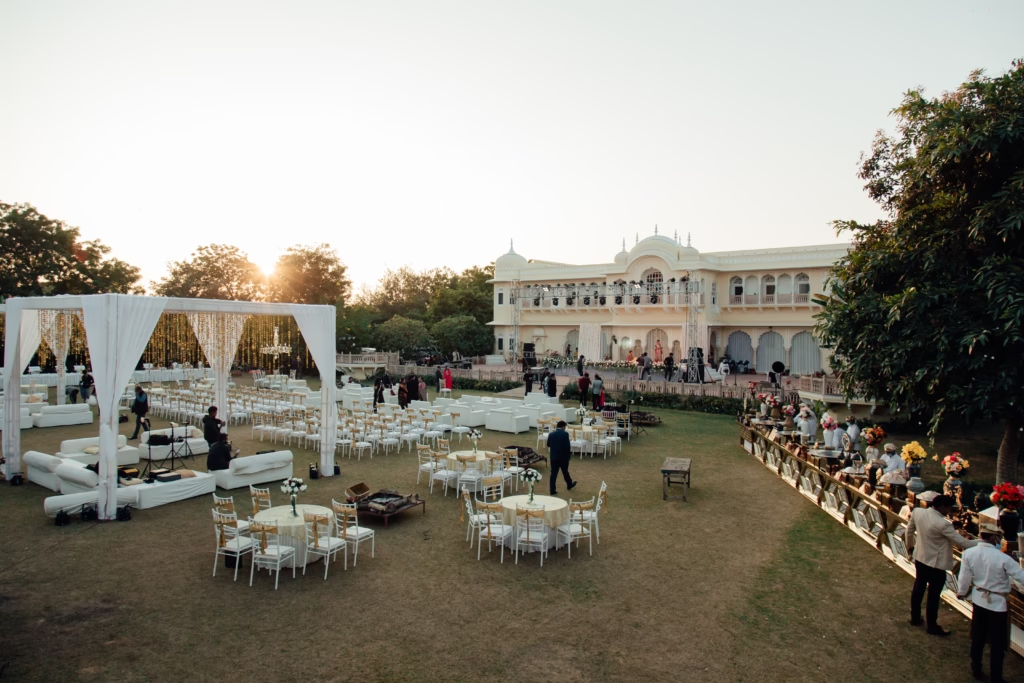
Why is an operational recce essential before event day?
An operational recce (site inspection) lets planners verify real-world logistics—such as doorway width for stage props, raw electrical capacity, kitchen hygiene standards, loading dock access windows, and mobile network strength for digital payment counters.
Understanding what is the process of event management shifts your perspective from seeing an event as a chaotic series of decisions to managing it as a structured, predictable project workflow. By setting clear parameters, building detailed operational budgets, sourcing reliable vendors, and enforcing strict run sheets, you can eliminate host stress and deliver exceptional guest experiences. Equipped with this structured framework, you are ready to approach your event planning with confidence, clarity, and control.




Leave a Comment