
Table of Contents
What if it Rains on Your Wedding Day? Hyderabad Weather Backup Guide
Asking what if it rains on your wedding day is one of the most common concerns for couples planning an outdoor celebration. Whether you are hosting a picturesque Mehendi on a lush lawn in Gandipet, an open-air Sangeet in Financial District, or a morning Pelli in Shamshabad, an unseasonal downpour or monsoon deluge can quickly compromise unshielded decor, electrical systems, and guest comfort if you lack a structured backup strategy.
With proper weather contingency planning, rain does not have to ruin your celebration. From booking dual-zone venues in Hyderabad to setting strict decision timelines with your vendors, this comprehensive guide outlines how to safeguard your wedding day against unseasonal weather.
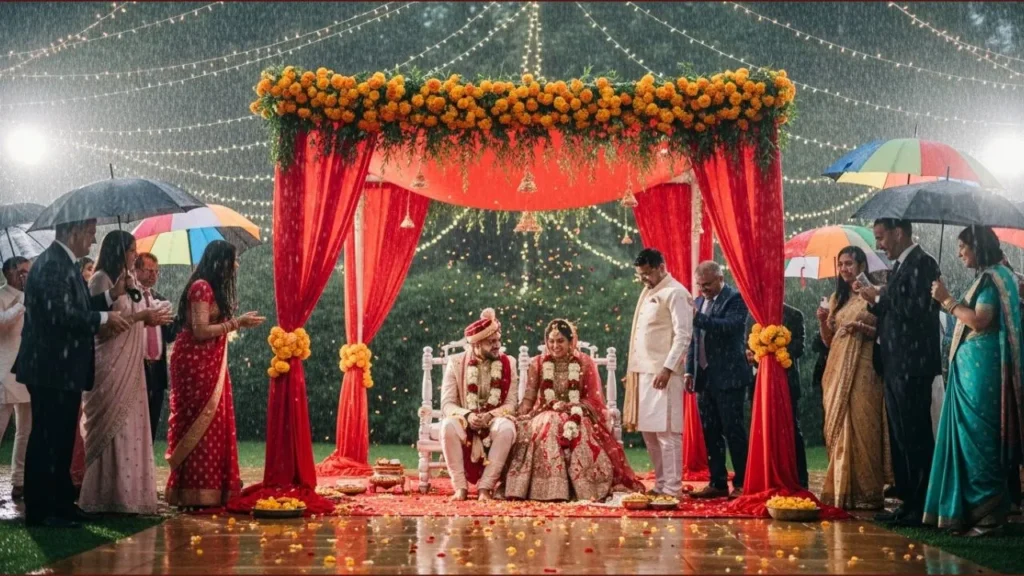
What Happens When it Rains on Your Wedding Day?
When it rains on your wedding day, outdoor setups face mud accumulation, saturated decor fabrics, electrical short-circuit risks, and catering temperature drops. Managing these issues requires executing a pre-planned weather contingency strategy that shifts the ceremony indoors or under a reinforced waterproof German tent without halting the event timeline.
┌─────────────────────────────────────────────────────────────────────────────┐
│                   WEATHER CONTINGENCY DECISION MATRIX                       │
├──────────────────────────────┬──────────────────────────────┬───────────────┤
│ THREAT LEVEL                 │ OPERATIONAL ACTION           │ LEAD TIME     │
├──────────────────────────────┼──────────────────────────────┼───────────────┤
│ Light Drizzle / Passing Fog  │ Deploy Umbrellas & Matting   │ 30 Minutes    │
│ Unseasonal Passing Shower    │ Cover Buffet & Move Seating  │ 2 Hours       │
│ Heavy Downpour / Monsoon     │ Execute Indoor Hall Transfer │ 4 to 6 Hours  │
│ Prolonged Storm / Cyclone    │ Full Waterproof Hangar Shift │ 12+ Hours     │
└──────────────────────────────┴──────────────────────────────┴───────────────┘
Why Weather Contingency Planning Matters in Hyderabad
Open-air lawns across Telangana—particularly along the Kompally, Shamshabad, and Chevella belts—offer scenic backdrops for mandaps and grand reception stages. However, regional weather patterns can be unpredictable.
The South-West monsoon (June to September) regularly brings heavy downpours, while post-monsoon depressions (October to November) and unseasonal pre-monsoon showers (April to May) can bring sudden, intense rainfall.
Standard Outdoor Setup Output           Rain-Protected Setup Target
├── Saturated Lawn & Muddy Carpets      ├── Elevated Wooden Sub-Flooring
├── Wet Buffet Line & Cold Food         ├── Covered Water-Shielded Service Hangars
├── Shorted Power & Tripped Breakers    ├── Raised Waterproof Junction Boxes
└── Ruined Silk Drapes & Soaked Seating └── German Waterproof PVC Structures
Couples who rely solely on good weather often face major logistical challenges during unexpected rain:
- Saturated Grounds: Unprotected grass transforms into soft mud within minutes, making walking difficult for guests in heels or heavy traditional attire like lehengas and kanjeevaram sarees.
- Electrical Vulnerabilities: Exposed power lines, floor-level extension boxes, and unshielded stage lighting pose serious safety hazards when wet.
- Food Quality Loss: Open-air buffet counters cool down rapidly in cold wind and rain, leading to soggy food and diluted gravies.
- Cost Inefficiencies: Attempting to source emergency tents or indoor halls at the last minute results in inflated rental rates and rushed, messy execution.
The 6 Pillars of a Wet-Weather Wedding Contingency Plan
Preparing for rain requires incorporating weather resilience into every vendor contract, venue layout, and event timeline from day one.
                          ┌── 1. Dual-Zone Venue Securing
                          ├── 2. Structural Waterproofing & Tenting
Weather Contingency ──────┼── 3. Electrical & Power Safety Protocols
   Architecture           ├── 4. Guest Hospitality & Mobility Logistics
                          ├── 5. Catering & Food Station Protection
                          └── 6. Photography & Wardrobe Safeguards
1. Dual-Zone Venue Contracts
The most reliable defense against rain is securing a venue that offers both open-air lawns and an adjacent indoor banquet hall under a single booking contract.
- Equal Capacity Matching: Ensure the indoor hall can comfortably seat your full guest list. A lawn designed for 800 guests paired with a backup hall that only holds 300 will create severe overcrowding if everyone moves inside.
- Exclusive Usage Guarantees: Confirm that the venue management will not rent out your backup indoor hall to a separate party on your event date.
- Proximity Matters: Choose venues where the indoor hall is connected to the outdoor lawn via covered walkways, allowing guests to transition indoors without getting wet.
2. Structural Waterproofing and Tenting Standards
If your venue does not have an indoor hall, you must install temporary weather-proof structures over key operational zones.
- German Tents vs. Water-Resistant Cloth: Never rely on standard decorative cloth drapes (shamianas) for rain protection. They absorb water, become heavy, and leak. Require structural German tents constructed with high-density PVC vinyl fabric mounted on aluminum trusses.
- Raised Wooden Platform Sub-Flooring: Laying carpet directly onto lawn grass offers zero protection against water pooling. Insist on a raised wooden sub-floor (at least 4 to 6 inches off the ground) beneath all carpeted areas, dining zones, and stage setups.
- Integrated Guttering Systems: Ensure adjacent tents are connected with industrial rain gutters that direct runoff away from guest walkways and entrance corridors.
┌───────────────────────────┬───────────────────────────────────┬────────────────────────────────┐
│ Tenting Component         │ Standard Fair-Weather Setup       │ Wet-Weather Recommended Standard│
├───────────────────────────┼───────────────────────────────────┼────────────────────────────────┤
│ Structural Frame          │ Bamboo Pole / Iron Pipe Frame     │ Heavy-Duty Aluminum Truss      │
├───────────────────────────┼───────────────────────────────────┼────────────────────────────────┤
│ Overhead Canopy           │ Decorative Cotton Cloth / Sheer   │ High-Density PVC Vinyl Hangar  │
├───────────────────────────┼───────────────────────────────────┼────────────────────────────────┤
│ Flooring Foundation       │ Direct Grass Carpet Overlay       │ 6-Inch Elevated Wooden Decking │
├───────────────────────────┼───────────────────────────────────┼────────────────────────────────┤
│ Side Enclosures           │ Open Fabric Swag Curtains         │ Solid PVC / Clear ABS Panels   │
└───────────────────────────┴───────────────────────────────────┴────────────────────────────────┘
3. Electrical and Power Safety Protocols
Rain and electricity are a dangerous combination. Outdoor sound systems, heavy lighting rigs, and kitchen equipment require strict safety precautions.
- Elevated Cables and Distribution Boxes: All electrical cables, multi-plug boards, and generator connections must be lifted off the ground using rubber mats or wooden blocks to prevent water exposure.
- RCD and GFCI Circuit Breakers: Verify that your lighting and sound vendors use Residual Current Devices (RCD) or Ground Fault Circuit Interrupters (GFCI) that trip instantly if moisture enters the circuit.
- Sound Console Protection: Ensure the main audio mixing console and DJ gear are housed inside a fully enclosed waterproof tent rather than under a simple parasol or umbrella.
4. Guest Hospitality and Mobility Logistics
Caring for your guests’ comfort during rain requires proactive, thoughtful hospitality touches.
- Valet and Drop-off Canopy: Position a covered drop-off arch (Porte-Cochère) or waterproof extension at the main entry gate so guests can step out of their vehicles without getting wet.
- The Umbrella Escort Team: Station a dedicated hospitality team equipped with large golf umbrellas at the valet parking drop-off and along all open walkways.
- Hospitality Stations: Place umbrella stands, non-slip rubber entrance mats, and dry towel baskets at all venue entrances.
5. Catering and Food Station Protection
Rain can quickly disrupt food service if kitchen and dining areas are not properly sheltered.
- Covered Live Food Counters: Street-food stalls (chaat, dosa, tandoor) must be set up under deep, covered overhangs with side walls to prevent wind-driven rain from reaching food pans.
- Enclosed Kitchen Passages: Ensure the service path between the primary kitchen area and the buffet tables is completely covered.
- Thermal Chafing Dishes: Use double-walled, insulated brass or stainless-steel chafing dishes with wind-protected gel burners to keep food piping hot despite cold weather.
6. Photography and Wardrobe Safeguards
Rain does not have to ruin your photos or bridal attire if you plan ahead.
- Scout Indoor Photo Locations: Identify covered architectural features—such as pillared hallways, grand staircases, glass foyers, or covered archways—for portraits if the gardens are unusable.
- Bridal Lehenga Protection: Use hidden bustle hooks, wrist loops, or petticoat ties to lift heavy skirts off wet surfaces when moving between locations. Keep a dedicated attendant equipped with dry hand towels and stain-removing chalk or wipes nearby.
- Clear Prop Umbrellas: Keep several large, clear bubble umbrellas on hand for outdoor portraits. Clear umbrellas let in natural light while creating romantic, candid photo opportunities in the rain.

How to Build a Weather Contingency Plan Step-by-Step
Follow this step-by-step framework to ensure your event is fully prepared for unexpected rain.
[Phase 1: Venue & Contracts] ──> [Phase 2: Technical Audits] ──> [Phase 3: Rain Call Protocol] ──> [Phase 4: Execution]
Step 1: Secure Dual-Zone Venue Rights During Booking
- When evaluating venues in areas like Jubilee Hills, Gachibowli, or Shamshabad, insist on booking a combined indoor-outdoor space.
- Ensure your contract explicitly grants your event exclusive access to the indoor hall without extra last-minute surge fees.
Step 2: Establish “Rain Call” Timelines with All Vendors
- Define a clear cut-off time for deciding whether to move the event indoors or deploy full waterproofing.
- Major Structures (Tents/Hangars): Decide 12 to 24 hours prior to guest arrival.
- Decor, Stage, & Mandap Shift: Decide 4 to 6 hours prior to guest arrival.
- Seating, Place Settings, & Florals: Decide 2 to 3 hours prior to guest arrival.
Step 3: Audit Electrical & Power Infrastructures
- Walk the venue grounds with your decorator and electrician 48 hours before the event.
- Identify low-lying areas prone to water pooling, elevate all electrical connections, and confirm that backup diesel generators are parked on high, dry ground with waterproof housing.
Step 4: Finalize Water-Resistant Layouts & Flooring
- Confirm that your decorator uses raised wooden sub-flooring beneath lawn carpets.
- Verify that all dining, bar, and seating areas are situated beneath solid PVC German tent roofing rather than permeable decorative cloth.
Step 5: Assemble the Wet-Weather Hospitality Kit
- Procure 30 to 50 large, sturdy umbrellas (a mix of clear bubble umbrellas for the bridal party and large golf umbrellas for valet staff).
- Set up heavy-duty non-slip rubber matting along all main entrances and walkways.
Step 6: Execute the Day-of Weather Monitoring & Contingency Plan
- Monitor local meteorological radar updates throughout the morning.
- If rain is forecasted within your decision window, convene a 10-minute briefing with your lead planner, decorator, caterer, and venue manager to formally trigger the “Rain Call” and execute the indoor shift.
4 Common Myths About Rainy Wedding Days
Myth 1: “A decorative cloth shamiana will keep guests dry during a heavy downpour.”
Fact: Traditional cotton or polyester decorative drapes (shamianas) are designed solely for shade and light aesthetics. Under heavy rain, the fabric absorbs water, stretches, forms sagging water pockets, and eventually leaks. True rain protection requires waterproof PVC-laminated German tent structures.
Myth 2: “Rain completely ruins all wedding photography.”
Fact: Rainy weather offers unique lighting conditions. Overcast skies act as a natural softbox, eliminating harsh shadows and squinting. When paired with clear umbrellas, warm string lights, and wet pavement reflections, rain can result in dramatic, romantic wedding portraits.
Myth 3: “If it rains, we can quickly move everything indoors in 15 minutes.”
Fact: Moving an entire wedding setup—including heavy floral mandaps, brass structures, stage backdrops, sound systems, lighting rigs, and dining tables—takes a team of 20 to 40 crew members at least 2 to 4 hours. This is why establishing a strict “Rain Call” 4 to 6 hours before guest arrival is essential.
Myth 4: “Rain on a wedding day is a sign of bad luck.”
Fact: Across many Indian cultural traditions, rain during a wedding is considered an auspicious sign. It symbolizes spiritual cleansing, fertility, financial abundance, and a strong, enduring bond between the couple.
Real-World Weather Contingency Scenarios
Scenario 1: The Unseasonal November Downpour in Shamshabad
- The Context: A couple planned an 800-guest outdoor reception on a lawn venue in Shamshabad. Four hours before guest arrival, an unseasonal depression in the Bay of Bengal brought heavy downpours across Hyderabad.
- The Contingency Execution: The couple had secured a contract with a pre-allocated indoor hall. Because they made the “Rain Call” at 1:00 PM (5 hours before the 6:00 PM start time), the decor crew successfully moved the stage backdrop, floral arrangements, and dining tables inside.
- Outcome: Guests arrived at a dry, air-conditioned hall with no delays, preserved food quality, and zero electrical interruptions.
Scenario 2: The Sangeet Lawn Rescue in Financial District
- The Context: An open-air Sangeet featuring a large LED floor and extensive truss lighting was scheduled on a lawn in Gachibowli during a drizzly July evening.
- The Contingency Execution: The planner had pre-installed a clear-span German tent with raised wooden sub-flooring over the entire lawn 24 hours prior. All electrical cables were elevated, and water channels were cleared around the perimeter.
- Outcome: When light rain fell during the event, the performance continued without interruption under the clear roof, creating a memorable dance experience with rain visible overhead.
What to Look for When Planning a Weather-Proof Event
When planning an outdoor event, choosing the right venue and vendors can make all the difference in managing unpredictable weather. Keep these guidelines in mind:
- Verify Venue Drainage Capacity: During your venue site visit, inspect the grounds for adequate slope, functional storm drains, and solid gravel or paved access roads behind kitchen areas.
- Review Vendor Equipment Rigor: Ensure your decorator owns or rents structural German tents with aluminum trusses and elevated wooden decking rather than relying on simple cloth drapes.
- Hire Experienced Regional Coordinators: Managing sudden weather shifts requires calm leadership and strong vendor relationships. Hyderabad-based companies like Prashasta Events (prashastaevents.com) coordinate venue management, catering logistics, and decor teams under a single contingency strategy, taking the stress out of weather decisions.
- Maintain Clear Guest Communication: If severe weather hits on the morning of your event, use broadcast messaging or your wedding website to update guests on parking arrangements, venue shifts, or covered entry details.
Frequently Asked Questions
What if it rains on your wedding day in an outdoor lawn venue?
If it rains on your wedding day, immediately activate your pre-arranged contingency plan. This involves executing a “Rain Call” 4 to 6 hours before guest arrival to transition the mandap, seating, and catering to a pre-booked indoor banquet hall or under a waterproof German tent structure with raised wooden flooring.
How much does a German tent weather backup cost in Hyderabad?
Renting a waterproof German tent or aluminum hangar structure in Hyderabad typically costs between ₹80,000 and ₹3,500,000 depending on total square footage, side-wall paneling, air conditioning integration, and elevated wooden platform sub-flooring.
Is rain on your wedding day considered good luck in Indian culture?
Yes, across many Indian traditions, rain on a wedding day is regarded as a sacred blessing symbolizing fertility, cleansing, renewal, and a prosperous, long-lasting marriage.
When should you make the final decision to move an outdoor wedding indoors?
Experienced event coordinators recommend making the “Rain Call” 4 to 6 hours before the ceremony start time. This gives the decor, sound, and catering teams enough time to shift heavy floral mandaps, lighting rigs, and buffet counters without disrupting guest arrival.
How do you protect a bridal lehenga or silk saree from wet lawn mud?
Protect heavy bridal wear by fitting a hidden bustle or wrist loop to hold up long trains, laying down raised wooden or carpeted walkways across wet grass, and keeping a dedicated bridal attendant equipped with dry towels and stain-removal kits nearby.
Can caterers maintain hot food quality during heavy monsoon downpours?
Yes, caterers preserve hot food quality during rain by utilizing fully enclosed water-resistant cooking hangars, double-walled brass or stainless-steel chafing dishes with gel-fuel burners, and covered water-shielded serving corridors.
How do you handle guest valet parking during sudden heavy rains in Hyderabad?
Manage wet-weather parking by deploying valet teams equipped with large golf umbrellas, setting up covered porch drop-off zones (Porte-Cochère), laying non-slip rubber matting across walkways, and maintaining clear drainage channels around parking lots.

What is the difference between waterproof tents and rain-resistant drapes?
Rain-resistant drapes are decorative fabrics (like silk or cotton) treated to repel light mist, but they quickly saturate and leak under heavy rain. True waterproof tents utilize high-density PVC or multi-layer vinyl membranes sealed over rigid aluminum trusses with gutters.
Unseasonal rain does not have to compromise your vision or disrupt your celebration. By securing a dual-zone venue, establishing clear “Rain Call” timelines, insisting on proper German tenting and elevated sub-flooring, and prioritizing guest hospitality, you can navigate any weather challenge with confidence. Armed with this practical framework, you are well positioned to host a beautiful, seamless, and rain-proof wedding day.



Leave a Comment