
Table of Contents
Creative Birthday Themes for Kids: Strategy & Trends Guide
Designing children’s milestone events has evolved past simple decor and basic entertainment. Modern parents, corporate clients, and professional event planners now expect experiential gatherings that focus on active engagement, storytelling, and high visual appeal. Finding truly creative birthday themes for kids requires looking past standard mass-market characters to create immersive environments tailored to specific age groups and venue styles.
An exceptional event production relies on strategic planning rather than just assembling decorative pieces. Planners must balance entertainment flow, catering logistics, safety rules, and photo-friendly design choices. Moving away from standard, passive parties means understanding how physical spaces, lighting, and interactive activities combine to keep young guests truly engaged.
This guide provides a detailed analysis of high-performing, immersive children’s event designs. Drawing from professional experience in premium event production, we will look at technical setup logistics, cost efficiencies, and the critical design decisions needed to execute a flawless celebration.
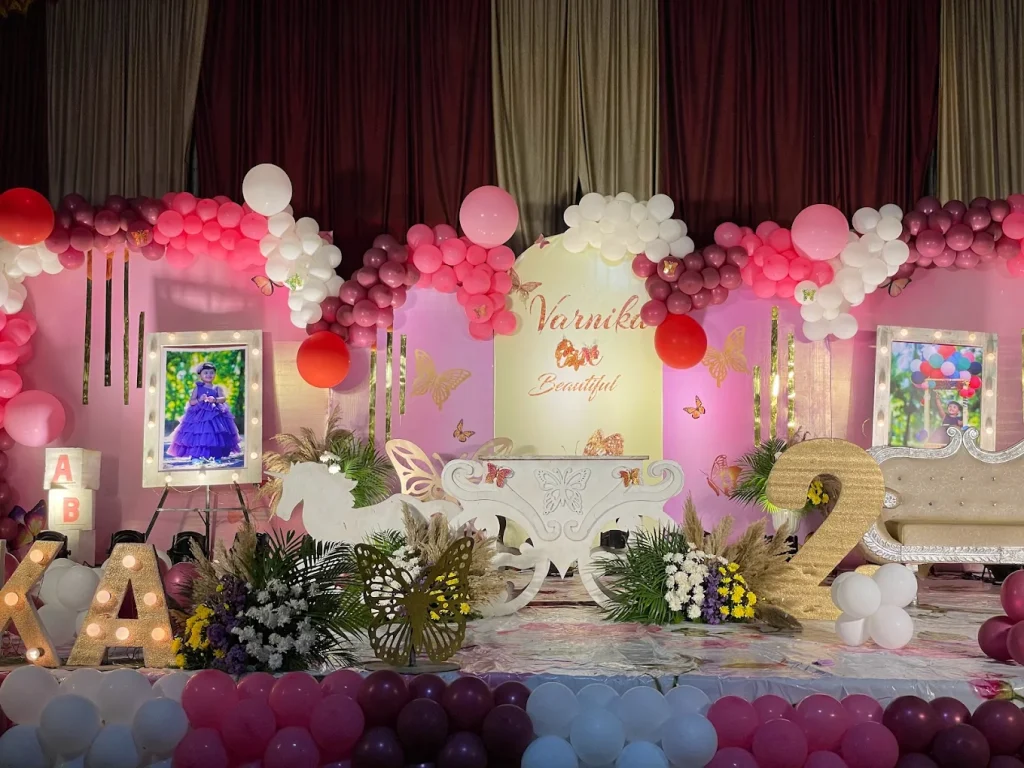
High-Engagement Theme Comparison Matrix
| Concept System | Primary Age Bracket | Key Immersive Element | Technical Complexity | Floor Space Requirement |
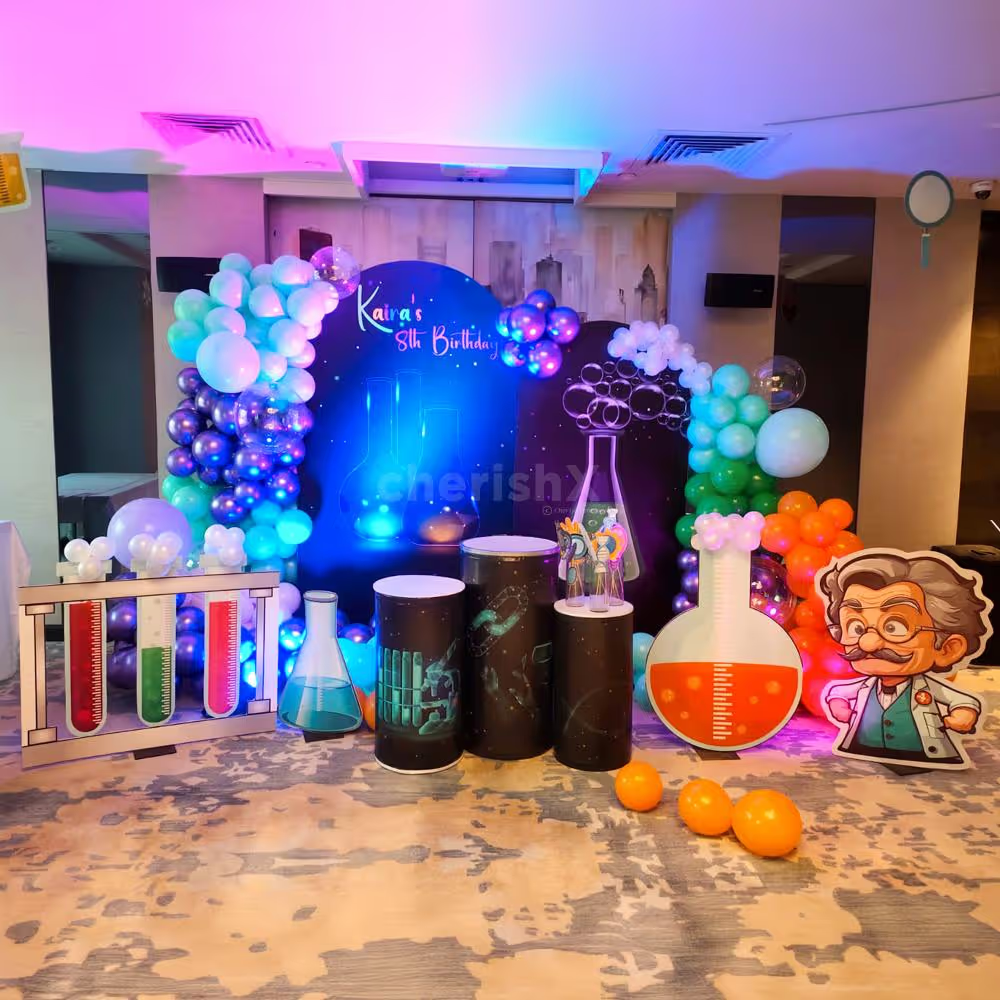
| Cosmic Discovery Lab | 6 – 11 Years | Interactive science & projection mapping | High (Requires dedicated power/AV) | Medium (Indoor preferred) |
| Little Chefs Culinary Academy | 5 – 9 Years | Individual prep stations & custom apparel | Medium (Requires water access/sanitation) | High (Spaced work surfaces) |
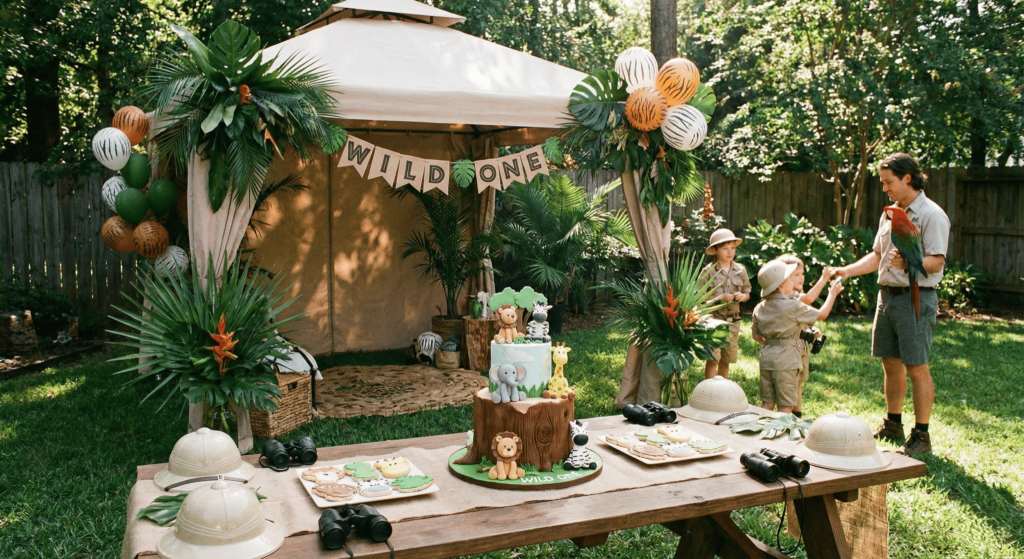
| Jungle Safari & Survival | 2 – 7 Years | Natural textures, organic arches & soundscapes | Low to Medium (Focus on prop styling) | High (Indoor or outdoor lawn) |
| Retro Arcade & Neon Pixel | 8 – 14 Years | Functional gaming cabinets & blacklight decor | High (Heavy power load distribution) | Medium (Darkened venue zone) |
Defining Experiential Kids’ Event Frameworks
What Are Immersive Children’s Party Themes?
Creative birthday themes for kids are comprehensive, experiential event design systems that combine customized scenic backdrops, sensory elements (like specialized soundscapes and targeted lighting), age-appropriate interactive activities, and curated menu choices to keep young guests engaged in an active, narrative-driven environment rather than a passive party space.
How to Choose the Right Creative Birthday Themes for Kids
Selecting an experiential event theme requires looking closely at several key structural and operational details beyond basic visual ideas.
                  PRODUCTION WORKFLOW & LOGISTICAL FLOW

       +--------------------------------------------------+
       | 1. Venue & Infrastructure Assessment             |
       | Verify ceiling heights, electrical loads, and    |
       | clean water access for active stations.           |
       +--------------------------------------------------+
                               |
                               v
       +--------------------------------------------------+
       | 2. Interactive Entertainment Logistics           |
       | Balance structured activities with open play     |
       | times to maintain proper guest engagement.       |
       +--------------------------------------------------+
1. Age-Appropriate Ergonomics and Activity Flow
Children’s physical coordination and attention spans change dramatically every couple of years. A theme that requires fine motor control—like complex crafting or detailed baking—will frustrate toddlers, while simple mascot appearances won’t engage pre-teens. Planners must match the spatial layout, activity timing, and structural prop sizes to the developmental needs of the specific age group.
2. Technical Venue Infrastructure and Utility Access
Immersive setups often feature unique technical needs, such as ultraviolet blacklights, high-capacity food prep equipment, or projection screens. Before picking a theme, confirm your venue can handle the required electrical load without tripping breakers. Active cooking or science themes also need quick access to clean water stations and easy-to-clean floor surfaces.
3. Vendor Safety Certifications and Material Choices
High-quality event planning prioritizes child safety above all else. Scenic pieces, fabrics, and interactive props should be fire-retardant, non-toxic, and free of sharp edges. If your theme includes live demonstrations—like dry ice experiments or guided cooking—ensure your specialty entertainers hold proper safety certifications and insurance.
Detailed Breakdown of Immersive Birthday Themes
1. Cosmic Discovery Lab
This theme turns a standard hall into an interactive space station and science laboratory, perfect for curious minds.
- Pros: High engagement through hands-on chemistry and space experiments; visually striking under neon or UV lighting.
- Cons: Requires precise ambient light control and extra staff to safely guide kids through the activities.
2. Little Chefs Culinary Academy
An interactive cooking and baking setup where kids wear custom aprons and learn to prepare their own party treats.
- Pros: Built-in dining activity that serves as both entertainment and food service; unique photo opportunities with personalized chef outfits.
- Cons: Needs strict attention to food allergen tracking, sanitation stations, and ample table space for each guest.
3. Jungle Safari & Survival Adventure
An outdoor-friendly or indoor green space setup that brings the wild outdoors to life using natural textures and animal lifelike props.
- Pros: Works beautifully on outdoor lawns or in large sunrooms; uses classic, universally loved themes that cross many age groups.
- Cons: Requires secure anchoring for large outdoor props against wind, along with backup plans for sudden weather changes.
4. Retro Arcade & Neon Pixel System
A bold, high-energy theme featuring classic arcade systems, glow-in-the-dark accents, and pixel-art decor elements designed for older kids.
- Pros: Perfect for engaging hard-to-please pre-teens; strong visual style that works well in dark indoor spaces.
- Cons: High power demands for multiple gaming screens and audio systems, requiring careful cable management to prevent tripping.
Strategic Audience Segmentation: Theme Selection Guide
Different group dynamics and venue styles require specific theme types:
- The Early Childhood Exploration Group (Ages 2-4): Best suited for sensory-rich, open-ended environments like the Jungle Safari. Focus on tactile elements like soft plush textures, low-climb structures, and gentle background sounds rather than structured, timed games.
- The Mid-Childhood Achievement Group (Ages 5-9): Best suited for goal-oriented, skill-building choices like the Little Chefs Culinary Academy. Kids this age enjoy following simple step-by-step processes, wearing themed outfits, and showing off a finished product.
- The Pre-Teen Social Group (Ages 10-14): Best suited for high-energy, visually distinct styles like the Retro Arcade & Neon Pixel System. This group prefers informal socializing, interactive gaming stations, and plenty of well-lit backdrops for taking photos with friends.
What Should I Look for When Hiring a Specialized Kid’s Entertainment Vendor?
Critical Logistical Questions for Coordinators
When checking out interactive vendors and entertainment options with your planning team, ensure you cover these technical details:
- “What is the exact ratio of trained adult supervisors to participating children for this specific activity?”
- “Are all chemical solutions, cosmetic paints, and slime ingredients hypoallergenic and certified non-toxic?”
- “Does your setup require a dedicated electrical circuit separate from our main audio-visual system?”
- “How much set-up time is needed to assemble and safety-test the interactive pieces before the party starts?”
Critical Pitfalls in Children’s Event Production
Prioritizing Visual Decor Over Practical Play Space
It is easy to fill a venue with beautiful props and massive balloon arches, only to leave the children with very little room to move around safely. Packed floor plans lead to accidental collisions and broken decorations. Always preserve a clear, open zone for active games and free play.
Forgetting Transition and Downtime Management
Young guests can easily get overwhelmed when moving quickly from a high-energy game straight into a formal sit-down meal. Lacking clear transition times can lead to mid-party meltdowns or restless behavior. Schedule short, calming intervals—like a brief magic show or quiet storytelling session—to help kids wind down between high-energy activities.
FAQs
How long should a structured interactive kid’s birthday party last?
For children aged 2 to 5, a 2-hour window is ideal to prevent overstimulation. For older children aged 6 to 12, events can run up to 3 hours, allowing plenty of time for detailed crafts, escape rooms, or interactive cooking challenges.
How do we handle food allergies across different creative themes like baking?
Collect detailed dietary restrictions through your RSVP system at least two weeks before the event. When hosting food-centric themes, set up completely separate, cross-contamination-free prep surfaces and clearly label all alternative ingredients.
What is the best way to handle mixed age brackets at a themed birthday party?
Incorporate a main theme that features tiered activity levels. For instance, a space science theme can offer simple sensory slime-making for younger siblings alongside advanced rocket-model building for the older guests.
How much power does a neon arcade or high-tech projection theme typically require?
A standard commercial room outlet handles around 15-20 amps. A retro arcade or heavy AV setup can easily overload a single circuit, so you should distribute your equipment across multiple distinct power lines or bring in a dedicated generator.
Are outdoor lawn spaces safe for active immersive themes like survival challenges?
Yes, provided you conduct a thorough site sweep beforehand to remove debris, smooth out uneven ground, and set up clear safety boundaries. Always ensure you have a secure indoor room available as a backup for unseasonal weather.
How far in advance should we secure custom themed props and personalized apparel?
Custom manufacturing for personalized items like monogrammed chef hats, lab coats, or custom stage flats takes time. Aim to finalize your bookings six to eight weeks out to allow for production and shipping buffers.
Can experiential themes be scaled down for smaller residential venues?
Absolutely. Themes like the science lab can easily be adapted for home settings by replacing large projection backdrops with smaller tabletop experiment kits and focused LED accent lights.
Do we need special insurance for interactive children’s parties?
Professional planners should maintain comprehensive commercial general liability insurance. Additionally, verify that any specialty vendors—such as mobile climbing walls or science performers—carry independent safety coverage.
Summary: Designing Memorable Experiential Celebrations
A successful children’s event strikes a careful balance between imaginative styling and smart, safe layout design. Ensuring your chosen theme fits the physical venue, matches the developmental stage of the guests, and leaves ample room for active play helps you avoid common production hiccups and keeps the day fun for everyone.
Taking the time to plan out these logistical details lets your design teams work efficiently and safely on-site. This thorough preparation ensures a reliable production, allowing you to relax and enjoy a memorable celebration.
For custom layout plans, technical venue checks, or full-service event coordination tailored to unique children’s themes, consider consulting an expert firm like Prashasta Events. Our experienced coordination teams excel at blending creative styling with reliable on-site logistics. Contact our design studio today to schedule your event strategy session.



Leave a Comment