

Table of Contents
Budget wedding planners in India : Value-Driven Weddings in Modern India
The Indian wedding industry is currently witnessing a fascinating evolution. While the “Big Fat Indian Wedding” remains a cultural touchstone, a growing segment of the population is pivoting toward “Value-Based Luxury.” Today, the search for budget wedding planners in India isn’t about cutting corners; it is about the strategic optimization of resources. Couples in 2026 are increasingly analytical, seeking to maximize the “Guest Experience” while minimizing “Logistical Waste.”
In a country where wedding costs can range from a few lakhs to several crores, the role of a budget-conscious planner is to act as a financial architect. They don’t just “organize”; they engineer savings by navigating the complex vendor ecosystem, leveraging long-standing relationships, and applying technical expertise to design high-impact celebrations on a disciplined budget.

Why Budget Planning Matters in the Current Economic Landscape
The importance of specialized budget planning has never been higher. With the rising costs of premium venues in metros and the inflationary pressure on gold and catering, an unmanaged wedding budget can spiral out of control within weeks. Budget planners provide the structural discipline needed to keep a celebration sustainable.
Moreover, the modern Indian professional—whether based in Bangalore’s tech hubs or Delhi’s corporate centers—values transparency. They want to know exactly where every rupee is going. A professional planner ensures that the “hidden costs” of logistics, generator fuel, and miscellaneous vendor tips are accounted for from day one, preventing stressful last-minute financial surprises.
Local Event Trends: What defines “Budget” in 2026
Indian weddings are moving away from sheer volume toward meaningful detailing. Several trends are helping budget planners achieve more with less:
- The “Intimate Grandeur” Move: Instead of 1,500 guests, couples are opting for 200–300 guests but choosing high-quality catering and immersive decor.
- Sustainability as a Cost-Saver: Using locally sourced flowers (like marigolds and jasmine) and biodegradable decor isn’t just eco-friendly; it significantly reduces the transport costs associated with imported blooms.
- Weekday Weddings: A significant trend where hosting celebrations on a Tuesday or Wednesday can result in a 20–30% discount on venue rentals.
Types of Popular Budget Events Across India
Budget planners are most frequently engaged for three specific types of celebrations that require high coordination:
1. The “Native” Destination Wedding
Instead of expensive international locales, planners are utilizing “hidden gem” locations within India—such as the backwaters of Andhra Pradesh, the hills of Himachal, or the heritage forts of Rajasthan—that offer a luxury backdrop at domestic prices.
2. Residential Multi-Day Rituals
For families with large ancestral homes or spacious community centers, planners are transforming private spaces into “Luxe-Home” venues, saving lakhs on commercial venue rentals.
3. The Tech-Enabled Hybrid Wedding
Focusing on a physical event for close family while investing in high-end streaming for the extended network. This allows for a smaller physical footprint (lower F&B costs) without excluding anyone from the joy.

Logistics & Venue Intelligence: Managing the “Hidden” Costs
The success of a budget wedding depends on how the planner manages the physical movement of goods and people. In India, logistics can be the biggest budget-killer if not handled with precision.
- The Proximity Factor: Professional planners prioritize sourcing vendors within a 10–15 km radius of the venue. This drastically reduces “transport and labor” charges, which are often hidden in vendor quotes.
- In-House Inventory: Top-tier budget wedding planners in India often maintain their own inventory of basic decor elements—trusses, fabrics, and lighting. By using their own stock, they can offer significant discounts compared to planners who outsource every single prop.
Compliance and Cultural Nuances
Indian weddings are a blend of legal requirements and deep-seated traditions. A planner must navigate both without friction.
1. Licensing and Permissions: Even for a budget wedding, one cannot skip the PPL/IPRS licenses for music or the necessary police permissions for Baraats. Planners handle these “administrative hurdles” to avoid heavy fines that can ruin a budget.
2. Food Sensitivity: In a country with diverse palates, catering is the most scrutinized element. Planners focus on “quality over quantity”—a well-curated 12-item menu often leaves a better impression than a 50-item buffet where the quality is inconsistent.
3. Ritual Timing: The “Muhurtham” or auspicious time often dictates the logistics. Planners ensure that the transition between rituals is seamless, preventing “overtime” charges from venue staff and decorators.
Pricing Overview: The Indian Context (2026)
While “budget” is subjective, the Indian market generally categorizes it based on the guest count and the level of customization.
| Event Scale | Guest Count | Estimated Budget (Low) | Estimated Budget (Mid) |
| Micro-Wedding | 50 – 100 | ₹3 Lakhs – ₹6 Lakhs | ₹7 Lakhs – ₹12 Lakhs |
| Standard Regional | 200 – 400 | ₹10 Lakhs – ₹18 Lakhs | ₹20 Lakhs – ₹35 Lakhs |
| Semi-Destination | 150 – 250 | ₹15 Lakhs – ₹25 Lakhs | ₹30 Lakhs – ₹50 Lakhs |
Budget Wedding Planner Fees in India typically range from a flat fee of ₹50,000 to ₹2,00,000 for coordination, or 10–15% of the total wedding budget. Hiring a planner can actually save you 15–20% on the total cost through their negotiated vendor rates and waste-reduction strategies.
Frequently Asked Questions (FAQs)
1. Can I really have a destination wedding on a budget?
Yes. By choosing domestic “off-beat” locations and hosting the event during the off-season (e.g., Rajasthan in August or hills in January), you can achieve a destination feel at a fraction of the cost.
2. How do budget wedding planners in India save money on decor?
They use “Impact Decor”—focusing on high-visibility areas like the entrance and stage while using subtle, cost-effective elements for the rest of the venue.
3. Is catering the most expensive part of a wedding?
Usually, yes. Catering can account for 30–40% of the budget. Planners help by optimizing the menu and preventing “plate wastage” through better guest-count management.
4. Should I hire a planner for a home wedding?
Absolutely. Home weddings often have more complex logistics regarding power, parking, and sanitation. A planner ensures your home remains a home and doesn’t turn into a chaotic construction site.
5. How far in advance should I book a budget planner?
To get the best venue rates and vendor availability, 6–8 months is ideal. However, professional firms can often execute events with a 3-month lead time.
6. Do planners charge for the first consultation?
Most professional firms like Prashasta Events offer a free initial discovery call to understand your vision and provide a rough feasibility report.
7. Can a planner help reduce guest-count related costs?
Yes, through active RSVP management. Knowing exactly how many people are attending 48 hours before the event can save lakhs in food and beverage costs.
8. Is GST applicable on wedding planning services?
Yes, a standard 18% GST is applicable on professional event management services in India.
Summary: Strategic Planning for a Flawless Day
The journey to a beautiful wedding doesn’t have to be paved with financial stress. Hiring the best budget wedding planners in India is a decision to prioritize “Operational Intelligence” over “Empty Opulence.” By focusing on what truly matters—the union of two families and the comfort of your guests—you can create an unforgettable experience that is as fiscally responsible as it is aesthetically stunning.
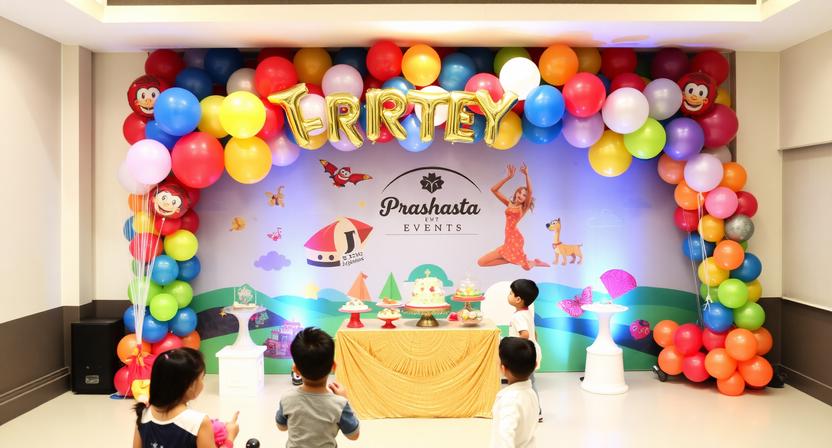
At Prashasta Events, we specialize in “Value Engineering” for the modern Indian family. Our local insights and national network allow us to bring a premium touch to every budget.
Would you like a customized budget breakdown based on your preferred city in India?



Leave a Comment