

Table of Contents
The Complete Wedding Planning Timeline: A Step-by-Step Guide for Indian Celebrations
Organizing a multi-day Indian celebration requires balancing family expectations, complex cultural rituals, high-demand vendor schedules, and strict financial boundaries. Following a structured wedding planning timeline allows couples and their families to distribute major operational milestones systematically over 12 months rather than scrambling in the final weeks. Whether you are coordinating an intimate family gathering or a 1,000-guest destination event, executing tasks in a logical sequence keeps your budget intact and ensures a smooth live experience.

What Is a Wedding Planning Timeline?
A wedding planning timeline is a chronological, step-by-step project schedule that outlines when to execute specific tasks—such as confirming auspicious dates, locking venues, hiring vendors, purchasing attire, and sending invitations—over a 6 to 12-month period before the wedding day to ensure seamless operational execution.
Why Timing and Sequence Matter in Indian Event Planning
Unlike single-day Western ceremonies, Indian weddings typically span three to five distinct functions, including the Engagement, Haldi/Mehendi, Sangeet, main ceremony (Pelli/Pheras), and Reception. Managing this multi-event structure without a rigid timeline creates severe operational bottlenecks:
- Panchangam and Muhurtham Scarcity: Auspicious dates calculated by family priests (Siddhantis or Pandits) often fall on the same few weekends each season. Top venues and high-end caterers book out 9 to 12 months in advance for these specific dates.
- Custom Fabrication Lead Times: Intricate stage backdrops, custom mandaps, and tailored bridal couture require extensive production lead times. Ordering attire or decor structures late incurs heavy rush fees or compromises quality.
- Guest Travel and Accommodation Blocks: Coordinating travel for out-of-town relatives requires securing hotel room blocks and transport fleets well before commercial airlines and hotel rates surge.
The 12-Month Master Wedding Planning Timeline
To help you stay on track, this month-by-month checklist breaks down the entire event planning process from initial engagement to the post-wedding handover.
┌─────────────────────────────────────────────────────────────┐
│                 12-MONTH PLANNING ROADMAP                   │
├─────────────────────────────────────────────────────────────┤
│ Months 12–10: Foundation, Budget & Venue Locks             │
│ Months 9–7:   Core Vendor Contracting & Attire Sourcing      │
│ Months 6–4:   Theme Design, Invitations & Culinary Audits   │
│ Months 3–2:   RSVP Tracking, Logistics & Run-Sheets          │
│ Month 1:      Final Briefings, Walkthroughs & Live Execution │
└─────────────────────────────────────────────────────────────┘
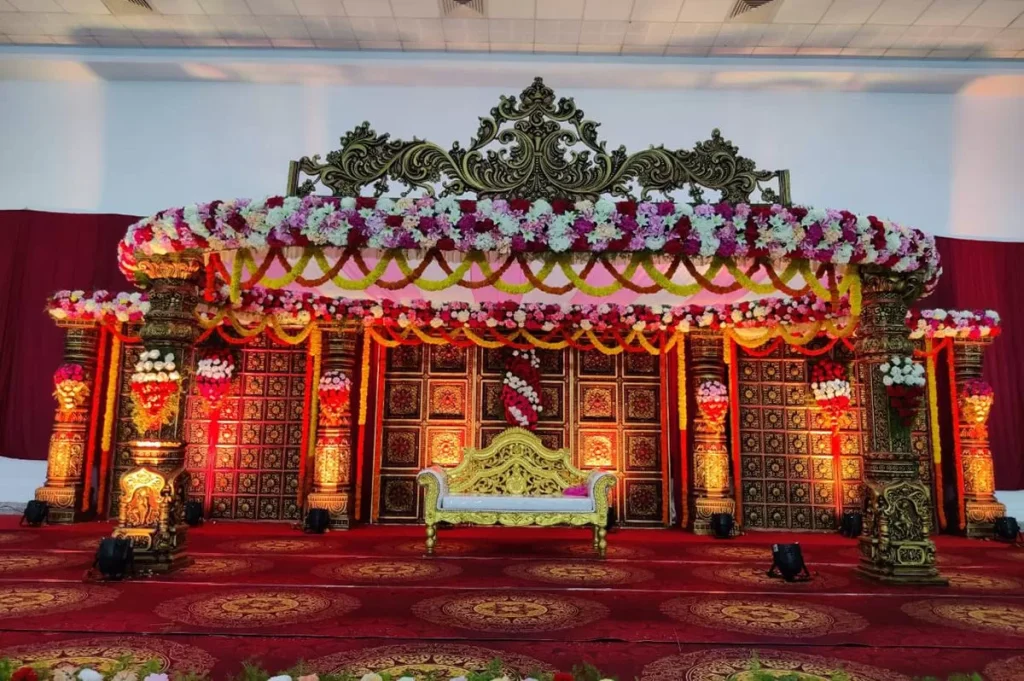
1.Foundation, Budget Allocation & Venue Locking:Months 12 to 10.
Confirm your auspicious dates (Muhurthams) with your family priest. Establish your total financial limit and split allocations across venues, catering, decor, photography, and attire. Draft your preliminary guest list and inspect potential venues to lock in physical dates with advance deposits.
2.Core Vendor Contracting & Bridal Attire Sourcing:Months 9 to 7.
Research and hire key individual suppliers who can only take one event per day: your lead photographer, videographer, makeup artist, and ceremonial pandit. Begin shopping for heavy bridal couture and groomswear, as custom embroidery requires 3 to 5 months for production and fitting.
3.Visual Design Blueprinting, Invites & Culinary Audits:Months 6 to 4.
Finalize theme concepts, color palettes, and 3D CAD staging renders with your decor fabricator. Conduct formal food tastings with your chosen caterer to lock multi-day menus. Order physical and digital invitations, and launch your wedding website for out-of-town guest coordination.
4.RSVPs, Transportation Fleet & Accommodations:Months 3 to 2.
Send out formal invitations and monitor RSVPs closely. Lock hotel room blocks for out-of-town guests and book airport/station transfer vehicles. Finalize choreography for the Sangeet, purchase wedding favors (Tamboolam gifts), and schedule outfit alterations.
5.Final Walkthroughs, Logistics & Master Run-Sheets:Month 1.
Conduct on-site venue walkthroughs with decor and technical leads. Confirm final guest counts with caterers, build a minute-by-minute master production run-sheet, pack ceremony pooja items, and assign duty leads for vendor payments on event day.
6.Inventory Reconciliation & Account Settlement:Post-Event.
Inspect venue premises for property damage, return rented items, collect physical equipment, clear vendor balances against contracted SLAs, and send out thank-you notes to guests.
Phase Breakdown: What to Focus on at Each Stage
To manage your energy and focus effectively, categorize your planning into distinct operational tiers:
1. Financial Allocation Standard
Establishing a realistic financial distribution early prevents overspending on cosmetic elements at the expense of guest comfort. According to Indian wedding industry benchmarks (such as reports by WedMeGood and FICCI), budgets typically follow this allocation model:
| Expense Category | Recommended Allocation Percentage | Key Inclusions |
| Venue & Property Rentals | 25% – 30% | Lawn rentals, banquet halls, electricity charges, basic generator backups. |
| Catering & Beverage | 25% – 30% | Multi-meal food production, live counters, service staff, tableware rentals. |
| Decor & Production Fabrication | 15% – 20% | Stage builds, mandap design, floral installations, technical AV and lighting. |
| Media & Photography | 8% – 10% | Candid photography, traditional video, pre-wedding shoots, album printing. |
| Attire, Jewelry & Makeup | 8% – 10% | Bridal outfits, groomwear, family attire, hair and makeup artists. |
| Logistics & Contingency | 5% – 10% | Guest transport fleets, hotel blocks, permits, emergency slush fund. |
2. Sourcing High-Demand vs. Modular Vendors
Understanding vendor availability prevents booking disappointments:
- Unique Daily Capacity Vendors: Photographers, celebrity makeup artists, top-tier DJs, and specific priests can only manage one booking per day. These must be locked in 7 to 10 months ahead.
- Modular Capacity Vendors: Decor fabricators, large-scale catering firms, and transportation companies manage multiple teams and events simultaneously. These can generally be finalized 4 to 6 months ahead.
Common Timeline Misconceptions and Pitfalls
Myth 1: “Six Months Is More Than Enough Time to Plan a Peak-Season Indian Wedding.”
Rebuttal: While six months can work during off-peak dates, planning a major wedding during prime winter Muhurtham months in under six months severely restricts venue choices and forces families to pay premium rates for available suppliers.
Myth 2: “Decor Details Should Be Finalized Before Locking the Venue.”
Rebuttal: Decor plans must adapt to the venue’s physical realities—including ceiling height, structural anchor points, floor load limits, and existing color schemes. Designing stage layouts before confirming the venue often leads to costly design revisions.
Myth 3: “Guest Counts Remain Static After Invitations Go Out.”
Rebuttal: In Indian wedding planning, guest counts fluctuate up until the final 48 hours. Experienced planners recommend holding a 10% buffer with caterers rather than committing to a rigid headcount months in advance.
Practical Planning Scenarios: How Timelines Shift
Scenario A: The Compressed 4-Month Planning Window
- The Context: A couple needs to host a 400-guest wedding in four months due to professional relocation or family preferences.
- The Solution: The couple simplifies decision-making by selecting an all-inclusive 5-star hotel banquet hall that handles food, basic tables, and AV in-house. They choose a modular decor catalog rather than custom fabrication and rely on digital invitations to gather rapid RSVPs within 14 days.
Scenario B: The Multi-City Destination Wedding
- The Context: Hosting a 250-guest destination wedding at a resort requiring complex travel arrangements.
- The Solution: The timeline shifts forward by two months: save-the-dates and room block locks occur at Month 9 (instead of Month 6) so guests can book flight tickets affordably, while local logistics teams are hired at Month 7 to coordinate ground transfers.
How to Keep Your Timeline on Track
To maintain momentum throughout your 12-month journey, implement these three practical management habits:
- Establish a Single Source of Truth: Keep all vendor contracts, payment receipts, contact sheets, and budget logs in a shared digital workspace (such as Google Drive or Notion) accessible to both families.
- Assign Clear Category Owners: Avoid conflicting decisions by designating specific family members to oversee distinct areas—for example, one person managing guest logistics, another handling priest requirements, and another overseeing catering.
- Set Monthly Milestone Reviews: Schedule a brief monthly check-in to review completed checklist items, approve upcoming deposits, and adjust timelines as needed.
Frequently Asked Questions
How early should I book a wedding planner?
If you choose to hire a full-service event planner, engage them 9 to 12 months in advance—ideally before finalizing your venue contracts. Early involvement allows planners to negotiate venue terms and optimize your overall budget allocation from the start.
Can a major Indian wedding be planned in under 3 months?
Yes, but it requires quick decision-making and flexibility. In compressed timelines, focus on securing an all-inclusive venue (such as a major hotel) that provides catering and basic infrastructure, choose ready-to-wear bridal attire, and utilize digital invitations.
When should save-the-date cards be sent out for an Indian wedding?
Save-the-date notifications should be sent 6 to 8 months in advance for destination weddings or events with significant out-of-town guests. For local celebrations, sending save-the-dates 3 to 4 months ahead provides ample notice.
How do I manage vendor payment schedules across the timeline?
Never pay 100% upfront. A standard schedule includes a 20–30% deposit upon contract signing, an interim payment (40–50%) 30 days before the event after site walkthroughs, and the final balance (10–20%) settled post-event after inventory verification.
What is the ideal time to start bridal outfit fittings?
Begin outfit shopping 6 to 8 months prior to the wedding day to allow time for custom weaving, embroidery work, and shipping. Schedule your final fitting 2 to 3 weeks before the first function to accommodate minor weight changes.
When should food tastings be conducted with the caterer?
Schedule formal food tastings 3 to 5 months before the wedding. This leaves sufficient time to refine recipe spice levels, adjust menu balance, and finalize live station configurations with the executive chef.
How many days before the wedding should decor setup begin?
For simple indoor ballroom setups, decor load-in usually begins 12 to 18 hours prior. For complex outdoor lawn installations, custom mandaps, or heavy stage fabrications, load-in should start 36 to 48 hours before guest arrival.
What should be included in a day-of wedding kit?
A day-of emergency kit should include double-sided tape, safety pins, hairpins, stain remover wipes, basic medicines, extra jewelry closures, bottled water, phone chargers, and printed copies of vendor contact sheets and run-sheets.
Execute Your Event Vision with Confidence
A well-structured wedding planning timeline transforms a complex, multi-day celebration into a series of clear, manageable steps. By addressing high-priority decisions early—such as venue bookings, budget allocation, and core vendor contracts—you protect your budget and enjoy a stress-free countdown to your wedding day.



Leave a Comment