
Table of Contents
How do I plan for an event?
The Strategic Blueprint: How to Plan for an Event Successfully
Planning an event—whether it is a high-stakes corporate summit in Hyderabad’s Financial District or an intimate heritage wedding—is essentially the art of managing a thousand moving parts toward a single, cohesive moment. For many, the initial question is: “How do I plan for an event without becoming overwhelmed?”
The answer lies in shifting your perspective from “party planning” to “project management.” A successful event is not the result of luck; it is the output of a rigorous strategic blueprint that accounts for guest psychology, technical logistics, and fiscal discipline. In 2026, the complexity of events has increased with the integration of AI-driven personalization and sustainable practices, making a structured approach more critical than ever.

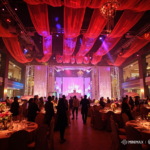
This guide is designed to move you past the “to-do list” phase and into the realm of strategic execution. We will break down the essential phases of event development, providing you with the same frameworks used by industry authorities to ensure every guest leaves with a lasting, positive impression.

What is Event Planning?
Event Planning Definition: Event planning is the professional process of coordinating all aspects of a meeting, celebration, or convention. It encompasses budgeting, site selection, acquiring necessary permits, coordinating transportation and parking, arranging for speakers or entertainers, catering, emergency contingency planning, and post-event ROI analysis to ensure a seamless guest experience.
Why Strategic Planning is Non-Negotiable
In the event industry, “failing to plan is planning to fail” is not just a cliché; it is a financial reality. Strategic planning matters because it:
- Protects Your Investment: Events are significant capital expenditures. Planning ensures funds are allocated to high-impact areas rather than wasted on logistical inefficiencies.
- Mitigates Risk: Professional planning identifies “Single Points of Failure”—like a single power source for an entire LED wall—and builds in redundancies.
- Enhances Brand Reputation: Whether it’s a corporate brand or a family legacy, the event is a physical manifestation of your values. Seamless execution builds trust.
- Ensures Guest Comfort: From the temperature of the room to the ease of the check-in process, planning removes the friction that ruins a guest’s experience.
How it Works: The 7 Phases of Event Execution
Phase 1: Discovery and Goal Setting
Before booking a venue, define your “Why.” Is the goal to generate leads, celebrate a milestone, or launch a product? Use the SMART (Specific, Measurable, Achievable, Relevant, Time-bound) framework to set your objectives.
Phase 2: Financial Architecture (Budgeting)
Create a comprehensive budget that includes a 15% contingency fund. In 2026, account for rising costs in tech integration and sustainable catering.
- Strategic Tip: Always distinguish between “Fixed Costs” (venue rental) and “Variable Costs” (catering per head).
Phase 3: Site Selection and Logistics
Choose a venue that matches your logistical needs, not just your aesthetic. Check for “Load-In” access, power capacity (KVA requirements), and local permit compliance (e.g., sound limits in residential Hyderabad).
Phase 4: Vendor Ecosystem Assembly
Vet your vendors based on reliability, not just price. Ensure all contracts have clear “Force Majeure” and cancellation clauses. This includes your caterers, decorators, AV technicians, and security teams.
Phase 5: The Guest Journey Design
Map the experience from the moment a guest receives an invite to the moment they receive a thank-you note. Focus on “Friction Points” like registration queues or parking bottlenecks.
Phase 6: On-Site Execution (The Big Day)
Implement a Master Production Schedule (MPS). This is a minute-by-minute breakdown of every cue, from the first vendor arrival to the final guest exit.
Phase 7: Post-Event Reconciliation
The event doesn’t end when the guests leave. Conduct a “Post-Mortem” to review what worked, reconcile final invoices, and send out attendee surveys to measure success against your Phase 1 goals.

Types of Events and Their Unique Needs
The strategy for planning depends heavily on the event’s DNA:
- Corporate Events: Priority is on AV technology, branding, and seamless flow for networking.
- Luxury Weddings: Priority is on high-touch hospitality, emotional storytelling, and heritage aesthetics.
- Non-Profit Galas: Priority is on fundraising mechanics, donor recognition, and low overhead costs.
- Small Boutique Events: Priority is on high-detail personalization and exclusive, non-traditional venues.
Strategic Value: The Advantage of Professional Planning
When you follow a professional planning framework, you gain “Operational Intelligence.” This allows you to:
- Negotiate Better Rates: Knowing the market value of a “KVA of power” or “per-plate cost” gives you leverage.
- Predict Bottlenecks: Experienced planners see the “20-minute delay” in catering coming an hour before it happens and adjust the program accordingly.
- Ensure Compliance: Especially in cities like Hyderabad or Vizag, navigating local laws regarding sound and liquor permits is a specialized skill that saves you from legal shutdowns.
Common Myths and Planning Mistakes
- Myth: “I can save money by doing it all myself.”
- Reality: DIY planners often overspend on unnecessary decor while ignoring critical infrastructure like backup generators or sufficient security, leading to “Hidden Costs.”
- Myth: “The venue coordinator will handle everything.”
- Reality: A venue coordinator works for the venue. An event planner works for you. One manages the room; the other manages the entire experience.
- Mistake: Skipping the Technical Rehearsal.
- Insight: Even the most expensive LED walls can fail due to a simple cable incompatibility. Never skip a “Cue-to-Cue” rehearsal.
Practical Examples
Scenario A: The 500-Guest Corporate Product Launch
- Key Move: Utilizing AI-driven registration to reduce check-in time from 3 minutes to 15 seconds per guest.
- Result: Guests enter the hall energized and ready to engage with the brand, rather than frustrated by queues.
Scenario B: The Heritage Palace Wedding
- Key Move: Mapping the “Sun Path” to ensure the ceremony occurs in natural shade without requiring noisy industrial fans.
- Result: A tranquil, picturesque ceremony that respects the heritage architecture.
Frequently Asked Questions
1. How do I start planning an event? Start with the “Why” (Goal) and the “Who” (Audience). Once you have a clear purpose and guest count, you can build a realistic budget.
2. What is a realistic budget for a corporate event in 2026? Budgets vary wildly, but always allocate 40% for catering/venue, 20% for AV/Tech, 15% for decor, and 15% for contingency.
3. How far in advance should I start planning? For large-scale events (500+ guests), 8 to 12 months is ideal. For smaller boutique events, 3 to 4 months is manageable for a professional team.
4. How do I choose the right venue in Hyderabad? Look at “Last-Mile” connectivity. A venue may be beautiful, but if your guests get stuck in HITEC City traffic for 2 hours, the event is compromised.
5. What permits do I need for an event in India? Commonly required are PPL/IPRS (Music), Fire NOC, Sound permits (for after 10 PM), and temporary liquor licenses (P1).
6. How do I handle a sudden increase in the guest list? Always negotiate a “10% Buffer” with your caterer and ensure your floor plan has “dead space” that can be converted into seating if needed.
7. Is a mobile app necessary for my event? For corporate events or multi-day weddings, a dedicated app or WhatsApp Bot is essential in 2026 for real-time updates and guest queries.
8. What is a “Master Production Schedule”? It is a document that lists every single activity from 6 AM (Load-in) to Midnight (Load-out), assigned to a specific person and time.
Conclusion: Planning with Authority
Planning an event is a high-stakes endeavor that requires a blend of creative vision and logistical rigor. By following a structured framework—from clear goal setting to post-event analysis—you transform a potential source of stress into a powerful vehicle for connection and celebration.
The most successful organisers are those who understand that the “magic” of an event is actually the result of meticulous, invisible work.
Are you looking to elevate your next event from a simple gathering to a strategic masterpiece? Contact Prashasta Events for a professional consultation tailored to your vision.




Leave a Comment