
Table of Contents
How Do I Plan a Traditional Telugu Wedding in Hyderabad?
Planning a traditional Telugu wedding in Hyderabad requires aligning Vedic astrological timings (Shubha Muhurtham), multi-day ritual logistics, traditional floral mandap styling, and authentic regional cuisine (Vindhu Bhojanam). Known for rich cultural symbolism and joyous family customs, a classic Telugu ceremony (Telugu Pelli) spans multiple distinct functions—from Pellikuthuru and Snatakam to the sacred Jeelakarra Bellam and Talambralu rituals. Whether hosting 300 guests in a boutique AC kalyana mandapam in Dilsukhnagar or 1,200 attendees at a convention resort in Shamshabad, organizing a flawless Telugu celebration relies on structured timeline management and vendor coordination.
Last Updated: October 2026
What Is the Core Structure of a Traditional Telugu Wedding?
A traditional Telugu wedding is a Vedic South Indian celebration structured around precise Muhurtham hours. Key rituals include Pellikuthuru (bride making), Snatakam (groom preparation), Kanyadaan, Jeelakarra Bellam (sacred paste placement), Mangalsutra Dharana, and Talambralu (showering rice and turmeric). A complete Telugu wedding celebration typically unfolds across three main phases over 2 to 3 days.
| Phase | Typical Timing | Key Rituals & Events |
|---|---|---|
| 1. Pre-Wedding | Days 1–2 | Pellikuthuru, Snatakam, Nischayartham |
| 2. Main Muhurtham | Day 2 or 3 | Kanyadaan, Jeelakarra, Talambralu |
| 3. Post-Wedding | Days 3–4 | Appaginthalu, Reception, Satyanarayana Puja |
Why People Get Telugu Wedding Planning Wrong in Hyderabad
Host families often experience logistical confusion during multi-day Telugu celebrations by misjudging ritual durations and vendor timelines.
- Underestimating Muhurtham Timing Strictness: Traditional Telugu weddings center on a precise astrological minute calculated by the family priest (Siddhanti). Delays in groom arrivals or stage lighting setups during early-morning Muhurthams (often between 3:00 AM and 5:30 AM) cause severe distress.
- Overlooking Dual Venue Needs for Pre-Wedding Rituals: The Pellikuthuru (preparing the bride) and Pellikoduku (preparing the groom) ceremonies traditionally happen simultaneously at separate family homes or distinct banquet halls.
- Switching to Generic Buffets Over Authentic Feasts: Replacing traditional sit-down banana-leaf meals (Panti Seva) with generic multi-cuisine buffets during morning functions often disappoints family elders who expect classic regional recipes.
Key Rituals in a Traditional Telugu Wedding Explained
Understanding the sequence of sacred customs ensures your planning team accommodates each ritual’s specific physical space and material needs.
Essential Telugu Wedding Rituals
Telugu weddings include several traditional rituals that bring together family blessings, symbolic customs, and the couple’s wedding commitments. The exact practices and sequence may vary by region, family tradition, and the priest’s guidance.
| No. | Ritual | Traditional Significance |
|---|---|---|
| 1 | Pellikuthuru / Pellikoduku | A pre-wedding ceremony involving turmeric, oil, and blessings for the bride or groom. Floral elements may also be included. |
| 2 | Snatakam & Kasi Yatra | Snatakam marks an important transition in the groom’s traditional life stage, while Kasi Yatra symbolically represents a choice between pursuing a scholarly life and proceeding with marriage. |
| 3 | Mangala Snanam & Edurukolu | Mangala Snanam is a ceremonial bath before the wedding. Edurukolu is the traditional welcoming of the groom and his party by the bride’s family. |
| 4 | Jeelakarra Bellam | The bride and groom place a paste of cumin (jeelakarra) and jaggery (bellam) on each other’s heads at the auspicious Muhurtham moment, symbolizing their union. |
| 5 | Mangalsutra Dharana & Talambralu | Mangalsutra Dharana involves tying the sacred marital thread, while Talambralu involves showering the couple with rice, often mixed with turmeric, as a blessing for prosperity and happiness. |
1. Pellikuthuru and Pellikoduku
Held a day or two prior to the main wedding, female relatives apply turmeric paste (Nalugu), aromatic oils, and flowers to the bride and groom at their respective venues. Guests present silk sarees, dhotis, and traditional sweets.
2. Snatakam and Kasi Yatra
On the wedding morning, the groom undergoes Snatakam (signifying the completion of basic education and readiness for family life). In a lighthearted custom called Kasi Yatra, the groom pretends to embark on a pilgrimage to Kasi, only to be persuaded by the bride’s brother to assume householder duties (Grihastha Ashram).
3. Kanyadaan and Addutera
During the main ceremony, the bride is escorted to the mandap by her maternal uncles, sitting behind a hand-woven silk curtain (Addutera) that separates her from the groom while Vedic mantras are chanted.
4. Jeelakarra Bellam (The Muhurtham Moment)
At the exact auspicious minute, the couple places a paste made of cumin seeds (Jeelakarra) and unrefined sugar (Bellam) on each other’s crowns. Symbolizing eternal union, this moment marks the official marriage bond.
5. Talambralu and Saptapadi
Following the tying of the sacred Thali (Mangalsutra Dharana), the couple showers each other with pearls, flower petals, and rice mixed with turmeric (Talambralu). The ceremony concludes with taking seven sacred steps (Saptapadi) around the holy fire.

Venue Category & Cost Breakdown for Telugu Weddings in Hyderabad
Selecting the right venue category depends on your expected guest list, parking requirements, and dining preferences.
| Venue Category | Typical Locations in Hyderabad | Average Cost Range | Capacity & Features |
| Traditional Kalyana Mandapam | Dilsukhnagar, Uppal, Malkajgiri, LB Nagar | ₹1,50,000 – ₹4,00,000 (Hall Rental) | 400–1,000 guests; dedicated kitchen and separate sit-down dining hall |
| Boutique AC Convention Center | Kondapur, Kukatpally, Kompally, Nagole | ₹3,50,000 – ₹8,00,000 (Hall Rental) | 500–1,200 guests; elevated stage infrastructure and ample parking |
| 5-Star Luxury Hotel Ballroom | Banjara Hills, Hitec City, Begumpet | ₹8,00,000 – ₹20,00,000+ (F&B Minimum) | 300–800 guests; turnkey hospitality, in-house catering, luxury stay suites |
| Outdoor Resort / Farmhouse Lawn | Shamshabad, Moinabad, Gandipet | ₹4,00,000 – ₹12,00,000 (Venue Package) | 500–1,500+ guests; open-air setup, suitable for evening receptions |
How Much Does a Traditional Telugu Wedding Cost in Hyderabad?
In Hyderabad, a multi-day traditional Telugu wedding generally ranges from ₹12 Lakhs for a modest 300-guest event to ₹1.5 Crores+ for a high-end 1,000-guest celebration.
Typical Telugu Wedding Budget Allocation
Planning a Telugu wedding budget involves balancing venue and dining costs, traditional catering, mandap décor, photography, and wedding attire. The allocation below provides a starting framework for estimating expenses.
| Expense Category | Suggested Budget Allocation | What It Covers |
|---|---|---|
| Venue & Dining Facilities | 35%–40% | Venue rental, dining space, seating, and related facilities |
| Traditional Catering & Panti Seva Meals | 25%–30% | Traditional meals, food preparation, serving arrangements, and dining requirements |
| Mandap Décor, Floral Styling & Brass Props | 15%–20% | Wedding mandap, floral arrangements, traditional décor, and decorative brass elements |
| Photography, Cinematic Media & Albums | 8%–12% | Wedding photography, cinematic videography, editing, and albums |
| Attire, Gold Jewelry & Ritual Puja Materials | 10%–15% | Wedding clothing, jewelry, and materials required for traditional ceremonies |
- Budget Tier (₹10 Lakhs – ₹16 Lakhs): 250–300 guests; hosted at an AC kalyana mandapam in Dilsukhnagar or Uppal; traditional banana-leaf dining; marigold and cloth drape decor.
- Mid-Scale Tier (₹20 Lakhs – ₹45 Lakhs): 500–700 guests; hosted at a convention hall in Kondapur or Kompally; combination of sit-down meals and live buffet counters; candid media coverage.
- Luxury Tier (₹60 Lakhs – ₹1.5+ Crores): 800–1,500 guests; hosted at a 5-star hotel in Hitec City or a resort in Shamshabad; custom architectural mandap design; premium fine dining.
Step-by-Step Guide: How to Plan Your Telugu Wedding Timeline
Follow this step-by-step checklist to organize your multi-day celebration efficiently:
1.Step 1: Calculate Muhurtham and Finalize Dates: Consult family priest for auspicious timings.
Meet with your family priest (Siddhanti) to calculate the exact Shubha Muhurtham date and time based on birth charts (Pathrika).
2.Step 2: Book a Kalyana Mandapam with Panti Seva Spaces: Select venue matching ritual needs.
Inspect venues in your preferred hub (e.g., Kukatpally, Gachibowli, or LB Nagar). Confirm the venue offers a separate sit-down dining hall capable of seating at least 100 guests per batch.
3.Step 3: Contract a Specialist Telugu Caterer: Curate authentic regional menus.
Lock in a regional caterer specializing in authentic Vindhu Bhojanam. Sample signature items like Gongura Pachadi, Gutti Vankaya, Pootharekulu, Pappu Charu, and Bobbatlu.
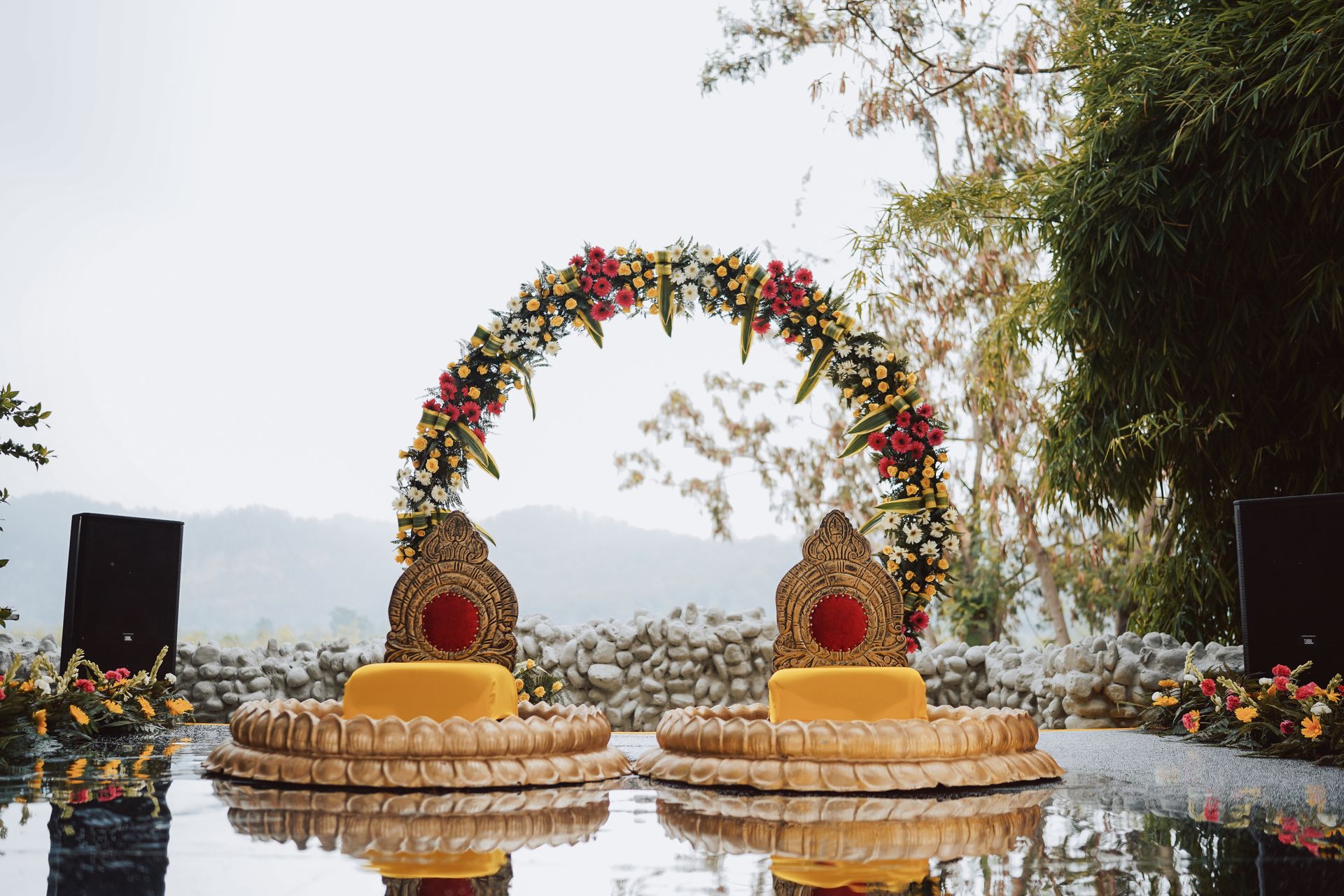
4.Step 4: Finalize Floral and Brass Prop Styling: Design traditional floral mandapam.
Plan a traditional mandap using fresh yellow marigolds, jasmine, banana saplings, coconut leaf weaves, and traditional brass Samai lamps.
5.Step 5: Prepare Puja Items and Guest Thamboolam: Procure required puja materials and gifts.
Assemble necessary ritual items—including Jeelakarra Bellam, fresh coconuts, turmeric roots, sacred thread (Pusti), and return favor bags (Thamboolam) containing betel leaves, sweets, and coin pouches.
6.Step 6: Assign Family Coordinators or On-Site Managers: Coordinate day-of flow and transport.
Assign specific roles for priest coordination, guest ushering, meal batch rotations, and luggage transfers between hotels and the main venue.
4 Common Myths About Telugu Weddings
Myth 1: “Sit-down banana-leaf meals (Panti Seva) are outdated.”
Fact: Traditional Panti Seva remains the gold standard of authentic hospitality in Telugu weddings. Guests appreciate hot, fresh dishes served attentively in a traditional sequence on organic banana leaves over self-serve buffets.
Myth 2: “Early-morning Muhurthams mean guests will not attend.”
Fact: Traditional family members and close relatives regularly attend early-morning Muhurthams (such as 4:00 AM). Providing comfortable holding rooms with hot coffee, tea, and tiffins ensures guests remain comfortable.
| Common Oversights | Recommended Setup | Guest Benefit |
|---|---|---|
| Tea stalls are closed | Arrange early-opening or round-the-clock hot beverage counters, depending on arrival schedules | Guests can access tea, coffee, and other warm refreshments |
| Seating areas feel too cold | Maintain comfortable indoor temperatures with suitable heating or air-conditioning controls | Guests can remain comfortable during the ceremony |
| Luggage drop-offs are unmanaged | Provide a dedicated cloakroom or supervised luggage storage area | Travelling guests have a designated place for their belongings |
Myth 3: “All Telugu sub-castes follow the exact same ceremony steps.”
Fact: While core Vedic steps (Jeelakarra Bellam, Kanyadaan, Talambralu) remain consistent, specific regional customs vary across Telangana, Coastal Andhra, and Rayalaseema traditions. Always confirm specific family preferences with elders.
Myth 4: “Traditional decor requires massive artificial structures.”
Fact: Authentic Telugu wedding aesthetics rely on natural elements—fresh marigold garlands, fragrant jasmine strands, mango leaves, woven palm fronds, and polished brass vessels—delivering timeless beauty at a lower cost than heavy synthetic backdrops.
Real-World Telugu Wedding Scenarios
Scenario 1: A 500-Guest Morning Muhurtham in Dilsukhnagar
- The Profile: A traditional family hosting a classic two-day ceremony.
- The Setup: They booked an AC kalyana mandapam in Dilsukhnagar featuring a 6,000 sq. ft. main hall and a 4,000 sq. ft. lower-level dining space.
- The Execution: The Snatakam and Pellikuthuru ceremonies took place on Day 1 afternoon, followed by an early-morning 4:45 AM Muhurtham on Day 2. The caterer served 500 guests in five smooth Panti Seva rotations.
- Total Spend: ₹18.5 Lakhs.
Dilsukhnagar Kalyana Mandapam: Two-Day Wedding Event Flow
This schedule outlines the key wedding rituals and early-morning dining arrangements, helping venue coordinators organise guest movement, ceremony preparation, and traditional Panti Seva service.
Day 1
3:00 PM
Snatakam and Pre-Wedding Rituals
Prepare the ritual area, arrange seating for family members, coordinate the priest’s requirements, and keep essential ceremonial items ready.
Day 2
4:45 AM
Sacred Muhurtham and Jeelakarra Bellam
Complete pre-ceremony arrangements before the auspicious time, including mandap readiness, lighting, priest coordination, and family seating.
Day 2
6:30 AM
Traditional Panti Seva Feast — 5 Rotations
Organise dining in five planned batches, with coordinated seating, serving teams, hot-food replenishment, and clear entry and exit routes.
Scenario 2: A 800-Guest Modern Telugu Wedding in Shamshabad
- The Profile: An urban family hosting a combined traditional Muhurtham and grand evening reception at a resort lawn.
- The Setup: The morning wedding took place inside a climate-controlled AC hall with a floral mandap, while the evening reception shifted to the resort lawn with a live band and multi-cuisine buffet.
- Total Spend: ₹52 Lakhs.
Traditional Telugu Wedding Vendor Checklist
Ensure your vendor contracts cover these essential items:
- [ ] Priest (Siddhanti) Coordination: Confirm the priest brings necessary Vedic materials (Homa Kunda, sacred wood, and puja samagri).
- [ ] Traditional Nadaswaram Musicians: Book a 4-piece traditional Nadaswaram and Thavil ensemble for ambient ritual music.
- [ ] Fresh Flower Delivery Schedule: Ensure fresh marigold and jasmine garlands arrive 2 hours prior to the Pellikuthuru and Muhurtham start times.
- [ ] Catering Batch Seating: Confirm that your caterer supplies adequate serving staff (panti servers) experienced in traditional leaf service.
- [ ] Thamboolam Favor Preparation: Prepare return gift bags containing betel leaves, sweets, fruits, and coin pouches for departing guests.
Frequently Asked Questions
What is the most important ritual in a Telugu wedding?
The Jeelakarra Bellam custom is the core Muhurtham moment. At the exact astrologically calculated minute, the bride and groom place a sacred paste of cumin seeds and jaggery on each other’s crowns, marking their spiritual union.
What is included in a traditional Telugu wedding feast (Vindhu Bhojanam)?
A traditional Vindhu Bhojanam is served on a banana leaf and features regional items such as rice, Pappu, Gongura Pachadi, Gutti Vankaya curry, Pulihora, Sambar, Rasam, Curd, Pootharekulu, Bobbatlu, and Vada.
How much does a traditional Telugu wedding cost in Hyderabad?
Costs typically range from ₹12 Lakhs to ₹18 Lakhs for mid-scale celebrations (300 guests) at community mandapams, and ₹25 Lakhs to ₹60 Lakhs+ for larger celebrations (600–1,000 guests) at modern convention centers or resorts.
How early should I book a kalyana mandapam in Hyderabad?
Book your venue 6 to 9 months in advance for major Shubha Muhurtham clusters (especially November through February and April through June) when popular kalyana mandapams fill quickly.
What is the difference between Pellikuthuru and Snatakam?
Pellikuthuru is the ceremony where the bride is anointed with turmeric, oil, and flowers by female relatives. Snatakam is a groom’s ritual signifying his readiness to transition from student life to family responsibilities.
Can a 5-star hotel accommodate traditional Telugu rituals?
Yes. Most 5-star hotels in Hyderabad permit traditional Mandapam setups, Homa Kunda sacred fires in designated spaces, and traditional dining arrangements upon request.
What is the Talambralu ritual?
Talambralu is a joyous post-wedding custom where the bride and groom shower each other’s heads with pearls, flower petals, and rice mixed with turmeric, symbolizing prosperity and happiness.
What is Appaginthalu?
Appaginthalu is the emotional farewell ceremony at the end of the wedding, where the bride’s family formally entrusts her to the groom and his parents.
Planning a traditional Telugu wedding in Hyderabad relies on respecting sacred customs, choosing a well-equipped venue, and providing warm, authentic hospitality. By organizing your timeline around precise Muhurtham hours, selecting experienced regional vendors, and curating an authentic Vindhu Bhojanam, you can host a memorable celebration for your family and guests. Equipped with these practical insights, you are well prepared to plan your wedding day.


Leave a Comment